



|
Getting your Trinity Audio player ready...
|
By: Fern Sidman
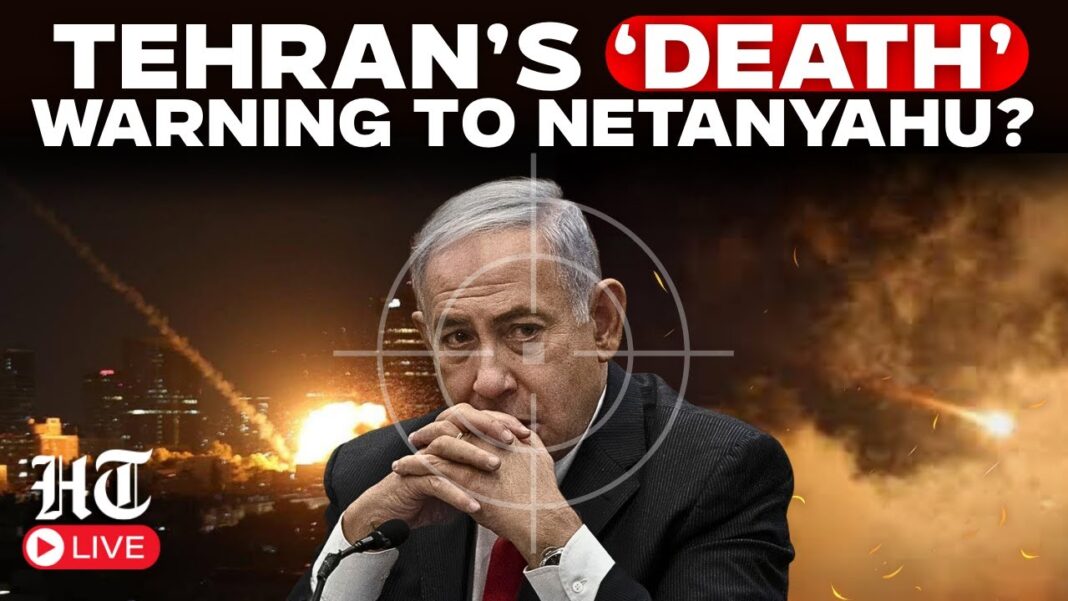
In a development that has heightened already intense tensions in the Middle East, Iranian authorities issued an explicit threat over the weekend to assassinate Israeli Prime Minister Benjamin Netanyahu, while simultaneously circulating unfounded claims that the Israeli leader may already have been killed in a recent Iranian attack. The statements, disseminated through official and semi-official Iranian media outlets, are being widely interpreted by analysts as part of a broader psychological warfare campaign unfolding alongside the ongoing military confrontation between Israel, the United States, and Iran.
According to a report by World Israel News, the threat was delivered in a statement published Sunday by Sepah News, the official media platform of the Islamic Revolutionary Guard Corps (IRGC). The message included a direct warning that Iranian forces would continue to pursue Netanyahu and implied that his death might already have occurred.
“If this child-killing criminal is alive, we will continue to pursue and kill him with full force,” the IRGC declared in the statement, which has drawn sharp condemnation from Israeli officials and international observers. The rhetoric marks one of the most explicit assassination threats issued by Iranian authorities against a sitting Israeli prime minister and underscores the increasingly volatile environment surrounding the regional conflict that has intensified in recent months.
The threat against Netanyahu was accompanied by a wave of disinformation circulated through Iranian media channels, suggesting—without evidence—that the Israeli leader had been killed or injured during a recent Iranian missile strike. According to the World Israel News report, the IRGC-affiliated Tasnim News Agency published an article last week attempting to legitimize these rumors. The report cited what it described as “indicators fueling speculation” about Netanyahu’s alleged death or injury.
Among the supposed signs highlighted by the Iranian outlet was the cancellation of a planned trip to Israel by White House special envoy Steve Witkoff and Jared Kushner, President Donald Trump’s son-in-law and former Middle East adviser. Tasnim insinuated that the decision might have been connected to Netanyahu’s rumored death, despite the absence of any credible evidence supporting such claims.
The article also pointed to a recent telephone conversation between Netanyahu and French President Emmanuel Macron, suggesting that the lack of precise details about the timing of the call raised doubts about whether it had actually occurred. “These speculations have yet to be officially confirmed or denied,” Tasnim wrote, according to coverage by World Israel News.
Observers note that such tactics—amplifying rumors and presenting them as plausible narratives—are characteristic of state-backed disinformation campaigns intended to sow confusion and undermine public confidence.
The rumors about Netanyahu were not the only disinformation circulating in Iranian media. Reports cited by World Israel News indicate that Iranian outlets also spread unverified claims suggesting that Israeli National Security Minister Itamar Ben-Gvir had been killed in a missile attack. Other rumors alleged that Netanyahu’s brother had been injured or killed, further contributing to the swirl of speculation surrounding Israeli leadership. None of these claims have been substantiated, and Israeli officials have dismissed them as fabrications designed to manipulate public perception during wartime.
Analysts say such narratives serve several purposes for Tehran. Domestically, they allow Iranian authorities to portray their military actions as successful strikes against high-value targets. Internationally, they create uncertainty and amplify propaganda designed to weaken morale among Israel’s supporters.
While Iranian media outlets promoted rumors about Netanyahu’s fate, Iranian Foreign Minister Abbas Aragchi used a high-profile television appearance to accuse the United States of conducting an unjustified war against the Islamic Republic.
Speaking Sunday on CBS’s “Face the Nation,” Aragchi described the ongoing military campaign as illegal and unnecessary, asserting that President Donald Trump was acting recklessly. “There are people being killed only because President Trump wants to have fun,” Aragchi said during the interview, according to remarks cited by World Israel News.
The Iranian diplomat alleged that American forces were attacking Iranian targets simply for entertainment. “The United States is sinking ships and targeting different places because it is fun,” Aragchi said. His comments appeared to reference remarks made by Trump the previous day regarding the destruction of military infrastructure on Kharg Island, Iran’s primary oil export hub. Trump had stated that the United States had already “destroyed” the island’s military facilities and could strike it again if necessary.
During the interview, Aragchi also rejected claims that Iran had sought a ceasefire through intermediaries. President Trump recently suggested that Tehran had attempted to initiate negotiations through third-party channels, but the Iranian foreign minister denied those reports. “We are ready to defend ourselves as long as it takes,” Aragchi said, insisting that Iran had not requested a ceasefire.
According to the information provided in the World Israel News report, Iranian officials have repeatedly framed the conflict as an unprovoked assault by Israel and the United States, portraying the Islamic Republic as a victim rather than a belligerent actor. This narrative forms a central component of Tehran’s messaging strategy in international media.
Critics argue that Iran’s portrayal of itself as a passive target of aggression ignores decades of activity by Tehran and its proxy groups across the Middle East. As reported by World Israel News, Iran has long been accused by Western governments of financing and arming militant organizations responsible for attacks against civilians and military personnel throughout the region.
Among the groups receiving Iranian support are Hezbollah in Lebanon, Hamas in Gaza, Islamic Jihad and various militia groups operating in Iraq and Syria. These organizations have been implicated in attacks that have killed both Israeli and American citizens.
Iran’s nuclear program has also been the subject of sustained international concern. Inspectors from the International Atomic Energy Agency (IAEA) have repeatedly complained that monitoring cameras at key nuclear facilities have been disabled or removed. According to the World Israel News report, Tehran has also limited access to certain sites where inspectors suspect nuclear activities may be occurring.
In the same interview, Aragchi insisted that Iran was directing its attacks exclusively against American military assets. “We are only targeting American assets, American installations, American military bases,” he said. However, critics argue that Iran and its proxy forces have repeatedly targeted civilian infrastructure throughout the region.
As noted by World Israel News, Iranian-backed groups have been linked to attacks on major energy facilities and transportation hubs in multiple Gulf states. Among the incidents cited by analysts are strikes on Dubai International Airport, oil facilities in Saudi Arabia and infrastructure sites in Qatar, Bahrain, Kuwait, and the United Arab Emirates. These attacks have disrupted global energy markets and threatened civilian air travel, further escalating tensions across the region.
The assassination threat against Netanyahu comes amid one of the most intense periods of confrontation between Iran and Israel in decades. Israel and the United States have launched a series of strikes targeting Iranian missile sites, naval installations, and nuclear infrastructure as part of the broader campaign aimed at preventing Tehran from acquiring nuclear weapons. Iran has responded with missile attacks, drone launches, and propaganda campaigns designed to project resilience and deter further strikes.
World Israel News reported that the conflict has increasingly extended beyond conventional military operations to include psychological warfare and information manipulation.
The IRGC’s explicit threat against Netanyahu represents a notable escalation in the rhetorical dimension of the conflict. Direct threats against national leaders are rare in official military statements and are widely viewed as indicative of heightened hostility. While Israeli officials have not publicly commented on the specific threat, analysts say the remarks are likely intended to rally Iranian domestic audiences while signaling defiance toward Israel and its allies. At the same time, the dissemination of false rumors about Netanyahu’s death reflects the broader information war accompanying the military conflict. Such tactics, experts warn, can contribute to misinformation and instability during already volatile circumstances.
As the confrontation between Iran and Israel intensifies, the battle for public perception has become nearly as significant as the military struggle itself. Iran’s messaging—combining assassination threats, conspiracy theories, and claims of victimhood—illustrates how governments seek to shape narratives in the global media environment.
Yet as World Israel News has repeatedly emphasized in its reporting, the gap between Tehran’s claims and the documented actions of Iranian-backed groups across the region continues to raise questions about the credibility of the Islamic Republic’s narrative.
For now, the conflict remains locked in a dangerous cycle of military escalation and information warfare. And with threats now extending openly to the highest levels of leadership, the stakes of that confrontation have rarely been higher.
