



|
Getting your Trinity Audio player ready...
|
By: Fern Sidman
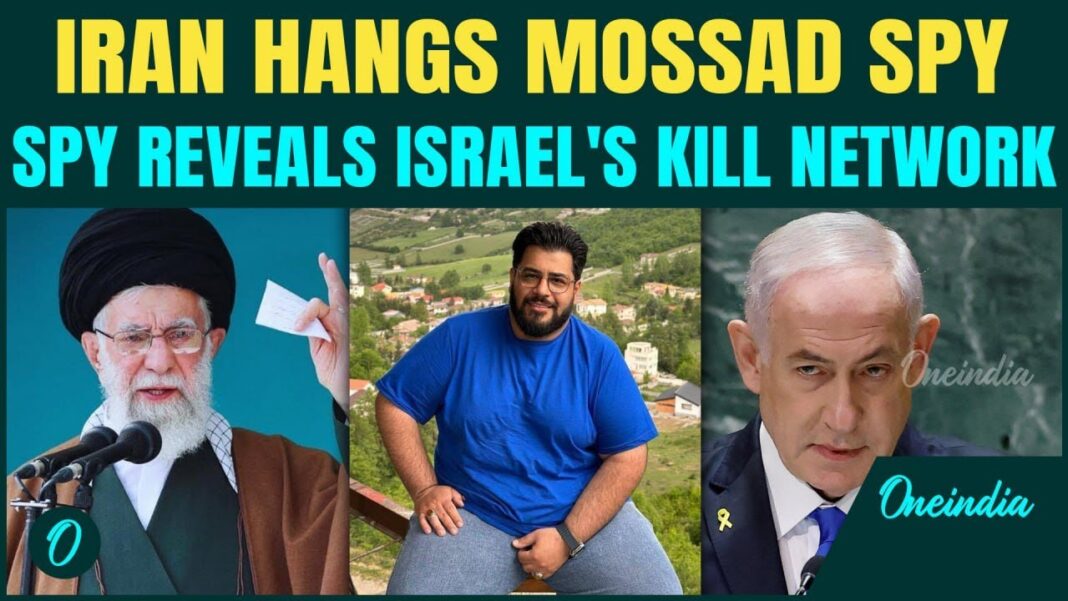
In a chilling reminder of the intensifying covert war between Iran and Israel, the Islamic Republic announced on Wednesday that it had executed a man accused of spying for Israel’s Mossad and aiding in the assassination of a senior Islamic Revolutionary Guard Corps (IRGC) officer in 2022. According to a report at World Israel News (WIN), 34-year-old Mohsen Langarneshin, a network security expert from the central Iranian city of Isfahan, was hanged at Tehran’s notorious Evin Prison, following a conviction on espionage and conspiracy charges.
The execution, shrouded in secrecy until after its completion, was carried out early Wednesday morning and announced hours later by Iranian state media outlets, including the semi-official Tasnim News Agency, which claimed Langarneshin had been a “senior spy” embedded within Israel’s Mossad intelligence apparatus.
As reported by World Israel News, Iranian authorities allege that Langarneshin played a key logistical and operational role in the daring May 22, 2022 assassination of IRGC Colonel Hassan Sayyad Khodaei, who was gunned down outside his home in Tehran by two motorcycle-riding assailants in a daylight attack that stunned the Iranian regime.
Khodaei was a high-ranking officer in the IRGC’s elite Quds Force, and had been publicly accused by Israel and Western intelligence agencies of orchestrating attacks and plots targeting American, Israeli, and European interests, including attempted kidnappings and killings. His assassination marked one of the boldest covert strikes within Iranian borders in recent memory and was widely attributed to Israeli intelligence, though Israel has never officially confirmed its role.
According to Iranian intelligence officials cited by World Israel News, Langarneshin was recruited by Mossad in 2020, and allegedly met with Israeli handlers twice—once in Georgia, and again in Nepal—to receive training and operational instructions.
He was said to have been tasked with photographing Iranian officials, surveilling strategic targets, and procuring equipment—including a motorcycle believed to have been used in the Khodaei assassination. Iranian authorities claimed that Langarneshin’s digital expertise and professional cover allowed him to evade detection for nearly two years before his eventual arrest.
World Israel News reported that Iranian officials insisted Langarneshin confessed to the charges during his detention, and this confession formed the basis for his conviction and execution.
Langarneshin’s family, however, has vigorously denied the charges, alleging that the so-called confession was extracted under duress during a prolonged period of solitary confinement and torture. According to family statements cited by World Israel News, Langarneshin was held in isolation for 43 days, during which time he was subjected to daily physical beatings and psychological abuse.
Despite filing three appeals requesting a retrial, all were summarily rejected by Iran’s judiciary, which is closely linked to the country’s intelligence and security apparatus. No international observers or legal monitors were allowed to attend the trial or verify the conditions under which the confession was obtained.
Human rights organizations have long criticized Iran’s judicial system for its lack of transparency, especially in national security cases, where evidence is often classified, and legal representation is tightly restricted.
The execution of Langarneshin marks a significant escalation in Iran’s public confrontation with Israel’s intelligence activities and serves as a stark warning to other suspected operatives. It also highlights the ongoing, shadow conflict between the two Middle Eastern rivals, which has played out across multiple theaters, from Tehran and Beirut to Damascus and Erbil.
As the report at World Israel News noted, the execution comes at a time of heightened tensions between Iran and Israel, especially in the wake of Iran’s drone and missile barrages targeting Israel in April and continued Israeli strikes on Iranian-linked assets in Syria and Lebanon.
While Israeli officials have remained silent on the case, as is customary with intelligence-related matters, analysts told World Israel News that the decision to publicly execute Langarneshin may be as much about internal political messaging as it is about counter-espionage. With growing domestic unrest and dissatisfaction over economic conditions, Tehran may be seeking to project strength and deterrence by cracking down harshly on suspected collaborators with Israel.
Langarneshin’s execution is also likely to further deter Iranian nationals from any contact with foreign intelligence services, and increase the risk to dual nationals and other civilians who may be caught up in Iran’s wide net of suspicion. Several past espionage trials involving alleged Mossad agents have featured questionable evidence, coerced confessions, and closed-door proceedings.
According to World Israel News, international human rights advocates have already begun calling for an independent investigation into the case, including the circumstances of Langarneshin’s detention, interrogation, and trial.
Nonetheless, the Iranian regime’s messaging is clear: it will respond decisively and without mercy to perceived threats from Israel—real or alleged—and is willing to make high-profile examples of those it accuses of collaboration.
As the shadow war between Iran and Israel intensifies, the fate of men like Mohsen Langarneshin serves as a grim reminder of the high-stakes intelligence battle unfolding far from the public eye—but with devastating real-world consequences
