



|
Getting your Trinity Audio player ready...
|
By: Fern Sidman – Jewish Voice News
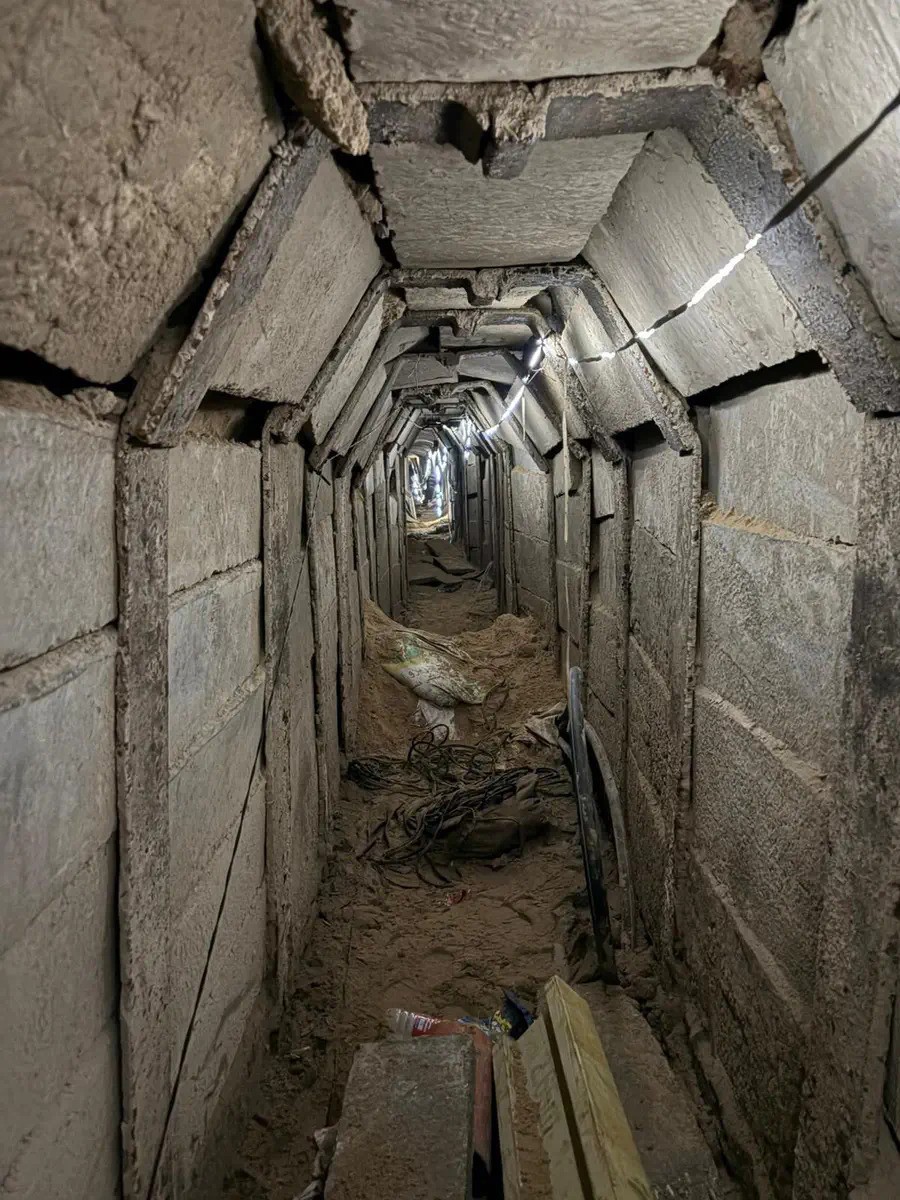
In a major breakthrough during ongoing operations in southern Gaza, IDF forces uncovered the extensive underground tunnel system in which abducted IDF officer Lieutenant Hadar Goldin had been held captive, a discovery officials described as one of the most expansive and sophisticated subterranean routes yet found in the Gaza Strip. According to a report on Thursday at Israel National News, the tunnel was exposed during a coordinated Southern Command activity in the southern sector of Rafah, carried out with the participation of elite units including Yahalom and Shayetet 13.

The subterranean passageways, stretching more than seven kilometers across densely populated civilian areas, represent one of Hamas’s most strategically important underground assets—constructed and maintained for years to facilitate senior leadership movement, weapons concealment, and operational planning. The Israel National News report noted that this specific route, at an approximate depth of 25 meters, stands out not only for its immense length but also for its elaborate internal infrastructure, which included dozens of operational chambers used by high-ranking Hamas commanders.
The tunnel traverses a crowded residential district near the Philadelphi Corridor, continuing beneath civilian institutions that included a UNRWA compound, mosques, clinics, kindergartens, and schools. Israel National News reported that the IDF emphasized the deliberate placement of the tunnel system beneath sensitive civilian structures, highlighting long-standing Israeli concerns that Hamas embeds its military assets within civilian populations to complicate operational responses.
Within this vast underground labyrinth, IDF forces located approximately 80 separate hideouts and rooms. These chambers were constructed for prolonged occupancy and were used by senior Hamas operatives to store weapons, convene planning sessions, and coordinate attacks targeting IDF forces. According to the information provided in the Israel National News report, among those who used the facility was Mohammad Shabaneh, the commander of the Hamas Rafah Brigade and a key figure in the group’s military hierarchy.
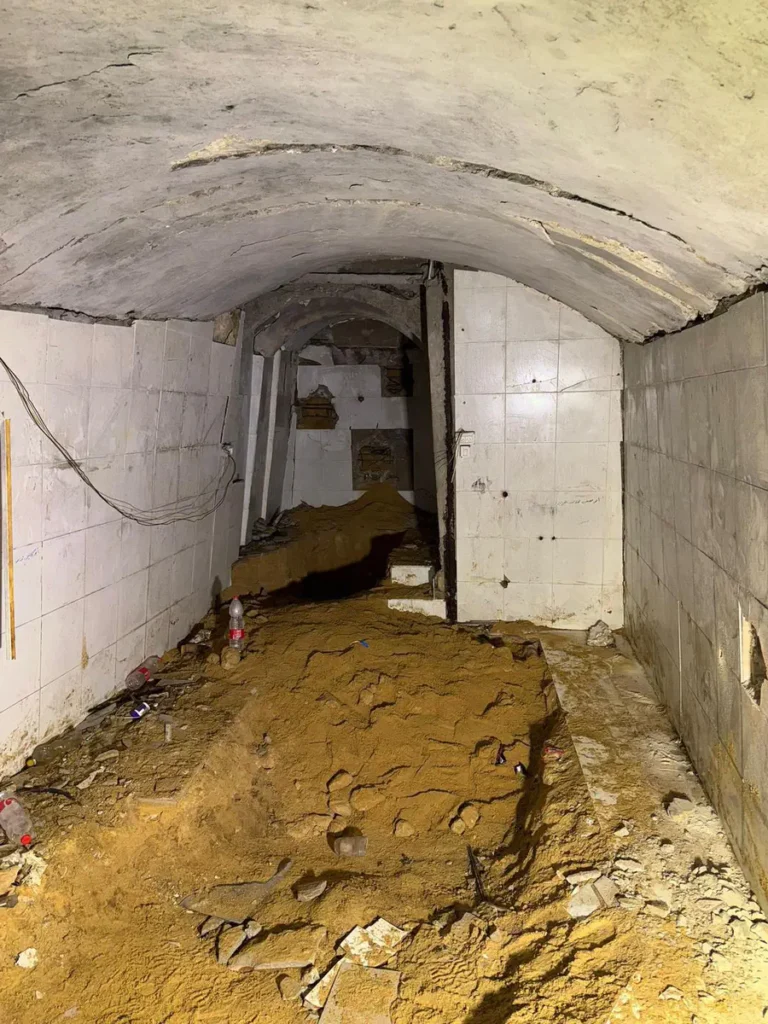
The exposure of such an extensive infrastructure underlines the scale of Hamas’s long-term investment in subterranean warfare. IDF engineers and special operations personnel have spent years studying, mapping, and neutralizing the group’s tunnel systems, yet this discovery underscores the continued breadth of underground activity built intentionally beneath civilian communities.
The discovery was made possible by a layered operational effort. Troops from the IDF’s 162nd Division and Gaza Division provided critical support by securing the area surrounding the tunnel, enabling specialized units to enter and safely maneuver inside the complex underground passageways. Israel National News reported that this coordinated approach allowed the forces to identify and document the vast scale of the tunnel network without interference or ambush.
The combined activity brought together the IDF’s most skilled tunneling and naval commando units. Yahalom, the Combat Engineering Corps’ elite demolition and tunnel warfare unit, conducted the primary subterranean mapping and neutralization efforts. Shayetet 13, the Israeli Navy’s premier commando force, contributed tactical expertise and provided additional capabilities for maneuvering in environments where intelligence indicated the presence of senior terrorist figures and weapons caches.
The IDF has continued to emphasize that Hamas’s tunnel program, which spans dozens of kilometers across the Gaza Strip, poses a strategic threat not only to Israeli soldiers but also to Gaza’s civilian population. Israel National News reported that the army reiterated its assessment that Hamas systematically embeds essential command-and-control hubs under civilian infrastructure precisely to deter airstrikes and to increase the risk to civilians during wartime.
The newly uncovered route holds particular resonance due to its connection to Lt. Hadar Goldin, who was abducted in 2014 during Operation Protective Edge. Although Israel National News noted that the IDF did not release additional information about the exact timeline of his captivity inside this specific tunnel, officials did emphasize that the route’s length, depth, and complexity marked it as one of the most significant discoveries in recent military operations in Gaza.
The IDF’s statement, quoted by Israel National News, stressed that the size and sophistication of the tunnel system demonstrate how deeply embedded Hamas’s military infrastructure remains, even after years of conflict. Despite extensive Israeli efforts across multiple operations to degrade Hamas’s subterranean capabilities, the discovery shows that considerable tunnel networks continue to exist beneath civilian areas.
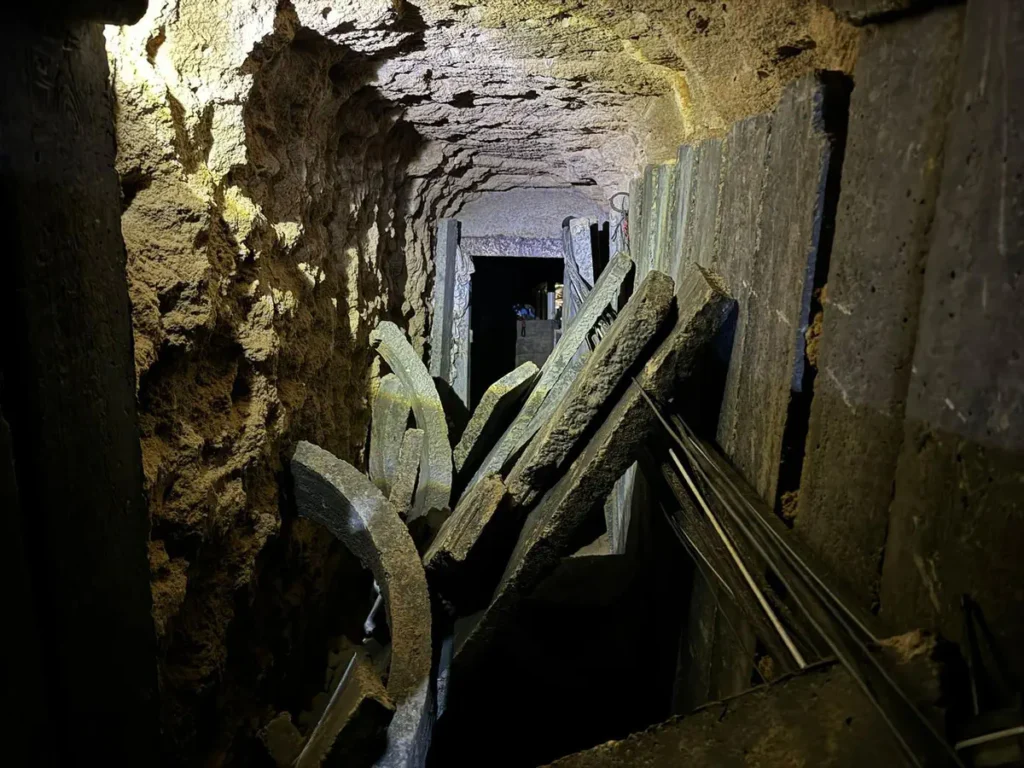
As operations proceed in Rafah and other sectors of the Gaza Strip, IDF forces are expected to continue exposing additional tunnels, weapons caches, and command centers buried beneath civilian neighborhoods. According to the information contained in the Israel National News report, the military reiterated that identifying and neutralizing these underground systems is essential to preventing future terrorist activity and ensuring long-term security.
While the full scope of the newly uncovered tunnel system is still being assessed, military spokespersons described its discovery as a major operational achievement. The find not only uncovers critical insights into Hamas’s subterranean operations but also offers a clearer picture of how deeply the organization has entrenched itself beneath civilian areas throughout Gaza.