



|
Getting your Trinity Audio player ready...
|
By: Fern Sidman
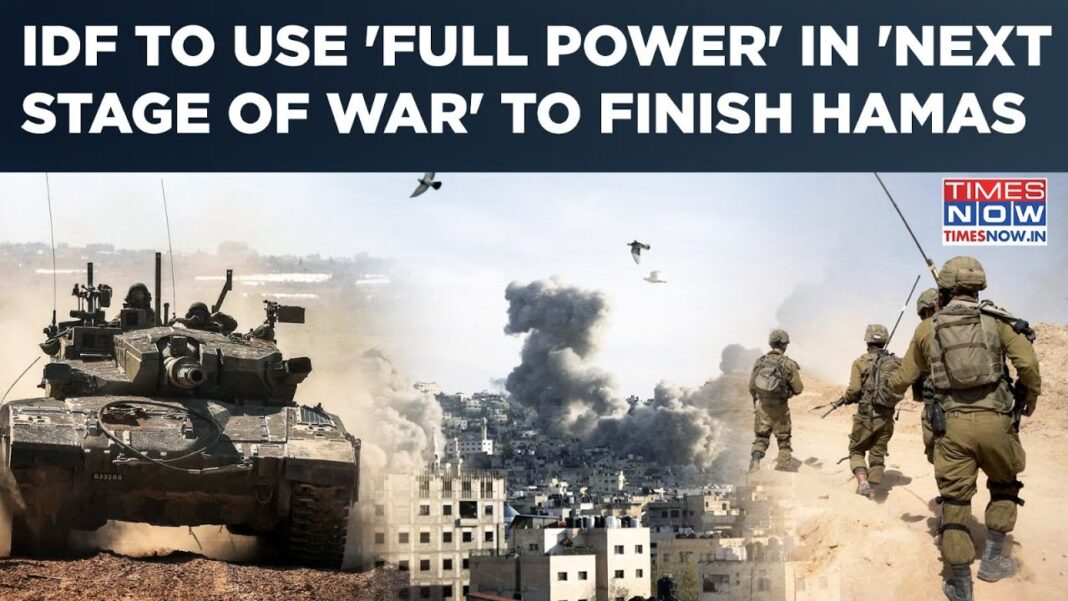
In what military observers describe as one of the largest ground operations since the 2014 Gaza war, Israel Defense Forces Chief of Staff Lt.-Gen. Eyal Zamir has finalized the scale and structure of the forces slated to participate in the upcoming Gaza City offensive. According to reports first carried by Walla and analyzed further by The Jerusalem Post, the operation envisions the deployment of multiple brigade-sized combat teams—totaling at least 80,000 soldiers—to surround and ultimately seize Gaza City, the heart of Hamas’s remaining military and political infrastructure.
Senior defense sources, speaking to The Jerusalem Post, acknowledged both the promise and peril of the ambitious campaign. “This is a broad plan that will exact a heavy price from Hamas,” one source observed, “but it also carries great risks for IDF forces.” The calculation is stark: the encirclement of Gaza City could deliver a fatal blow to Hamas’s command structure, but the dense urban battlefield presents unparalleled challenges for Israeli soldiers, who will confront entrenched terrorists in heavily fortified positions.
As outlined by Chief of Staff Zamir, the upcoming maneuver is designed to decisively dismantle Hamas’s core terrorist infrastructure while simultaneously uprooting the remaining symbols of its governance. The Jerusalem Post report on Monday emphasized that the operation is not envisioned as a piecemeal advance, but rather a coordinated surge that integrates infantry, armor, air power, and naval assets. The intent, military analysts suggest, is to overwhelm Hamas defenses with speed and precision, reducing the group’s capacity to regroup or prolong the conflict.
The plan, which Zamir is scheduled to present formally to Defense Minister Israel Katz, includes provisions for the rapid deployment of Merkava tanks, Namer armored personnel carriers, and Eitan wheeled combat vehicles. The IDF’s Technology and Logistics Directorate, under the leadership of Maj.-Gen. Michel Yanko, has expedited maintenance and readiness procedures to ensure armored units are capable of sustained maneuvering in the dense urban terrain of Gaza City.
Additionally, special attention has been given to communication systems. The Jerusalem Post reported that the chief of staff instructed commanders to allocate resources for integrated communications platforms, enabling seamless synchronization of operations across land, sea, and air forces. In anticipation of the operation’s complexity, reservists are being mobilized to staff command posts and emergency situation rooms, ensuring continuous oversight as the offensive unfolds.
Zamir’s preparations were not limited to headquarters briefings. Over the weekend, he traveled to the Gaza Division to personally assess the terrain and confer with frontline commanders. Accompanied by Southern Command head Maj.-Gen. Yaniv Asor and Operations Branch chief Maj.-Gen. Itzik Cohen, Zamir spent hours analyzing the routes of advance, choke points, and the anticipated methods of resistance Hamas fighters might employ.
“The chief of staff wanted to feel the terrain, see things firsthand, and hear directly from the commanders who are leading the fight,” military officials told The Jerusalem Post. His approach shed light on a commitment to granular detail in operational planning, with an emphasis on precision and preparedness rather than haste.
In closed-door sessions, Zamir stressed that IDF forces would soon push into areas of Gaza City not yet penetrated during earlier phases of the war. This expansion into new territory, he warned, would demand “sharpness, precision, and thoroughness,” requiring soldiers to balance aggressive maneuvering with the imperative of safeguarding Israeli lives.
Perhaps the most complex dimension of the plan concerns the Palestinian civilian population. Senior IDF officials have voiced concern, according to The Jerusalem Post, that once Israeli forces seize neighborhoods in central Gaza City, they may find themselves directly responsible for the provision of humanitarian aid until civilians can be relocated southward.
To mitigate this challenge, Zamir has insisted that the operation cannot commence until a functioning humanitarian aid system is in place. The Coordinator of Government Activities in the Territories (COGAT), led by Maj.-Gen. Rassan Aliyan, has been tasked with coordinating with international organizations to ensure food, water, and medical assistance reach civilians. Only once these mechanisms are operational, Zamir emphasized, will the IDF move forward into densely populated districts.
This sequencing reflects an acute awareness of the international scrutiny Israel faces in Gaza. As The Jerusalem Post has repeatedly noted, balancing military imperatives with humanitarian considerations has become a defining challenge of the conflict. By conditioning the offensive on humanitarian arrangements, the IDF seeks to demonstrate both operational discipline and moral responsibility.
Another element Zamir factored into the operation is the plight of the hostages still believed to be held by Hamas. In his guidance to commanders, he stressed that planning must align closely with the IDF’s Hostages and Missing Persons Directorate. The Jerusalem Post reported that this directive reflects both strategic and moral considerations: any major operation in Gaza City must account for the safety and potential recovery of captives.
The fate of the hostages remains a central issue in Israel’s domestic discourse, with families and advocacy groups pressing the government to prioritize their release. By integrating hostage considerations into the operational framework, Zamir sought to reassure the public that the IDF is not losing sight of this humanitarian imperative even as it prepares for large-scale combat.
Despite the careful planning, military experts caution that the operation’s risks are formidable. Urban warfare in Gaza City, one of the most densely populated areas in the world, exposes Israeli troops to ambushes, improvised explosive devices, and complex tunnel networks. As one senior officer told The Jerusalem Post, “The conquest of Gaza City will not be a simple matter. Hamas has prepared for this scenario for years. Every street, every alley, every building could become a battlefield.”
These realities explain the IDF’s insistence on overwhelming force. By mobilizing 80,000 troops, commanders aim to deny Hamas the tactical initiative, leveraging superior numbers and technology to offset the inherent disadvantages of fighting in confined urban terrain. Still, the costs—both human and political—may be significant. Casualties are expected, and international criticism may intensify as images of destruction emerge from Gaza.
To prepare for these contingencies, Deputy Chief of Staff Maj.-Gen. Tamir Yadai recently visited Southern Command to inspect operational readiness. He provided recommendations for refining logistics, improving coordination, and ensuring that every component of the force is prepared for the offensive’s complexity. According to the report in The Jerusalem Post, Yadai’s visit reflects a broader effort by the General Staff to instill discipline and unity of purpose across the IDF’s sprawling operational framework.
Reservist call-ups, already underway, will augment active-duty units with experienced personnel, particularly in command and control functions. Specialized situation rooms have been established to monitor developments in real time, enabling senior leadership to adjust tactics as the situation evolves.
For Israel, the impending Gaza City offensive represents more than a tactical battle; it is a campaign aimed at reshaping the strategic balance of the entire region. As The Jerusalem Post has pointed out, Hamas’s grip on Gaza City is both symbolic and functional: it houses the group’s leadership, administrative offices, and key military infrastructure. To dismantle Hamas as a governing authority, the seizure of Gaza City is essential.
Israeli Prime Minister Benjamin Netanyahu, addressing the nation in a televised statement on Monday evening, characterized Hamas as “under immense pressure,” noting the group’s recent shift in posture toward negotiations after weeks of intransigence. His remarks came as reports surfaced that Hamas had tentatively accepted a 60-day ceasefire proposal mediated by Egypt and Qatar, signaling a possible turning point in Israel’s ongoing war with the terrorist organization.
According to a report on Monday on The Jewish News Syndicate (JNS), Netanyahu spoke following high-level consultations with Defense Minister Israel Katz and IDF Chief of Staff Lt. Gen. Eyal Zamir. The discussions centered on the pending Israeli military offensive in Gaza City, which the prime minister has repeatedly framed as critical to dismantling Hamas’s military and political apparatus. Netanyahu, who earlier in the day visited the IDF’s Gaza Division, described his admiration for the “tremendous achievements” of Israeli forces thus far, calling the campaign both a “War of Redemption” and a “War on Seven Fronts.”
In his remarks, Netanyahu placed an emphasis on the significance of Gaza City as the strategic core of Hamas’s power. As the JNS report highlighted, Israeli defense officials believe the city represents Hamas’s central hub—housing leadership, command infrastructure, and key symbols of its control. Defense Minister Katz has consistently argued that the capture of Gaza City will be the decisive blow that ultimately dismantles Hamas’s operational capabilities.
The IDF’s planned offensive, already approved by Lt. Gen. Zamir, reflects this strategy. Netanyahu reiterated that the army will press ahead with intensified strikes until Hamas is decisively defeated. During his visit to the Gaza Division, the prime minister was visibly moved by what he termed the soldiers’ “spirit of battle” and determination to secure both the military victory and the release of hostages still held in Gaza.
“The resolve of our forces is unbreakable,” Netanyahu said. “We are on the path to victory, and Hamas feels this pressure more with each passing day.” His tone, as JNS reported, was both firm and deeply personal, reflecting a balance between strategic calculation and the raw emotion surrounding the plight of the hostages.
After weeks of refusing Israeli overtures, Hamas on Monday appeared to soften its position. Senior Hamas official Bassem Naim announced on Facebook that the group had submitted a response to mediators in Egypt and Qatar, accepting the contours of a new proposal. According to Naim, the plan would involve a 60-day cessation of hostilities, the release of approximately half the hostages—around 20 believed to be alive and 30 bodies of deceased captives—in exchange for the release of Palestinian prisoners and a temporary halt to military operations.
As reported by JNS, this proposal represents the first tangible indication in weeks that Hamas might be willing to negotiate. Yet questions remain over the sincerity of the move, with many Israeli officials cautioning that Hamas’s acceptance may be a tactical maneuver designed to buy time amid mounting battlefield setbacks.
Netanyahu himself has voiced skepticism. Only days earlier, he asserted that Israel would only support an agreement if it ensured the release of all remaining hostages. While the prime minister has not yet issued a definitive response to the latest proposal, his prior statements suggest he may view Hamas’s partial offer as inadequate.
The involvement of Egypt and Qatar draws attention to the central role regional actors have played throughout the conflict. According to the JNS report, Cairo and Doha transmitted the latest ceasefire framework to Israel, declaring that “the ball is now in its court.” Both countries have long-standing relationships with Hamas and have positioned themselves as indispensable mediators in any potential settlement.
At the same time, the regional pressures on Hamas are growing. The IDF’s relentless campaign, combined with Israel’s signaling of a pending Gaza City offensive, has created the conditions that forced Hamas to the table, the JNS report noted. This pressure coincides with increasing frustration among Arab states, many of which have expressed solidarity with the Palestinian people but also fear the destabilizing ripple effects of an emboldened Hamas.
Netanyahu’s reference to a “War on Seven Fronts” was particularly striking. As JNS reported, the phrase reflects Israel’s assessment that the Gaza war is part of a broader, multi-front struggle against Iranian-backed terrorist organizations and hostile regimes. While Gaza is the immediate theater, Israel continues to monitor threats from Hezbollah in Lebanon, militias in Syria, and Iranian influence across the region.
By situating the Gaza conflict within this broader framework, Netanyahu sought to rally both domestic and international audiences. His remarks reinforced the notion that the war against Hamas is not an isolated battle but rather part of a larger confrontation against forces bent on Israel’s destruction.
The fate of the hostages remains central to both Israeli policy and public sentiment. The prospect of recovering even half of them—as Hamas’s proposal suggests—has placed immense pressure on Israel’s leadership to weigh the military advantages of pressing forward against the moral imperative of bringing citizens home.
JNS has repeatedly documented the anguish of the hostages’ families, who remain caught between hope and despair. Netanyahu, keenly aware of this domestic pressure, has vowed not to relent until every last hostage is freed. Yet the partial nature of Hamas’s latest offer threatens to deepen divisions within Israeli society over how best to balance military objectives with humanitarian demands.
Domestically, Netanyahu faces a divided political landscape. While many Israelis support the continuation of military operations, the humanitarian toll in Gaza and the prolonged captivity of hostages have raised questions about strategy and endgame. Internationally, Israel’s partners, particularly the United States, have urged caution while reaffirming Israel’s right to self-defense.
Netanyahu’s speech on Monday evening appeared designed to reassure multiple audiences simultaneously: the Israeli public, skeptical international observers, and Hamas itself. His message was that Israel remains resolute and prepared to escalate further, but that it is also open to negotiated solutions—provided they meet the essential condition of freeing the hostages and ensuring Hamas’s defeat.
As of Monday night, the ceasefire proposal awaits Israel’s formal response. Netanyahu’s government must weigh the military momentum it currently enjoys against the risk of prolonging hostilities and the moral urgency of securing the hostages’ release. Hamas, for its part, faces dwindling options, hemmed in by Israeli firepower and increasing regional isolation.
The coming days may prove decisive. Whether Israel launches its long-anticipated offensive on Gaza City or pauses to explore negotiations, the outcome will shape the trajectory of the war and its broader regional implications.
