



|
Getting your Trinity Audio player ready...
|
By: Fern Sidman – Jewish Voice News
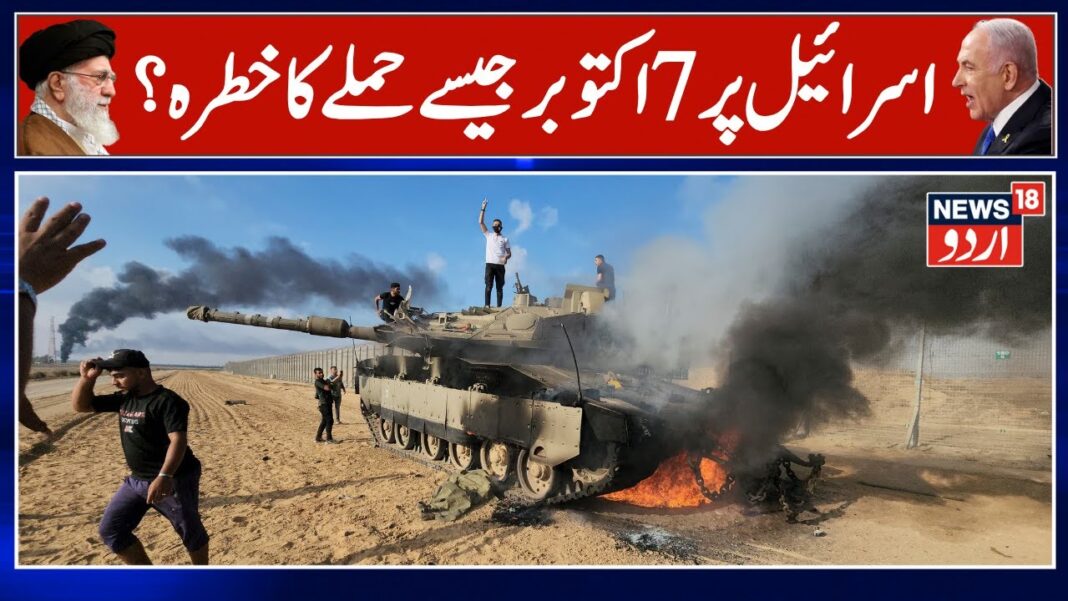
The Israel Defense Forces (IDF) and the Mossad have raised their alert levels amid growing intelligence warnings that Iranian-backed militias in Iraq are preparing coordinated attacks on Israel, both from the air and potentially by land. Sources in Israel’s Northern Command told Walla that Tehran has been pouring resources into pro-Iranian networks inside Iraq — effectively transforming the country into a strategic springboard for strikes on the Jewish state.
As The Jerusalem Post reported on Friday, these developments come amid renewed concerns over Iran’s deepening influence across the Middle East through its proxy network — a vast web that includes Hezbollah in Lebanon, the Houthis in Yemen, and a range of Shiite militias operating under the Popular Mobilization Forces (PMF) umbrella in Iraq. The emerging intelligence picture suggests that the Islamic Republic is methodically positioning these militias to execute attacks on Israel at a time of Tehran’s choosing, creating a new front that could stretch Israel’s defense capabilities to the limit.
According to the information provided in The Jerusalem Post report, the Islamic Revolutionary Guard Corps’ Quds Force (IRGC-QF), which oversees Iran’s overseas military operations, has intensified its activity in Iraq. Under the command of Esmail Qaani, who succeeded the late Qassem Soleimani after his assassination in 2020, the Quds Force has been quietly consolidating a network of armed groups capable of launching missiles and drones into Israeli territory.
Recent intelligence indicates that Qaani personally visited Iraq in recent weeks to coordinate with senior militia leaders. His trip, confirmed by regional sources cited by The Jerusalem Post, reportedly focused on integrating air capabilities and ground operations to establish a two-pronged attack framework against Israel.
“The Iranians are preparing the ground for a multifront confrontation,” a senior Israeli defense official told The Jerusalem Post. “They are building a launchpad in Iraq, just as they did in Yemen with the Houthis — using the same tactics of plausible deniability and operational layering to mask direct Iranian involvement.”
The primary threat, Israeli military analysts believe, would come in the form of missile and drone strikes launched from Iraqi territory, following patterns observed during the Israel-Hamas conflict in 2023–2024. These would target Israel’s central and northern population centers and military installations, testing the limits of Israel’s air defense systems, including the Iron Dome, David’s Sling, and Arrow batteries.
A secondary but highly alarming scenario, according to The Jerusalem Post report, involves a land-based maneuver originating in Iraq, passing through Syria, and potentially reaching the Israel-Jordan border. While such an operation would require unprecedented coordination among Iran’s regional proxies, Israeli intelligence agencies believe the IRGC-QF is already exploring logistical corridors to make it possible.
At the heart of this network lies Kataib Hezbollah, a powerful and ideologically hardline militia that has long served as one of Tehran’s most loyal instruments. As The Jerusalem Post report noted, Kataib Hezbollah is not only militarily capable but also deeply entrenched in Iraq’s political landscape, operating under the PMF’s formal umbrella while effectively answering to Iran’s Quds Force.
“Kataib Hezbollah is Iran’s most reliable extension in Iraq,” security analyst Yoav Limor told The Jerusalem Post. “It has the long-range weapons, the political protection, and the operational experience to threaten both Israel and U.S. forces in the region.”
The group reportedly possesses tens of thousands of fighters and an expanding arsenal of long-range drones and precision-guided missiles — weaponry that mirrors Iran’s own indigenous systems. In recent years, Kataib Hezbollah has targeted U.S. bases in Iraq and Syria, showcasing its reach and technological sophistication.
The militia also controls key smuggling routes running from western Iraq into eastern Syria — corridors that Israeli intelligence assesses are being used to move weapons, cash, and operatives into the Levant. As The Jerusalem Post report detailed, these routes have become critical arteries in the Iranian “land bridge” linking Tehran to Beirut via Baghdad and Damascus.
In response to the growing threat, the Israel Air Force (IAF) has intensified its operational activity targeting Iranian supply chains and militia infrastructure. During Operation Rising Lion, according to The Jerusalem Post report, Israeli fighter jets struck a series of logistical and weapons depots along the Iraq–Iran border. These facilities, funded and managed by Iranian operatives, served as key nodes in Tehran’s regional military network.
The strikes, conducted in coordination with Mossad intelligence, were designed not only to destroy infrastructure but to send a deterrent message to both Baghdad and Tehran: Israel will not tolerate the use of Iraqi soil for attacks on its territory.
Following these operations, Israel’s newly formed 96th “Gilad” Division, led by Brig.-Gen. Oren Simcha, began rehearsing defensive and counterattack scenarios along the Jordan Valley border. As The Jerusalem Post reported, the exercises simulated multi-front attacks involving rockets, drones, and infiltration attempts — precisely the kind of complex warfare Iran hopes to unleash through its proxies.
“This is about readiness for the next phase of conflict,” a senior IDF source told The Jerusalem Post. “We are preparing for an operational environment where attacks could come from Lebanon, Syria, Iraq, or even Yemen simultaneously.”
While Kataib Hezbollah remains the linchpin of Iran’s strategy in Iraq, other militias are also emerging as potential threats to Israel. Among them is Harakat al-Nujaba, a group that maintains especially close ties with Hezbollah in Lebanon and the Quds Force in Tehran. The militia has previously claimed responsibility for missile launches targeting Israel, and Israeli defense officials fear it could play a key role in coordinated operations alongside Lebanese Hezbollah.
According to the information contained in The Jerusalem Post report, Harakat al-Nujaba has adopted a hybrid model of warfare — combining traditional guerrilla tactics with advanced Iranian-supplied weaponry. The group’s growing cooperation with Hezbollah is seen as a dangerous convergence of Iran’s northern and eastern proxy networks.
The Iranians have already tested this strategy through small-scale attacks carried out by Iraqi militias using generic names to mask their identities. These “faceless” operations, similar to those conducted by the Houthis in Yemen, provide Tehran with deniability while allowing it to project power across multiple theaters.
In several cases, the IAF—reportedly with Mossad’s assistance—struck militia positions deep within Iraq, according to foreign sources cited by The Jerusalem Post. These strikes, though not officially confirmed, are believed to have successfully disrupted several planned operations.
Beyond military action, Israel has delivered a series of sharp diplomatic warnings to Baghdad through multiple channels. As The Jerusalem Post report confirmed, messages were conveyed via the United States and European intermediaries, urging the Iraqi government to curtail militia activity on its soil and to distance itself from Iranian command structures.
“Israel has made it clear that any attack from Iraqi territory—directly or indirectly—will be treated as an act of aggression by Iran,” a senior Israeli diplomatic official told The Jerusalem Post.
For its part, Iraq’s government has maintained public silence on the matter, likely reflecting the precarious balance it must strike between domestic Shiite factions loyal to Tehran and Western allies still stationed in the country.
The latest intelligence assessments, as detailed in the The Jerusalem Post report, point to a dangerous escalation cycle forming across the Middle East. Iran’s long-term strategy of building a “ring of fire” around Israel—stretching from Lebanon and Syria to Iraq and Yemen—is nearing operational maturity. Each of these fronts, while geographically distinct, now functions as part of a unified network capable of striking Israel from multiple directions.
In this volatile environment, Israel’s military and intelligence services face the immense challenge of preempting threats before they materialize. The joint efforts of the IDF and Mossad—backed by close coordination with U.S. intelligence—are now focused squarely on Iraq as the next potential launchpad of Iranian aggression.
As one senior Israeli security source told The Jerusalem Post, “The war in Gaza exposed how Iran’s proxies act in unison. Iraq is the next arena. What we are seeing now is Iran building the fuse that could ignite a regional explosion.”
For Israel, the message is clear: vigilance must be matched by deterrence. Whether through preemptive strikes, diplomatic pressure, or covert operations, Jerusalem intends to ensure that Tehran’s newest front never becomes an active battlefield.
