



|
Getting your Trinity Audio player ready...
|
By: David Avrushmi
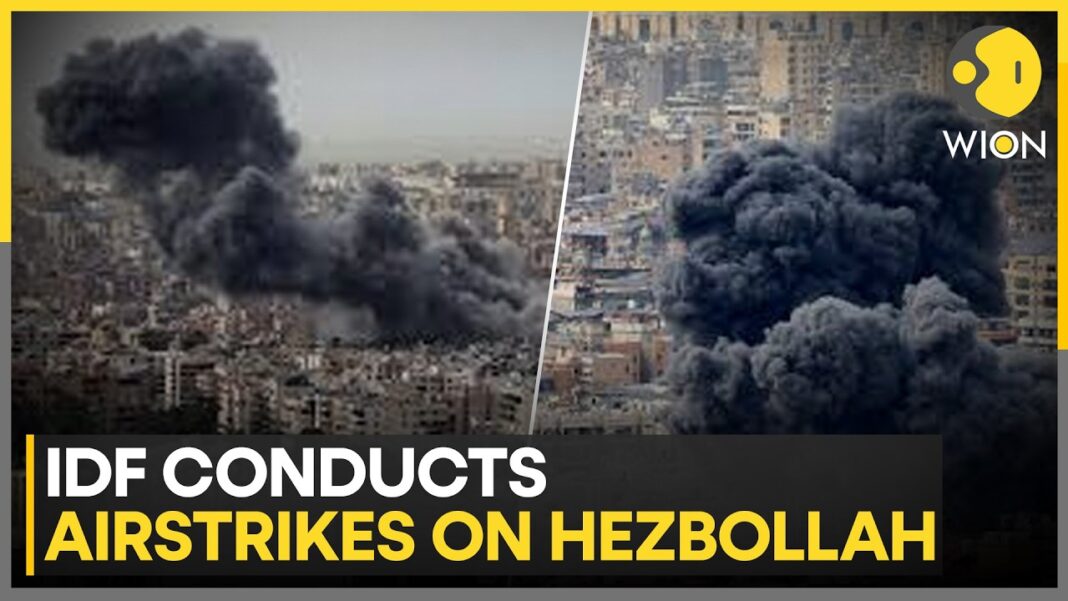
The Israel Defense Forces issued an urgent warning on Thursday instructing residents of several densely populated neighborhoods in Beirut’s southern suburbs—an area long regarded as a stronghold of the Iran-backed Hezbollah terrorist organization—to immediately evacuate their homes. The unprecedented alert, delivered directly to civilians through Arabic-language messaging channels and social media, underscored the rapidly intensifying confrontation between Israel and Hezbollah following the assassination of Iranian Supreme Leader Ali Khamenei in Tehran earlier this week.
According to a report cited on Thursday by The Jewish News Syndicate (JNS), the evacuation notice targeted four specific districts: Bourj el-Barajneh, Hadath, Haret Hreik and Shiyyah. These neighborhoods collectively house at least 75,000 registered residents, though local estimates suggest that the true number of people living in the area may be significantly higher. Informal settlements, refugee populations and unregistered residents have dramatically expanded the population of the southern suburbs in recent years, leading some Lebanese observers to estimate that as many as half a million people could potentially be affected by the warning.
The evacuation directive was issued by Col. Avichay Adraee of the Israeli military’s Spokesperson’s Unit, who heads the Arab Media Branch responsible for communications directed at Arabic-speaking audiences across the region. In a message posted on social media, Adraee urged civilians to immediately leave the targeted areas and prioritize their safety.
“Save your lives,” he wrote, emphasizing that the Israel Defense Forces would inform residents when conditions allowed them to safely return to their homes. Adraee also warned civilians against traveling southward from their locations, stressing that such movement could expose them to severe danger amid ongoing military operations.
As JNS reported, the Israeli military framed the warning as part of broader efforts to reduce civilian casualties while preparing for potential strikes against Hezbollah infrastructure embedded within densely populated urban environments. Israeli officials have repeatedly argued that Hezbollah deliberately positions weapons depots, missile launchers and command centers within civilian neighborhoods, thereby using the surrounding population as a form of human shield.
The warning to residents of Beirut’s southern suburbs came one day after the IDF issued a sweeping directive instructing all civilians in Southern Lebanon to relocate north of the Litani River. That order effectively covered a wide swath of territory historically dominated by Hezbollah’s military infrastructure and rocket-launching positions.
In the statement circulated Wednesday, Adraee stressed that the Israeli military’s actions were a response to Hezbollah’s ongoing attacks against Israeli territory.
“The activities of the Hezbollah terrorist organization are forcing the Israel Defense Forces to act against it with force,” the spokesperson wrote in the notice, which was shared widely across social media platforms. “The IDF does not intend to harm you.”
Adraee further cautioned Lebanese civilians that proximity to Hezbollah personnel, weapons storage facilities or combat equipment places them in direct jeopardy.
“Any home used by Hezbollah for military purposes may be subject to targeting,” he stated, according to the JNS report. “Any movement southward may endanger your life.”
The dramatic escalation in warnings and evacuation notices follows a surge in hostilities between Israel and Hezbollah triggered earlier this week by a high-profile Israeli strike in Tehran. In the opening moments of what Israeli officials have described as “Operation Roaring Lion,” Israeli forces reportedly targeted the compound of Iranian Supreme Leader Ali Khamenei, killing him in what analysts say may be one of the most consequential assassinations in the modern history of the Middle East.
As reported by JNS, Hezbollah began launching missiles toward northern Israel shortly after the news of Khamenei’s death emerged on Monday morning. The attacks were described by the Iranian-backed organization as retaliation for the killing of the longtime Iranian leader.
Since then, Hezbollah has continued to fire rockets and deploy explosive-laden drones toward Israeli territory. While the barrage has triggered multiple waves of air-raid sirens across northern Israel, the country’s sophisticated missile-defense systems—including the Iron Dome and David’s Sling—have intercepted many of the incoming projectiles. Civil defense shelters and emergency protocols have also helped prevent mass casualties, Israeli authorities say.
According to information cited by JNS, Thursday’s attacks caused widespread alarm but resulted in no major fatalities, highlighting the effectiveness of Israel’s layered defense network.
Still, Israeli officials have made clear that continued Hezbollah aggression will provoke a forceful military response. Analysts note that Hezbollah possesses an estimated arsenal of tens of thousands of rockets and missiles, many capable of reaching deep into Israeli territory. The group’s military capabilities—built up over decades with extensive Iranian funding, training and logistical support—have long been regarded by Israeli defense planners as one of the most significant strategic threats facing the Jewish state.
The situation is further complicated by the fragile ceasefire agreement brokered by the United States in late 2024 between Israel and Lebanon. The truce, which took effect on Nov. 27 of that year, was intended to reduce cross-border violence and establish mechanisms to gradually curb Hezbollah’s military presence in southern Lebanon.
Under the terms of the agreement, the Lebanese government pledged to move toward disarming Hezbollah and restoring full state authority over the country’s southern territories. However, implementation has been widely viewed as incomplete, with Hezbollah continuing to maintain significant military capabilities across Lebanon.
In a notable development on Thursday, Lebanon’s government announced a series of new measures aimed at limiting the influence of Iran’s Islamic Revolutionary Guard Corps within the country. According to reports cited by JNS, the Lebanese Cabinet ordered that all activities by the IRGC in Lebanon be halted immediately.
The decision represents one of the most explicit steps taken by Beirut in recent years to distance itself from Tehran’s military presence. The Iranian Revolutionary Guard has played a pivotal role in building and sustaining Hezbollah’s military infrastructure since the organization’s founding in the early 1980s.
Lebanese Information Minister Paul Morcos confirmed that IRGC operatives operating within Lebanon would be subject to detention under the new policy. Reuters reported that Morcos described the measure as part of a broader effort by the Lebanese government to assert sovereignty and reduce the country’s vulnerability to regional conflict.
Additional steps were also announced. According to the Saudi-based Al Arabiya network, Lebanon’s Cabinet decided to end visa-free entry for Iranian nationals traveling to Lebanon. The move appears intended to limit the ability of Iranian operatives to enter the country without scrutiny.
The government also reiterated its commitment to implementing an earlier decision to disarm Hezbollah, though observers remain skeptical about the feasibility of such a measure given the group’s entrenched political and military influence within Lebanese society.
As the JNS report noted, Hezbollah has long operated as both a powerful armed militia and a major political force within Lebanon, holding seats in parliament and exercising substantial control over key government ministries. Efforts to dismantle its military capabilities have repeatedly faltered amid concerns that doing so could trigger internal instability or even civil conflict.
Meanwhile, the evacuation warnings issued by the IDF have heightened anxiety among civilians living in Beirut’s southern suburbs, where Hezbollah maintains its primary command centers, media operations and weapons depots. The neighborhoods targeted by Thursday’s alert—including Haret Hreik and Bourj el-Barajneh—have historically served as core hubs for the organization’s leadership and logistical networks.
Residents in those areas have faced similar warnings in previous conflicts between Israel and Hezbollah, though the scale and urgency of the latest directive suggest that Israeli military planners may be preparing for a significant escalation.
Regional analysts told JNS that Israel’s strategy appears aimed at degrading Hezbollah’s operational capacity while simultaneously attempting to minimize civilian casualties through advance warnings. Such warnings have become a hallmark of Israeli military doctrine, particularly in densely populated urban theaters where militant groups embed themselves within civilian infrastructure.
Nevertheless, the potential humanitarian consequences of mass evacuations remain significant. The southern suburbs of Beirut are among the most crowded areas in Lebanon, already strained by years of economic crisis, political instability and the presence of large refugee populations from neighboring Syria.
If hundreds of thousands of residents are forced to flee their homes simultaneously, humanitarian organizations warn that Lebanon’s already fragile infrastructure could struggle to cope with the influx of displaced people.
As the crisis unfolds, international observers are closely monitoring whether the confrontation between Israel and Hezbollah could spiral into a broader regional war. The killing of Iran’s supreme leader has already sent shockwaves across the Middle East, raising the specter of retaliatory actions by Tehran’s network of allied militias throughout the region.
For now, Israeli officials continue to emphasize that their military actions are directed at Hezbollah’s capabilities rather than Lebanon’s civilian population. In communications cited by JNS, Israeli spokespeople have stressed that the evacuation warnings are intended to prevent civilian casualties as the IDF prepares to confront what it describes as an entrenched terrorist threat operating within residential areas.
Whether those warnings will avert further bloodshed remains uncertain. But with rockets continuing to fly across the Israel–Lebanon border and tensions mounting throughout the region, the latest developments suggest that the fragile calm that once prevailed along the frontier may be rapidly giving way to a far more dangerous phase of the conflict.
