



|
Getting your Trinity Audio player ready...
|
IDF Intensifies Campaign Against Iran & Hezbollah as Precision Strike in Beirut Targets Quds Force Commanders
By: Fern Sidman
In a dramatic escalation of Israel’s expanding regional campaign against Iranian military infrastructure and its proxy forces, the Israel Defense Forces carried out a precise strike early Sunday morning against senior commanders of the Islamic Revolutionary Guard Corps’ Quds Force operating in Lebanon. The operation, which targeted a room inside a hotel in central Beirut, represents the latest development in what Israeli officials describe as an ongoing effort to dismantle Iran’s regional terror network and neutralize threats to the Jewish state.
According to statements from the Israeli military reported by Israel National News, the operation targeted key operatives belonging to the Quds Force’s Lebanon Corps, a specialized branch responsible for coordinating Iranian military activity and proxy operations within Lebanon. The strike occurred at the Ramada Hotel in the Raouche district of Beirut, an area not typically associated with active military operations, underscoring what Israeli officials say is Iran’s deliberate strategy of embedding its operatives within civilian environments.
The Israeli military described the strike as a highly targeted operation designed to eliminate individuals responsible for advancing attacks against Israel and its civilian population. According to the IDF Spokesperson’s Unit, the commanders of the Quds Force’s Lebanon Corps served as a critical operational bridge between Iran’s Islamic Revolutionary Guard Corps and Hezbollah, the powerful Lebanese militant organization that has long functioned as Tehran’s most formidable proxy in the region.
Reporting by Israel National News indicates that the Quds Force’s Lebanon Corps plays a pivotal role in facilitating Hezbollah’s military development. The organization not only assists in the group’s force-building efforts but also acts as a strategic liaison connecting Hezbollah’s leadership with senior Iranian commanders. Through this relationship, Iran has been able to project influence throughout Lebanon while maintaining plausible deniability regarding its direct involvement in military operations.
The Israeli military asserted that the targeted commanders were engaged in planning and advancing terrorist attacks against Israeli civilians. Officials emphasized that the strike was conducted only after extensive intelligence gathering and surveillance, and that precautions were taken to minimize civilian casualties.
“The Iranian terror regime operates systemically in the heart of the civilian population in Iran and Lebanon, cynically exploiting the civilian population as human shields to advance terror attacks,” the IDF said in a statement quoted by Israel National News. “The IDF will not allow the Iranian terror regime elements to establish themselves in Lebanon and will continue to precisely eliminate the commanders of the Iranian terror regime wherever they operate.”
Local reports from Lebanon indicated that four people were killed in the strike and at least ten others were wounded. While the identities of the casualties have not yet been fully confirmed, Lebanese sources suggested that the targeted individuals were associated with Iranian military networks operating inside the country.
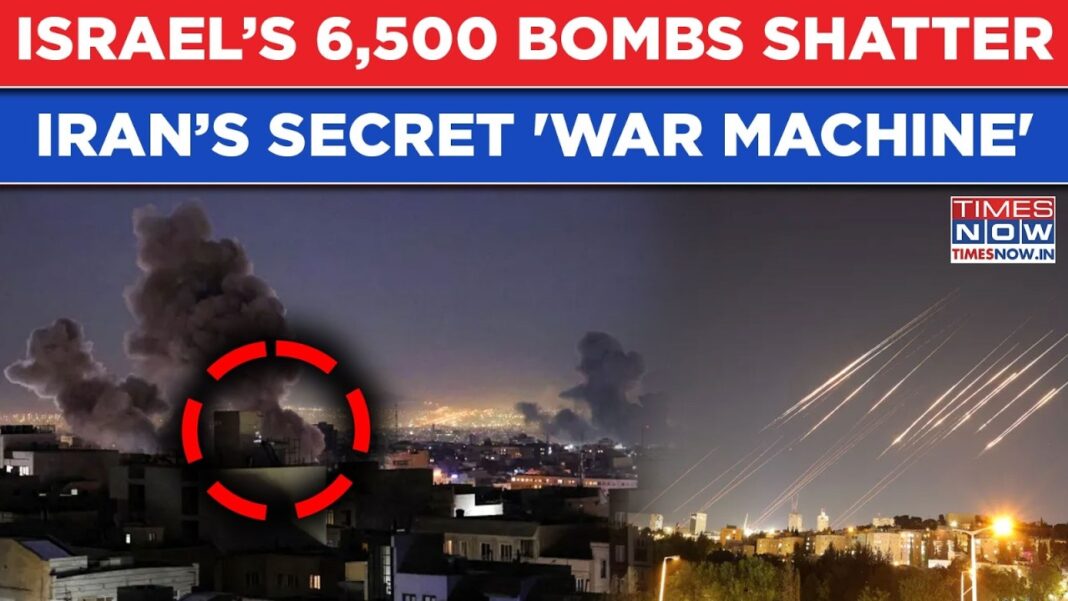
The Beirut strike occurred against the backdrop of Israel’s broader campaign against Iran, a multi-front military effort that has expanded dramatically in recent days. On Saturday evening, Israel launched a series of strikes against Iranian national oil infrastructure for the first time since the outbreak of the conflict.
According to the information provided in the Israel National News report, Israeli fighter jets targeted approximately 30 oil storage tanks across multiple sites, including facilities located in Kohak, Shahran, and Karaj. Iranian officials acknowledged the attacks, confirming that fuel depots had been struck during the operation.
The IDF confirmed that the Israeli Air Force conducted the strikes with the guidance of military intelligence, targeting facilities used by the Iranian regime to support military operations.
“The military forces of the Iranian terrorist regime make direct and frequent use of these fuel tanks to operate military infrastructure,” the IDF said in a statement. Officials noted that the storage facilities served as a central distribution point for fuel supplies destined for both civilian and military consumers across Iran.
Israeli military planners argued that targeting such infrastructure constitutes a significant step toward weakening the operational capacity of Iran’s armed forces. By disrupting fuel distribution networks, the strikes are intended to undermine the regime’s ability to sustain military operations, including the deployment of ballistic missile systems and other strategic assets.
Opposition leader Yair Lapid publicly endorsed the strikes, arguing that crippling Iran’s energy sector would deliver a decisive blow to the country’s economic stability. In remarks reported by Israel National News, Lapid stated that Israel should extend its campaign to include all of Iran’s oil infrastructure, particularly facilities located on Kharg Island, one of the country’s most important export terminals.
“This is what will crush Iran’s economy and bring down the regime,” Lapid said. He argued that the war must ultimately result in the collapse of Iran’s ruling system, the dismantling of its nuclear program, and the destruction of both its ballistic missile industry and Hezbollah’s military apparatus.
While Israeli forces have intensified offensive operations abroad, Iran has continued to retaliate with missile attacks targeting Israeli territory. On Saturday evening, sirens sounded across central Israel after Iranian forces launched a missile equipped with a cluster warhead toward the country.
According to the information contained in the Israel National News report, the missile was intercepted before reaching its intended target. Nevertheless, fragments from the interception fell in populated areas, prompting emergency responses from Israeli security forces.
Five individuals were treated for shock following the attack. In one particularly alarming incident, a piece of the intercepted missile penetrated the roof of a home in the city of Lod. Miraculously, no injuries were reported.
Northern Israel also came under heavy fire during the same period. Dozens of rockets were launched toward the city of Kiryat Shmona and surrounding communities. One person sustained light injuries in the village of Kfar Yuval.
Despite these attacks, Israeli officials say the Iranian missile arsenal has been significantly degraded since the launch of Operation Roaring Lion. According to assessments cited by Israel National News, Iran has lost approximately 70 percent of its missile-launching capabilities during the course of the campaign.
Israeli and American forces have reportedly destroyed around 150 launchers outright, while another 150 have been damaged or rendered temporarily inoperable. Prior to the start of the conflict, Iran was believed to possess approximately 420 operational launchers. Current estimates suggest that fewer than 100 remain active.
The Israeli Air Force has played a central role in achieving these results. Over the past week, hundreds of fighter jets have conducted sustained waves of strikes targeting Iranian military infrastructure.
One of the most significant operations involved more than 80 Israeli aircraft striking dozens of sites across Tehran and other areas of central Iran. Guided by intelligence from Israel’s military intelligence directorate, the aircraft targeted facilities associated with the Islamic Revolutionary Guard Corps.
Among the key targets was Imam Hossein University, the main military university operated by the IRGC. According to the IDF, the institution had been used not only for officer training but also as a staging ground for military operations during the ongoing conflict.
The Israeli military argued that the university constituted a legitimate military target under international law due to its use for operational planning and the storage of military assets. As reported by Israel National News, the facility contained numerous military installations and served as an assembly point for IRGC personnel.
Additional strikes targeted underground facilities used to store ballistic missiles and coordinate military operations. These sites included fortified bunkers and command centers believed to house senior Iranian officials involved in directing attacks against Israel.
Israeli aircraft also struck several launch sites located in western and central Iran. These attacks were aimed at further reducing Iran’s capacity to fire missiles toward Israeli territory.
IDF Spokesperson Brigadier General Effie Defrin provided a detailed update on the conflict during a briefing Saturday evening. According to remarks carried by Israel National News, Defrin said the military campaign had entered a critical stage.
“A week has passed since we launched Operation Roaring Lion,” he said. “The IDF is striking the Iranian regime with great force together with the US military. We are exacting a heavy price from the Hezbollah terrorist organization.”
Defrin noted that Israeli forces have recently evacuated sections of the Dahieh district in Beirut, a stronghold of Hezbollah, in preparation for additional operations.
“We are striking there with great force, hunting the Hezbollah terrorists there,” he said. “We will not compromise on disarming Hezbollah. The IDF will continue to advance in the stages of the operation, and we will not stop until the existential threat is removed.”
Another critical component of Israel’s campaign has been the systematic targeting of Iran’s weapons production infrastructure. According to Israel National News, Israeli forces recently struck two major ballistic missile production sites located in the areas of Parchin and Shahroud.
The Parchin complex has long been associated with Iran’s weapons development programs. During the strike, Israeli aircraft targeted facilities used to manufacture explosive materials for missile warheads, as well as plants producing specialized components for missile engines.
Additional targets included a missile engine mixing and casting facility and a research and development complex dedicated to advanced cruise missile technology.
A separate operation targeted the Shahroud site, located approximately 2,000 kilometers from Israel. The facility had been responsible for producing a significant portion of the missiles fired toward Israel in recent years.
According to the IDF, the strike severely damaged Iran’s ability to continue producing ballistic missiles at the site.
“The IDF will continue expanding strikes against the regime’s weapons production sites in order to cut off its ability to manufacture weapons and to thwart attempts to rebuild its infrastructure,” the military said in a statement cited by Israel National News.
As the conflict enters its second week, Israeli officials remain determined to dismantle Iran’s military capabilities and neutralize the network of proxy forces that Tehran has cultivated across the region.
For Israel’s leadership, the stakes could not be higher. The campaign represents not only a military confrontation with Iran but also a strategic effort to reshape the security landscape of the Middle East.
