



|
Getting your Trinity Audio player ready...
|
IDF Inquiry Exposes Hamas’ Hospital Spy Network: Nasser Clinic Camera Tracked Israeli Forces for Attack Plans
By: Fern Sidman
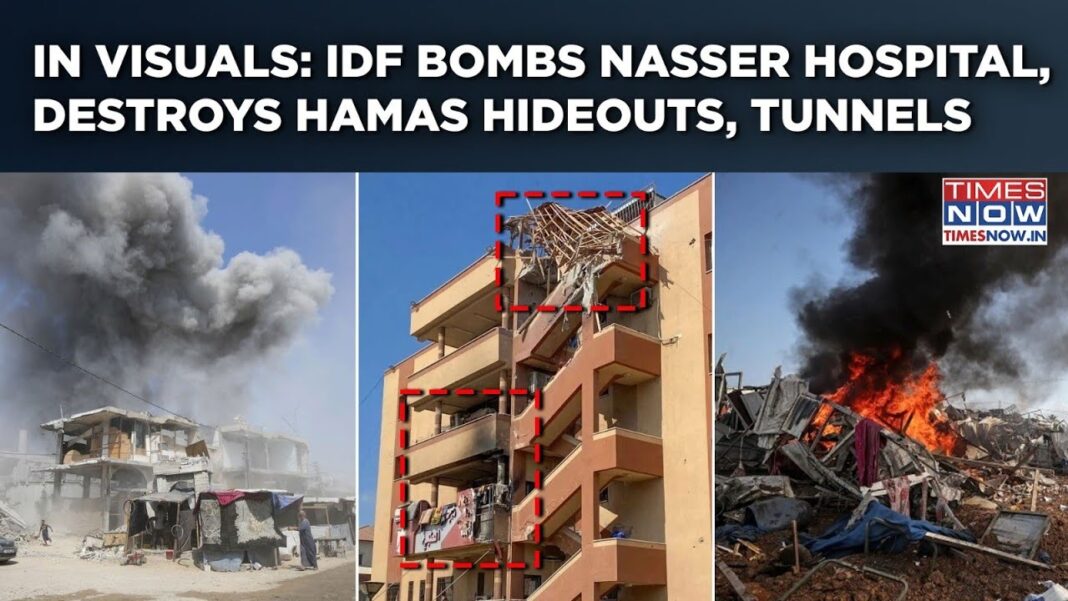
The Israel Defense Forces (IDF) has released the preliminary findings of its internal inquiry into the August 25th, 2025 strike on the Nasser Hospital in Khan Yunis, an incident that has drawn international scrutiny due to the civilian casualties reported alongside confirmed terrorist fatalities. The investigation, presented to IDF Chief of Staff Lt. Gen. Eyal Zamir by Southern Command Commander Maj. Gen. Yaniv Asor, sheds light on the chain of events leading to the strike and underscores the complex challenge of conducting military operations in an environment where terrorist groups deliberately exploit civilian infrastructure.
As Israel National News (INN) emphasized in its coverage on Tuesday, the inquiry illustrates the IDF’s persistent argument that Hamas systematically uses hospitals, schools, and other sensitive civilian sites as operational cover, thereby both violating international norms and increasing the likelihood of tragic civilian harm.
The Incident: August 25th, 2025
On the day of the strike, Golani Brigade troops were operating in the Khan Yunis sector as part of ongoing efforts to dismantle Hamas’ entrenched terrorist infrastructure. According to the IDF inquiry, soldiers identified a camera system positioned near the Nasser Hospital which intelligence assessed was being used by Hamas to monitor IDF troop movements.
As INN reported, the IDF determined that the surveillance device posed an imminent tactical threat, enabling Hamas to track Israeli soldiers’ maneuvers and facilitate ambushes or other attacks. Such assessments were based not only on the device itself but also on a well-documented pattern of Hamas’ use of hospitals for military purposes throughout the war.
In response, the IDF authorized a strike to dismantle the camera. The inquiry confirmed that the specific operational objective was the neutralization of this surveillance capability, which posed direct risks to Israeli soldiers in the area.
Findings of the Initial Inquiry
The IDF inquiry concluded the following:
Operational Objective: The strike was directed against the Hamas-operated surveillance camera. The camera was assessed as part of an operational infrastructure used to facilitate attacks on IDF forces.
Casualties: Lt. Gen. Zamir was informed that six of those killed were verified Hamas operatives, one of whom had participated in the October 7th infiltration into Israel that triggered the war. The IDF, however, acknowledged the likelihood that civilians were also harmed in the strike.
Decision-Making Process: The preliminary review found that soldiers acted in accordance with existing intelligence assessments of Hamas’ use of the hospital. However, further investigation has been ordered into two specific areas:
The authorization process prior to the strike, particularly regarding the type of ammunition selected and the timing of the authorization.
The field-level decision-making during the engagement, to evaluate whether operational discretion was exercised correctly.
Chief of Staff’s Directive: Lt. Gen. Zamir emphasized that the inquiry must continue until a full accounting of the authorization and execution process is completed, reaffirming the IDF’s principle that only military objectives are targeted.
The Use of Hospitals by Hamas
The IDF inquiry situates the Nasser Hospital incident within a broader operational reality: Hamas’ repeated exploitation of medical facilities for military purposes.
As the INN report repeatedly highlighted, this tactic is neither new nor isolated. Since the onset of the war following Hamas’ October 7th massacre, the IDF has documented and publicized numerous cases where hospitals, including Nasser, Shifa, and others, were used to store weapons, host command centers, or conceal tunnel access points.
Lt. Gen. Zamir, in his remarks, stressed that Hamas’ “extensive use of covert visual-intelligence gathering while exploiting sensitive civilian sites” presents one of the most significant challenges of the war. By embedding surveillance and command infrastructure within hospitals, Hamas seeks to deter Israeli strikes and simultaneously weaponize civilian casualties for propaganda purposes.
Balancing Military Necessity and Civilian Protection
The IDF’s release of the inquiry findings reflects its dual emphasis on military necessity and civilian protection. While affirming that six terrorists were eliminated—including a direct participant in the October 7th massacre—the IDF also expressed regret for any uninvolved civilian deaths.
Lt. Gen. Zamir reiterated the IDF’s guiding principle: “The IDF targets only military objectives in its operations.” He emphasized that regret for civilian harm does not diminish the necessity of protecting IDF forces from active threats but does require thorough internal review to ensure that targeting processes remain compliant with international law and ethical obligations.
This careful balance, as the INN report observed, reflects Israel’s determination to preserve the integrity of its moral and legal framework even under the most challenging combat conditions.
The Inquiry’s Broader Context
The timing and detail of this inquiry highlight several broader themes:
Transparency and Accountability: By releasing initial findings within 24 hours of presenting them to the Chief of Staff, the IDF demonstrates a commitment to transparency at a time when international critics often accuse it of opacity.
Operational Challenges in Khan Yunis: Khan Yunis remains one of Hamas’ strongholds in Gaza, characterized by a dense urban environment and extensive tunnel networks. According to INN, the presence of operational threats embedded within hospitals and civilian areas severely complicates IDF maneuvers.
Continuity of Hamas Tactics: The documented use of Nasser Hospital in this case aligns with past intelligence, reinforcing that Hamas’ weaponization of civilian sites is a systemic strategy, not an aberration.
Global Scrutiny: With civilian casualties and journalist deaths previously reported in Khan Yunis, the IDF’s handling of this inquiry will be closely monitored by international media and watchdogs. As the INN report noted, Israel’s adversaries often exploit such incidents to fuel accusations of war crimes, making factual and transparent investigations essential for countering misinformation.
Implications Moving Forward
The continuation of the inquiry will focus on operational lessons and potential adjustments to targeting protocols. Among the key issues under examination are:
Authorization Protocols: Determining whether higher-level authorization procedures adequately accounted for the risk of collateral damage.
Ammunition Selection: Evaluating whether alternative munitions could have neutralized the surveillance camera with reduced risk to surrounding civilians.
Real-Time Field Judgment: Assessing the extent to which on-the-ground commanders exercised discretion in balancing the urgency of neutralizing the threat against the risk to nearby non-combatants.
As the report at INN observed, such self-examination reflects the IDF’s ongoing commitment to refining its operational ethics, even in the face of an adversary that deliberately violates the laws of armed conflict.
The IDF’s initial inquiry into the Nasser Hospital strike in Khan Yunis illustrates the complex interplay between operational necessity and humanitarian considerations in Israel’s war against Hamas. The findings confirm that the strike targeted a Hamas surveillance installation and eliminated six terrorists, including one with direct involvement in the October 7th atrocities. Yet the IDF simultaneously acknowledged civilian casualties and pledged further investigation into both the authorization process and tactical execution.
The inquiry reflects the IDF’s broader struggle against an enemy that embeds itself within civilian infrastructure, exploiting hospitals, schools, and homes as shields. In such circumstances, the IDF insists on adhering to principles of proportionality, accountability, and operational transparency—values that Hamas systematically disregards.
The outcome of the continued inquiry may shape not only operational lessons for the IDF but also Israel’s ability to withstand international scrutiny, demonstrating that even amid a brutal war, it remains committed to targeting terrorists—not civilians.

This is exactly the kind of information I was waiting for and expecting. These alleged “journalists” were in fact Hamas terrorist operatives, which is why any apologies were very premature and wrong. Not only were they not by any stretch “civilians”, they all should have been eliminated. I do not believe there should be any “regret“ communicated. Beyond that, I do not personally consider any Gazans to be “civilians”, and although at that moment others in the area were not actively engaged in “combat”, they are ALL enemy combatants.
I also do not consider them “civilian shields” who are entitled to any protection. Particularly, since they are all collaborators in the results of October 7, they deserve no sympathy at all, and the media should cynically stop crying “crocodile tears”. All of the media should abandon the fraudulent propaganda term “civilians”.
Don’t be surprised if the ‘civilians’ in that hospital wanted to protect the Hamas terrorists from the IDF. Remember most of the attackers on October 7th were ‘civilians.’ Hope the IDF makes more mistakes like that. They are all evil.
This will go on and on until the Messiah comes or returns.