



|
Getting your Trinity Audio player ready...
|
By: Tzirel Rosenblatt
In one of the most consequential phases of Israel’s ongoing campaign against Iranian-backed terrorist forces in Lebanon, Israeli military officials announced that more than 380 Hezbollah operatives and allied terrorist figures have been eliminated since the launch of Operation Roaring Lion on Feb. 28. The sweeping offensive, conducted through coordinated strikes by air, sea, and land forces, represents one of the most aggressive Israeli efforts in recent years to dismantle Hezbollah’s operational infrastructure and leadership network.
According to a report published by The Jewish News Syndicate, the Israel Defense Forces (IDF) confirmed Saturday that the casualties include senior commanders from Hezbollah itself as well as key figures affiliated with Iran’s Islamic Revolutionary Guard Corps (IRGC), the Imam Hossein Division, and Palestinian Islamic Jihad.
Military officials emphasized that the targeted strikes have dealt a significant blow to Hezbollah’s chain of command and its ability to conduct coordinated attacks against Israeli territory.
“The eliminations and strikes in Lebanon significantly degrade the command-and-control and firepower abilities of the Hezbollah terrorist organization,” the IDF said in a statement cited by the Jewish News Syndicate. “They minimize the threats to the State of Israel and its civilians.”
The Israeli military has focused heavily on dismantling Hezbollah’s leadership hierarchy, a strategy that analysts say aims to disrupt the organization’s operational coherence while undermining morale among its fighters.
Among those killed in the strikes were several high-ranking commanders whose roles placed them at the center of Hezbollah’s military operations.
According to details reported by the Jewish News Syndicate, the most prominent figures eliminated include Zid Ali Jomaa, who was responsible for overseeing Hezbollah’s rocket and missile deployment strategies, Ali Reza Bi-Azhar, a senior intelligence officer coordinating Iranian activities within Lebanon, Ahmad Rasouli, who oversaw intelligence coordination between Iranian forces and Palestinian terrorist factions and Ali Maglas Tabaja, a key figure in the Iranian-backed militia network operating in the region.
In total, the IDF reported that the offensive eliminated seven Hezbollah commanders, five senior officers from the Quds Force’s Lebanon Corps, three commanders from the Imam Hossein Division, and one leader from Palestinian Islamic Jihad.
The Jewish News Syndicate report noted that the Israeli military did not provide a complete figure for the number of Iranian representatives killed in the strikes, though officials indicated that multiple senior figures connected to Tehran’s regional command structure were among the casualties.
Operation Roaring Lion has unfolded through a complex series of operations involving Israel’s air force, naval forces, and ground units.
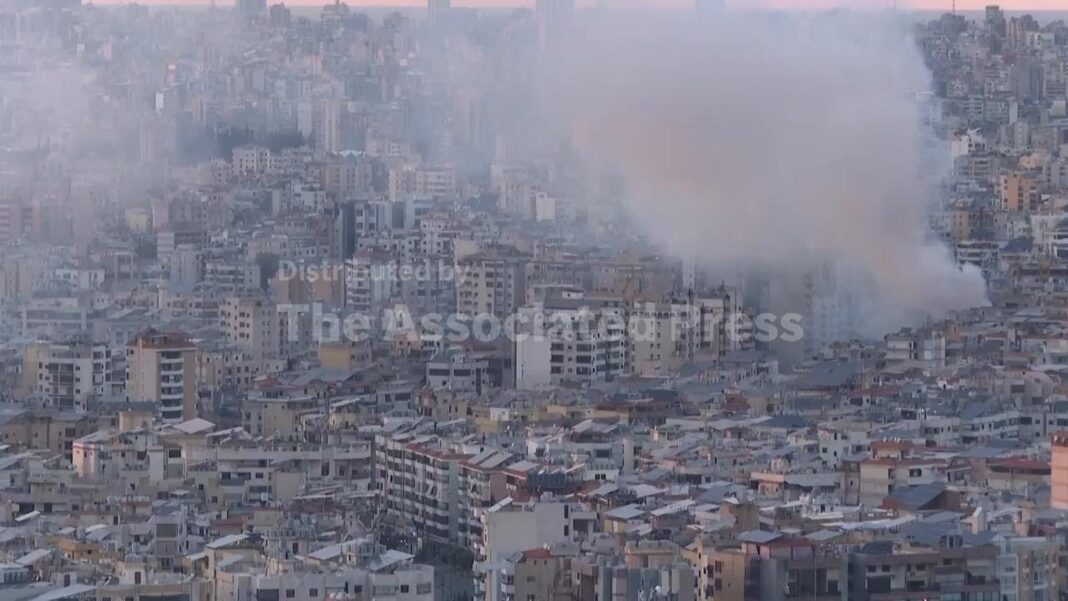
According to the Jewish News Syndicate report, the IDF conducted hundreds of coordinated strikes targeting Hezbollah infrastructure throughout Lebanon, particularly in Beirut and southern Lebanon, areas long regarded as strongholds of the Shi’ite militant group.
Military officials reported that since the campaign began more than 1,100 terrorist sites have been struck, approximately 190 targets associated with Hezbollah’s Radwan Force—the group’s elite commando unit—have been destroyed, over 200 missile launchers and weapons systems have been eliminated and around 110 Hezbollah command centers have been targeted.
These operations are designed to weaken Hezbollah’s capacity to launch rocket attacks into northern Israel while also degrading its ability to coordinate battlefield operations.
The Jewish News Syndicate reported that Israeli intelligence played a crucial role in identifying the locations of commanders and infrastructure, enabling the precision strikes that have characterized the campaign.
Particular attention has been paid to the Radwan Force, Hezbollah’s highly trained special operations unit responsible for infiltration missions into Israeli territory. Israeli officials view the Radwan Force as one of the organization’s most dangerous components due to its advanced training and its proximity to Israel’s northern border. By targeting Radwan positions, the IDF hopes to reduce the likelihood of cross-border raids and sabotage operations.
Military analysts quoted by the Jewish News Syndicate suggest that the destruction of nearly 200 Radwan-related targets represents a significant setback for Hezbollah’s operational planning.
Despite the heavy losses inflicted by Israeli strikes, Hezbollah’s leadership has signaled that the organization intends to continue fighting.
In a televised address, Naim Qassem warned that the conflict could evolve into a prolonged confrontation. “We have prepared ourselves for a long confrontation,” Qassem said, according to comments reported by the Jewish News Syndicate and other international media outlets. “And God willing, they will be surprised on the battlefield.” Qassem assumed leadership of Hezbollah following the death of longtime leader Hassan Nasrallah, who was killed in October 2024.
His speech sought to project resilience despite the significant casualties among Hezbollah’s command structure. “The enemy’s threats do not frighten us,” Qassem said. “This is an existential battle.”
During his address, Qassem outlined several conditions under which Hezbollah might consider a ceasefire. According to coverage cited by the Jewish News Syndicate, those conditions include a complete halt to Israeli military operations in Lebanon, a full withdrawal of Israeli forces from Lebanese territory, the release of Hezbollah detainees, the return of displaced residents to southern Lebanon and reconstruction of damaged areas.
However, Israeli officials have given no indication that such conditions would be accepted. Instead, Israeli leaders have emphasized that military operations will continue until Hezbollah’s ability to threaten Israeli civilians is substantially reduced.
One of the most closely watched aspects of the conflict has been Hezbollah’s relationship with Iran. Qassem claimed in his speech that Hezbollah’s decision to join the war was made independently rather than under Iranian orders. Yet many analysts remain skeptical of that assertion.
The Jewish News Syndicate report noted that Hezbollah has long functioned as one of Iran’s most powerful regional proxies, receiving financial support, weapons, and training from the IRGC. Qassem himself acknowledged the close coordination between Hezbollah and Iranian forces. “When the action is carried out jointly by both sides, Hezbollah and Iran, we will be able to weaken the enemy and bring him to a better agreement,” he said.
The escalation between Israel and Hezbollah carries profound implications for the broader Middle East. Hezbollah possesses one of the largest missile arsenals among non-state actors in the world, with tens of thousands of rockets capable of striking Israeli cities. For Israel, dismantling that arsenal is viewed as a national security imperative. Israeli leaders see Operation Roaring Lion as part of a wider effort to confront Iranian influence across the region.
By targeting Iranian commanders operating in Lebanon, the IDF is also signaling its willingness to challenge Tehran’s regional network of militant groups.
As the conflict intensifies, both sides appear bracing for a prolonged struggle. Israeli officials insist that the elimination of Hezbollah commanders and infrastructure will continue until the threat to Israeli civilians is substantially reduced. Hezbollah, meanwhile, continues to frame the confrontation as an existential battle.
For residents of northern Israel and southern Lebanon, the stakes could hardly be higher. According to ongoing reporting from the Jewish News Syndicate, military operations are expected to continue in the coming weeks as Israeli forces pursue additional targets tied to Hezbollah’s command structure and weapons network.
Whether those efforts ultimately force Hezbollah to retreat—or trigger a broader regional escalation—remains one of the defining questions of the current Middle Eastern conflict.
What is clear, however, is that Operation Roaring Lion has already delivered one of the most significant blows to Hezbollah’s leadership in years, reshaping the battlefield and sending a powerful message about Israel’s determination to confront the threats along its northern border.
