



|
Getting your Trinity Audio player ready...
|
By: Fern Sidman
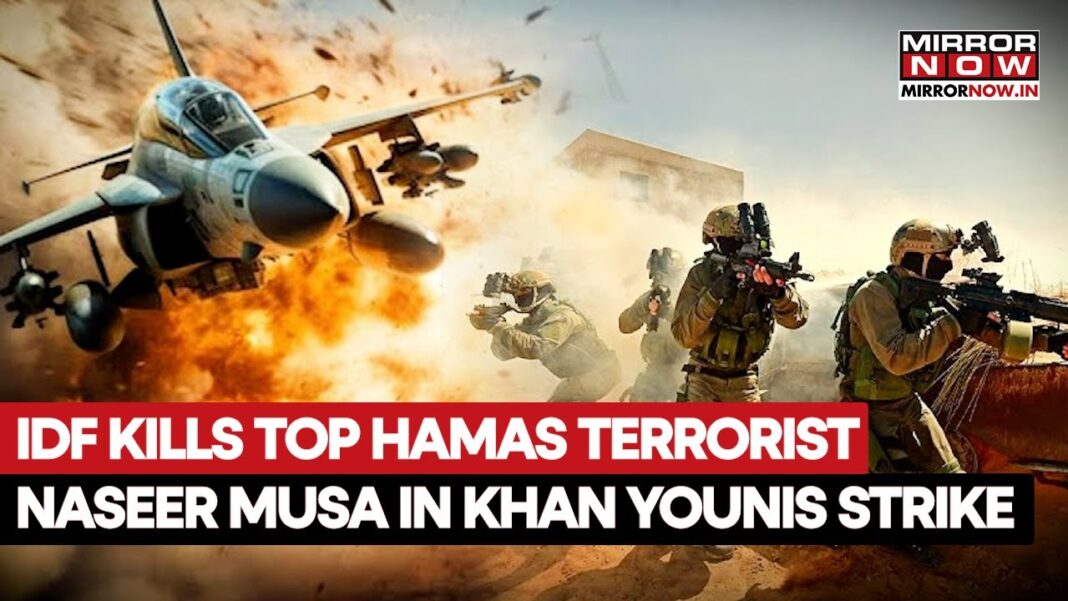
On August 9, 2025, the Israel Defense Forces (IDF), operating under the direction of the Israel Security Agency (ISA), carried out a precision strike in the Khan Yunis area that eliminated Nasser Musa, a senior Hamas operative who served as Head of Hamas’ Military Control Department within the group’s Rafah Brigade, Israel National News (INN) reported on Friday.
According to IDF and ISA intelligence cited in the INN report, Musa’s position placed him at the center of Hamas’ military readiness efforts in Rafah. His responsibilities included overseeing the operational preparedness and combat exercises of the Rafah Brigade — the very units that have coordinated and executed attacks against both IDF personnel and Israeli civilians during the ongoing war. Military officials noted that Musa’s role was critical in ensuring that Rafah-based terrorist cells remained combat-ready and capable of launching assaults on Israeli territory.
The INN report detailed that Musa was not only a senior commander but also a close associate of Mohammad Sabaneh, the Rafah Brigade commander who was killed in an IDF operation in May 2025. Sabaneh’s death was a significant blow to Hamas’ command hierarchy in Rafah, and Musa’s elimination further erodes the operational leadership of the brigade.
Over the course of his career within Hamas, Musa occupied a range of strategic positions in the Rafah Brigade, including assignments in military intelligence and the observation array. These roles placed him in control of both the information-gathering apparatus and the surveillance systems that enabled Hamas to monitor IDF movements and plan coordinated attacks.
By removing Musa from the battlefield, the IDF has disrupted a key node in Hamas’ operational network, limiting the Rafah Brigade’s ability to coordinate with other Hamas units across Gaza and to prepare its forces for further aggression.
Military sources quoted by INN emphasized that Musa’s elimination will have an immediate and tangible effect on the Rafah Brigade’s operational capabilities. The brigade has played a pivotal role in southern Gaza’s resistance operations, both in launching rocket fire at Israel and in planning ambushes against advancing IDF troops.
As Head of the Military Control Department, Musa oversaw training regimens, tactical drills, and coordination between various combat units. His absence is expected to reduce Hamas’ ability to maintain a consistent state of readiness and to implement complex military maneuvers in Rafah and beyond.
The strike on Musa was part of a broader, ongoing campaign targeting Hamas and other terrorist organizations across the Gaza Strip. As INN reported, on Thursday the IDF also struck a structure in Khan Yunis used by terrorists to store rockets intended for launch against the State of Israel and IDF forces. Intelligence provided jointly by the IDF and ISA guided this operation, which aimed to preempt rocket attacks by destroying weapons before they could be deployed.
IDF troops remain engaged in active operations in Khan Yunis, where they have located and dismantled multiple terrorist structures. These facilities often serve as weapons storage depots, command centers, or fortified positions from which militants can engage Israeli troops. In addition to demolishing infrastructure, IDF forces in the area have eliminated terrorist cells, neutralizing immediate threats to both military and civilian targets.
While Khan Yunis remains a focal point of IDF operations, the INN report noted that significant military actions are also underway in both southern and northern Gaza. In the south, IDF troops have dismantled dozens of military infrastructure sites and carried out precision strikes from the air to eliminate enemy combatants. These air operations are aimed at both fixed positions and mobile terrorist units attempting to regroup after earlier losses.
In the northern Gaza Strip, IDF troops continue defensive operations to protect Israeli communities adjacent to the border. These areas have faced persistent threats from tunnel shafts, which terrorists have used to infiltrate Israeli territory or launch surprise attacks. The IDF has destroyed numerous tunnel entrances, denying Hamas and other groups the ability to exploit these underground networks.
Khan Yunis and Rafah have long been considered strongholds of Hamas activity in southern Gaza. Rafah, in particular, has been a central hub for the movement of weapons, fighters, and funds due to its proximity to the Egyptian border. The Rafah Brigade operates as a semi-autonomous military formation within Hamas’ armed wing, the Izz ad-Din al-Qassam Brigades, with its own command structure, intelligence units, and logistical networks.
According to the information provided in the INN report, dismantling the leadership and infrastructure of the Rafah Brigade is viewed by Israeli defense officials as critical to reducing Hamas’ overall operational capacity. The loss of senior commanders like Musa not only disrupts immediate combat operations but also undermines long-term strategic planning within the brigade.
The elimination of Nasser Musa reflects the increasingly integrated approach between the IDF and the ISA in conducting targeted strikes. Intelligence from the ISA — often gathered through surveillance, informants, and signal interception — has been instrumental in identifying high-value targets and planning precision operations. The IDF then leverages this intelligence to execute strikes that minimize collateral damage while maximizing operational impact.
By combining intelligence and operational assets, Israel has been able to systematically dismantle Hamas’ command-and-control network. This strategy is designed to create cascading effects: removing key leaders, disrupting coordination, and forcing Hamas units into reactive rather than proactive positions.
Musa’s death compounds a series of losses for Hamas’ military leadership in recent months. The group has seen multiple senior operatives killed, including brigade commanders, intelligence chiefs, and specialist operatives responsible for rocket production and tunnel engineering.
The Rafah Brigade, already weakened by the death of Sabaneh in May, now faces an even greater leadership vacuum. This loss will likely slow the brigade’s ability to reorganize, rearm, and mount complex attacks, particularly at a time when the IDF continues to exert sustained military pressure across multiple fronts.
Despite these successes, Israeli defense officials caution that Hamas retains significant capabilities and remains determined to continue its campaign against Israel. The destruction of rocket storage sites and the elimination of commanders, while essential, must be paired with ongoing vigilance to prevent the group from regenerating its assets.
The IDF’s ongoing operations in Khan Yunis, Rafah, and northern Gaza are therefore not only punitive strikes but also preventive measures aimed at keeping the threat level manageable. This multi-pronged campaign — targeting leadership, infrastructure, and active combatants — reflects Israel’s strategic doctrine of continuous pressure to deny the enemy freedom of action.
The elimination of Nasser Musa marks another significant milestone in the IDF’s campaign to degrade Hamas’ military capabilities in southern Gaza. As Israel National News has reported, the precision strike that removed him from the battlefield deprives the Rafah Brigade of an experienced strategist, disrupts operational coordination, and further erodes the morale of Hamas fighters in the region.
Coupled with the destruction of weapons storage facilities, the dismantling of terrorist infrastructure, and the neutralization of active cells, these actions form part of a sustained and deliberate strategy to protect Israeli civilians and soldiers alike.
While the broader conflict continues to evolve, operations like the August 9 strike demonstrate the IDF’s ability to identify, target, and eliminate high-value threats with surgical precision — a capability that remains central to Israel’s defense posture against Hamas and other terrorist organizations entrenched in the Gaza Strip.
