



|
Getting your Trinity Audio player ready...
|
By: Fern Sidman – Jewish Voice News
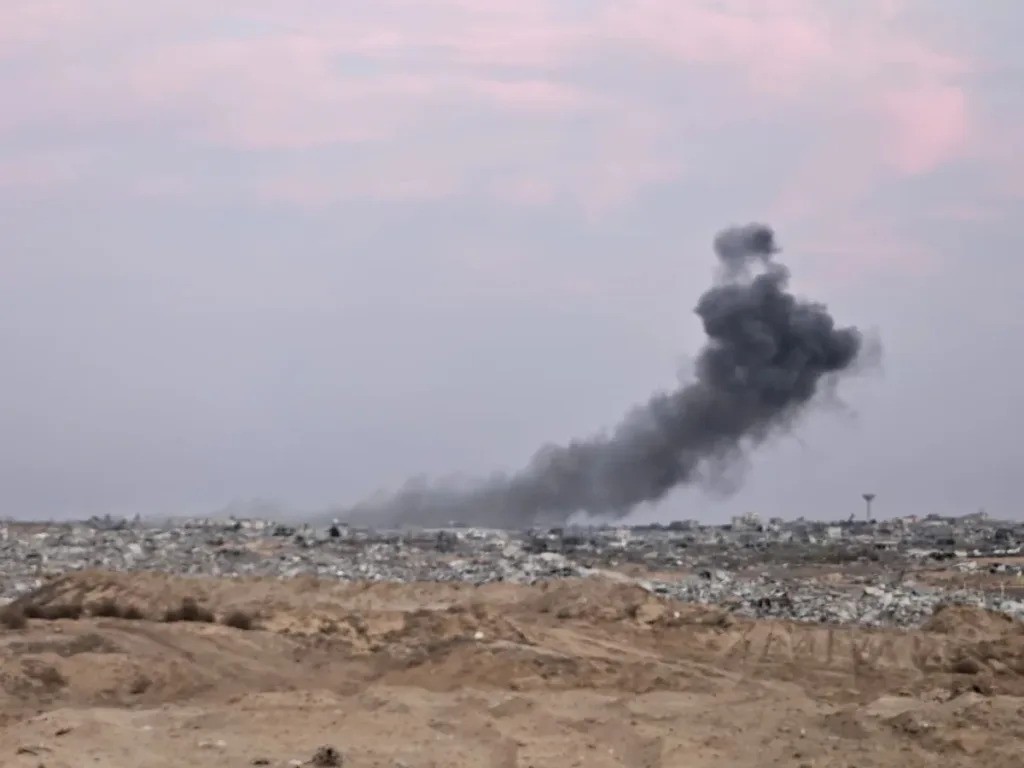
In a significant escalation following a ceasefire breach in the southern Gaza Strip, Israeli security forces on Saturday conducted a precision airstrike that killed Alaa Hadidi, the chief of supply in Hamas’s weapons manufacturing headquarters. The operation, confirmed jointly by the Israel Defense Forces (IDF) and the Shin Bet security agency, targeted what officials described as a pivotal figure in the terrorist organization’s wartime logistical infrastructure. According to a report on Saturday in The Times of Israel, the strike was executed only after Israel notified the U.S.-led oversight mechanism that supervises military activity during the ceasefire period, underscoring Israel’s insistence on transparency even as it responds to direct attacks on its troops.
The IDF and Shin Bet confirm killing Alaa Hadidi, chief of supply in Hamas’s weapons manufacturing headquarters, in an airstrike in Gaza City yesterday.
The strike came in response to an attack by a Palestinian gunman on troops in the southern Gaza Strip.
The military says… pic.twitter.com/dM4tzPcktG
— Emanuel (Mannie) Fabian (@manniefabian) November 23, 2025
Hadidi’s role within Hamas’s weapons production apparatus was extensive, technical, and operationally indispensable. Israeli defense officials, speaking to The Times of Israel, described him as a “central source of knowledge” in the fields of supply chain management, materials procurement, and improvised weapons production. Throughout the current conflict, they noted, Hadidi had worked tirelessly to maintain the flow of armaments to Hamas’s dispersed fighters, ensuring that terrorist squads in Gaza had access to explosives, anti-tank weaponry, and the raw materials required for rocket assembly.
“He was not merely another operative,” one senior defense source told The Times of Israel. “He was a crucial node in the network that keeps Hamas’s war machine functioning.” The elimination of such an individual, the official added, represents a blow not only to Hamas’s immediate operational capacity but to its institutional knowledge—and thus its long-term ability to reconstitute its manufacturing capabilities.
The strike comes in direct response to what Israeli authorities are calling a blatant violation of the ceasefire agreement: earlier in the day, a Palestinian gunman opened fire on IDF troops in the southern portion of the Gaza Strip. No Israeli casualties were reported, but the incident triggered renewed concerns about Hamas exploiting the ceasefire to regroup, reposition forces, and test Israeli response thresholds. A defense official told The Times of Israel that the decision to target Hadidi was made swiftly after the attack, reflecting Israel’s policy of immediate retaliation for ceasefire breaches.
Palestinian media outlets reported that five individuals were killed in the strike, though it remains unclear how many of those were Hamas operatives and how many were civilians caught in the blast radius. As of this writing, the IDF has not provided its own assessment of casualties or identified any additional targets struck during the operation.
The broader context of the operation is as significant as the tactical details. According to the information provided in The Times of Israel report, Israel’s move to update the American-led monitoring mechanism before carrying out the strike highlights Jerusalem’s ongoing effort to balance military necessity with diplomatic coordination. In the delicate architecture of humanitarian pauses and negotiated ceasefires, Israel has sought to reassure Washington and other mediating actors that it remains committed to the integrity of the agreements—while also preserving its right to defend its soldiers against active threats.
Israel’s strategic calculus in targeting figures such as Hadidi is informed by its longstanding understanding of Hamas’s operational structure. Hamas’s weapons production infrastructure is heavily decentralized, concealed within civilian neighborhoods, and designed to be resilient under pressure. This makes individuals with specialized expertise—such as supply chiefs, engineers, and explosives experts—immensely valuable and difficult to replace. As The Times of Israel has reported in past assessments, Israel views the targeted elimination of these experts as one of the most effective tools for degrading Hamas’s long-term capabilities without inflicting indiscriminate harm.
In this case, Hadidi’s work directly facilitated ongoing attacks on Israeli communities and military personnel. The ceasefire, say Israeli officials, cannot be allowed to create a protective buffer for figures whose activities are inherently tied to future acts of violence.
While the IDF has not yet formally commented on the operational details of the strike, the Shin Bet’s involvement suggests a high level of intelligence precision. The agency is known for its extensive network of surveillance, interrogations, signal interception, and human intelligence assets inside the Gaza Strip. The Times of Israel report noted that such joint operations often rely on weeks of intelligence accumulation and meticulous verification before a strike is approved.
The elimination of Hadidi is unlikely to mark the end of friction along the ceasefire boundaries. Israeli analysts quoted by The Times of Israel warn that Hamas may test Israel again, both to gauge its limits and to rally domestic support by portraying its fighters as defiant. Yet for now, the targeted killing serves as a message that ceasefire violations will not be tolerated, and that the Israeli military remains ready to dismantle Hamas’s military infrastructure piece by piece—even under the constraints of international monitoring.
In the ongoing war of attrition between Israel and Hamas, Saturday’s strike represents another step in a long campaign to dismantle the Iranian-backed terror group’s capacity to wage war. By eliminating a key architect of Hamas’s weapons pipeline, Israel hopes not only to enforce immediate deterrence but to weaken the organization’s ability to ignite future rounds of conflict.