



|
Getting your Trinity Audio player ready...
|
By: Fern Sidman
In the latest development of the Israel Defense Forces’ methodical campaign to dismantle Hamas’s remaining military capabilities in the Gaza Strip, the IDF announced that soldiers eliminated five armed Hamas operatives in eastern Rafah, an area long identified as one of the terror group’s last remaining strongholds. As VIN News reported on Tuesday, eastern Rafah has been under full IDF control since early 2024, yet it remains a complex battleground marked by concealed tunnel networks and pockets of entrenched Hamas fighters determined to prolong the conflict from beneath the surface.
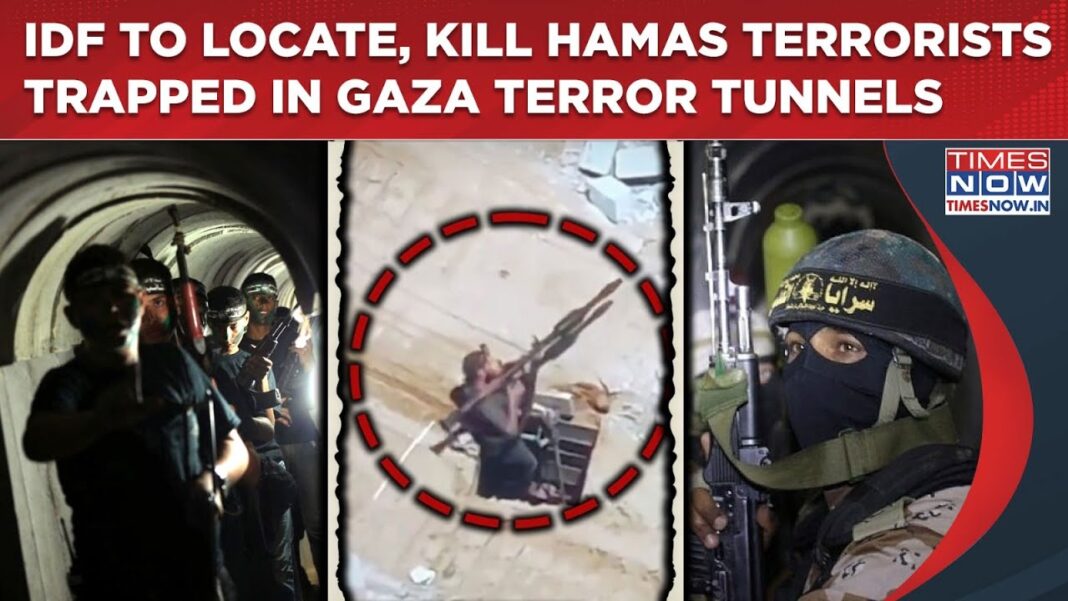
According to the IDF, the five gunmen were spotted by troops from the Nahal Brigade during routine scans of the sector. The operatives, all armed, had reportedly surfaced from one of the tunnels that crisscross the region. Within moments, the soldiers neutralized the threat. The army later confirmed that several dozen Hamas members are still believed to be hiding in underground passageways in the area—some likely trapped, others awaiting opportunities to ambush Israeli forces.
The engagement is part of a broader pattern of intensified tunnel encounters in Rafah, underscoring both the tactical challenges and strategic importance of the southernmost Gaza front. As VIN News documented throughout recent months, the IDF’s grip on eastern Rafah has tightened steadily as troops continue to uncover and destroy extensive subterranean infrastructure that Hamas relied upon as its primary mechanism of survival, movement, and offensive capability.
Though eastern Rafah is officially under Israeli control, the area remains volatile. The IDF’s focus on the region stems from its strategic significance: Rafah not only serves as Hamas’s final redoubt in Gaza but also historically functioned as the group’s gateway to smuggling routes, weapons supply lines, and tunnel networks that facilitated both internal mobility and cross-border operations.
The military’s description of this week’s incident fits a troubling pattern. Just one week earlier, IDF forces identified and killed four Hamas operatives who had similarly emerged from a tunnel shaft nearby. Over the recent weekend, 17 additional Hamas gunmen surfaced from tunnels in two separate locations in the Jenina neighborhood, adjacent to the broader Rafah sector. According to the report at VIN News, all were either neutralized or taken into custody, depending on their level of resistance.
These repeated confrontations reveal an increasingly cornered Hamas apparatus, relying primarily on tunnel ambushes and unpredictable resurfacing attempts to stage last-ditch attacks or to flee IDF-controlled zones. The operatives killed this week in eastern Rafah were believed to be attempting such a maneuver—either probing for gaps in IDF surveillance or seeking an escape route from what has become an increasingly constricted underground labyrinth.
The soldiers involved in the neutralization of the five gunmen were members of the Nahal Brigade, an infantry unit with extensive experience in both urban and subterranean combat. As VIN News has noted in several previous reports, the brigade has played a pivotal role in clearing Rafah’s tunnel complexes, engaging in close-quarter encounters that often unfold within seconds of detecting enemy operatives.
Tunnel warfare has required the IDF to refine its operational doctrines, investing in technology, intelligence integration, and specialized training designed to counter the unique threats posed by underground networks. Hamas’s extensive tunnel system—frequently described as “Gaza’s metro”—has served as the backbone of its military infrastructure, enabling its fighters to move undetected, store armaments, and plan attacks with relative impunity.
But the IDF’s steady progress in Rafah suggests that the organization’s reliance on subterranean strategies is no longer as effective as it once was. With troops now in full control of the surface terrain, tunnel exits have become chokepoints—places where operatives emerging into the open become vulnerable targets for drones, thermal imaging, and infantry surveillance units. The combination of intelligence and persistent ground presence has allowed the IDF to intercept operatives the moment they attempt to reenter surface conflict zones.
The IDF estimates that several dozen Hamas members remain underground in eastern Rafah, though their numbers are increasingly depleted. Many are thought to be trapped in collapsed or sealed tunnels, cut off from essential supplies. Others are believed to be waiting for opportunities to surface under the cover of darkness or amid attempted diversions. The military has kept details sparse, but officials told VIN News that IDF forces continue to strike tunnel shafts, demolish underground command posts, and seal access points to prevent escape attempts.
This tactical pressure has placed Hamas operatives in a desperate position—forced either to surrender, attempt a dangerous resurfacing, or remain hidden with dwindling food, oxygen, and water supplies. The emergence of dozens of fighters in recent days indicates that many are opting to take their chances above ground rather than die beneath it.
Israel’s decision to maintain a “tight cordon,” as described in the VIN News report, around eastern Rafah is rooted in long-term strategic necessity. The IDF understands that allowing even a small contingent of Hamas fighters to regroup in the south could undermine months of intensive operations across the Gaza Strip.
Rafah’s tunnel networks historically served as the nexus of Hamas’s logistical operations—particularly its smuggling routes from Egypt. Though Egypt has taken significant measures over the past decade to destroy cross-border tunnels, Hamas’s internal network remains vast. The IDF’s operations in eastern Rafah are thus a final push to ensure the group’s last remaining infrastructure is dismantled.
Moreover, Israeli officials have stressed that allowing Hamas to maintain even a symbolic foothold in Rafah would enable the organization to claim survival and resilience—something Israel is determined to prevent. Completing the operation in Rafah, therefore, is viewed not merely as a military requirement but as a strategic imperative in shaping the post-war landscape.
The elimination of the five gunmen this week is part of a larger IDF pattern in southern Gaza—one that reflects the erosion of Hamas’s capabilities and the collapse of its command structure. As VIN News has documented, the number of operatives emerging from tunnels in recent weeks suggests that Hamas has lost much of its ability to coordinate movements underground. What remains is a fractured network of small, isolated cells forced into reactive maneuvers.
Operations in the Jenina neighborhood, where 17 operatives surfaced over the weekend, signal that Hamas continues to suffer heavy losses. The pattern is unmistakable: groups of fighters rising from tunnel openings in ones, twos, or small clusters—only to be intercepted almost immediately by IDF patrols, drones, or surveillance units.
The elimination of five operatives in eastern Rafah underscores this steady trend: Hamas can attempt to flee, but it cannot escape the tightening ring surrounding its last bastions.
As operations progress through Rafah and its surrounding neighborhoods, the IDF’s strategy remains consistent: pressure the tunnel network, eliminate operatives attempting to surface, and ensure that no remnants of Hamas’s military infrastructure survive to regenerate for future conflict. The latest incident—five operatives killed by Nahal Brigade troops—serves as another data point in this broader campaign, illustrating both the persistence of Hamas’s underground threat and the IDF’s growing mastery of tunnel detection and neutralization.
The battle for Rafah is far from over. Yet the direction of momentum is clear: tunnel by tunnel, cell by cell, Hamas’s final operational pockets in southern Gaza are being constricted, exposed, and dismantled. And with each encounter—whether involving five operatives or seventeen—the IDF is moving one step closer to eliminating the remaining militant presence in the region.