



|
Getting your Trinity Audio player ready...
|
By: Fern Sidman
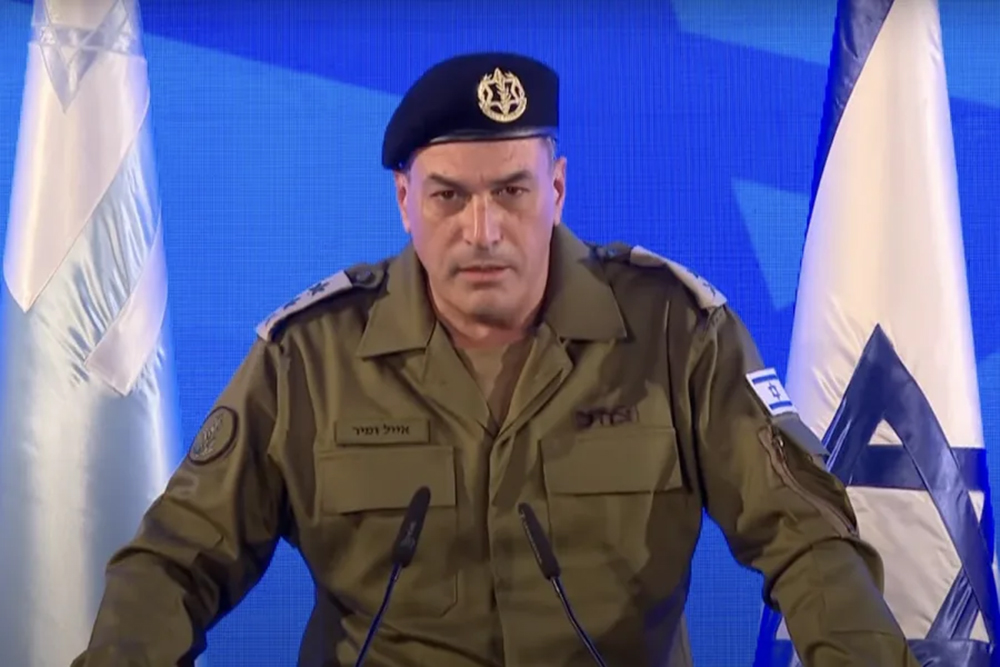
In a moment of extraordinary moral clarity and military resolve, Israel Defense Forces (IDF) Chief of Staff Lt. Gen. Eyal Zamir issued one of the strongest statements yet on Israel’s ongoing war against Hamas in Gaza, declaring that no militant from the Rafah area will be permitted to leave alive unless the body of Lt. Hadar Goldin, of blessed memory, is returned to Israel.
As reported by Israel National News on Tuesday, Zamir’s firm stance came amid growing debate within the Israeli security and political establishments over whether to allow armed terrorists to retreat from Rafah into Hamas-controlled areas under the condition of surrendering their weapons. The idea, floated in recent days, was met with widespread opposition from senior security officials and members of the Israeli right, who warned that any such move would constitute a moral betrayal of fallen IDF soldiers whose remains are still being held by Hamas.
Zamir’s unambiguous statement has effectively drawn a red line—both ethically and strategically. It comes at a time when Israel faces mounting pressure, both from international mediators and humanitarian organizations, to scale back its offensive operations in Rafah, the last major Hamas stronghold in the Gaza Strip.
“No militant may be allowed to leave alive—unless the body of Hadar Goldin, of blessed memory, is returned,” Zamir told senior decision-makers, according to Israel National News.
The remark, highly unusual in its directness, draws attention to the IDF’s growing insistence that Israel’s moral obligations to its soldiers must remain paramount, even as it navigates the complex diplomatic pressures surrounding the Gaza conflict.
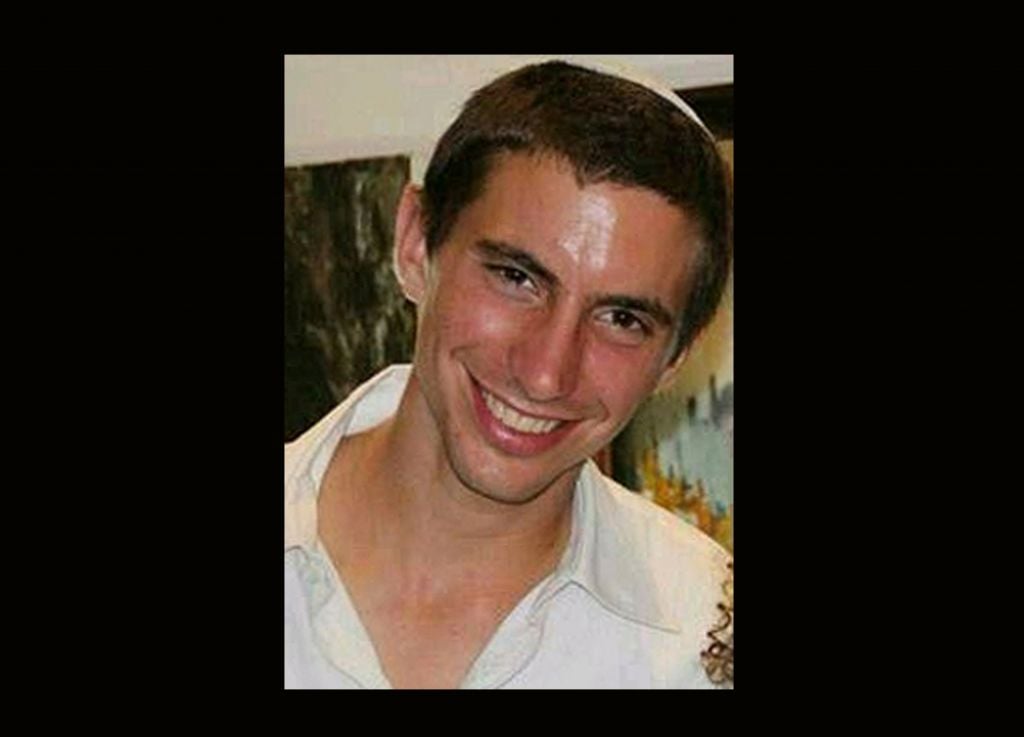
Hadar Goldin, an IDF officer killed in action during Operation Protective Edge in 2014, was taken into Gaza by Hamas terrorists after his death. His body, along with that of another fallen soldier, Oron Shaul, has remained in Hamas custody for a decade, despite repeated Israeli efforts and international appeals for their return.
As Israel National News has frequently documented, Goldin’s family has become a symbol of Israel’s enduring struggle to retrieve its fallen. They have campaigned tirelessly to keep his name alive in public discourse, pressing successive governments not to allow political compromises that leave behind soldiers’ remains in enemy hands.
Zamir’s statement was therefore more than a military directive—it was an emotional reaffirmation of a national covenant: that no Israeli soldier will be abandoned, in life or in death.
“Hamas must be destroyed and all our fallen must be buried in the Land of Israel,” Finance Minister Bezalel Smotrich wrote on X (formerly Twitter), praising Zamir’s resolve. His message, cited in the Israel National News report, echoed a widespread sentiment across the Israeli public that the return of the fallen is both a sacred duty and a strategic imperative.
Prime Minister Benjamin Netanyahu has faced mounting scrutiny in recent days over reports that Israel was weighing an arrangement to allow a limited withdrawal of militants from Rafah as part of a broader ceasefire effort. According to the information provided in the Israel National News report, the Prime Minister ultimately rejected the proposal after significant pushback from right-wing cabinet members and senior military officials, including Zamir himself.
Netanyahu’s office issued no direct response to Zamir’s statement, but sources quoted by Israel National News confirmed that the Chief of Staff’s remarks had influenced the Prime Minister’s decision to rule out any evacuation of armed operatives.
The controversy over Rafah is emblematic of a broader debate gripping Israeli politics as the war nears its next phase: how to balance the humanitarian and diplomatic pressures for de-escalation with the moral and strategic necessity of total victory over Hamas.
Zamir’s position, delivered privately to the War Cabinet and later confirmed through leaks to the press, makes clear that the IDF remains steadfast in its insistence on full accountability—both for Hamas’s atrocities and for the recovery of every last Israeli hostage and fallen soldier.
Zamir’s declaration came as Israel was still reeling from the somber news that the body of Sergeant Itay Chen, another abducted and fallen IDF soldier, had been returned to Israel by Hamas earlier in the week.
As reported by Israel National News, the Prime Minister’s Office and the IDF confirmed early Wednesday morning that Chen’s remains had been recovered and positively identified.
“Following the completion of the identification process by the National Center of Forensic Medicine, in coordination with the Israel Police and the Military Rabbinate, IDF representatives informed the family of the abducted fallen soldier, Sergeant Itay Chen, that their loved one has been returned to Israel and positively identified,” the government’s statement read.
Chen, just 19 years old, was killed during the October 7, 2023 Hamas invasion, in which terrorists slaughtered over 1,200 Israelis and abducted more than 250 others. He fell while serving in a tank crew defending Kibbutz Nir Oz, one of the communities most brutally attacked during the massacre.
According to the information contained in the Israel National News report, Chen’s death was officially confirmed on March 10, 2024, after extensive forensic and intelligence work. He was the last hostage with U.S. citizenship known to be held by Hamas.
The return of his body—though a moment of closure for his family—has reignited Israel’s determination to bring home all of the abducted and fallen.
“The Government of Israel shares in the deep sorrow of the Chen family and of all the families of the abducted fallen,” read the official statement, quoted in the Israel National News report. “The government and the entire security and intelligence apparatus of the State of Israel are determined, committed, and working tirelessly to bring all our abducted fallen back for proper burial in their homeland.”
The IDF’s announcement was accompanied by a renewed call for Hamas to fulfill its obligations under ongoing ceasefire arrangements to return all the deceased hostages still held in Gaza. According to the report at Israel National News, seven Israeli hostages’ bodies remain in Hamas custody, along with an unknown number of foreign nationals.
Zamir’s hardline position thus reflects not only an emotional vow of remembrance but also a strategic principle: Israel cannot signal weakness or compromise while its soldiers’ remains are being exploited as bargaining chips by a terrorist regime.
In the context of Rafah—the last remaining Hamas bastion—the issue is particularly sensitive. The city has become a refuge for what Israeli intelligence believes are several thousand Hamas operatives, many of them senior figures involved in the October 7 atrocities.
Allowing these terrorists to leave, even unarmed, would, in the eyes of many Israelis, be tantamount to allowing the architects of massacre to walk free.
For decades, the ethos of the IDF has been anchored in the principle of “No soldier left behind.” It is a doctrine deeply woven into Israel’s national identity, rooted in the trauma of wars where missing soldiers became haunting symbols of unfinished duty.
As the Israel National News report observed, Zamir’s declaration places that ethos squarely at the heart of Israel’s current campaign—a reminder that victory cannot be measured merely in territorial gains or ceasefire deals, but in the fulfillment of moral commitments to those who gave their lives defending the nation.
The Chief of Staff’s stance also sends a powerful signal to Israel’s enemies: that the IDF does not forget its own—and that Hamas’s attempts to use the remains of fallen soldiers as instruments of psychological warfare will fail.
“Hadar Goldin, Oron Shaul, Itay Chen — they are not statistics,” one IDF officer told Israel National News. “They are the sons of this nation. Their return is not a gesture; it is a duty.”
As the war enters a new and uncertain phase, Zamir’s defiant words have galvanized the country. They reaffirm what Israelis have always believed: that the moral strength of the nation lies in its unflinching commitment to its defenders, even when the cost is high.
The Israel National News report described Zamir’s declaration as “a defining moment”—a moral line drawn in the dust of Rafah, where politics meets conscience, and where Israel’s struggle is not merely against terror, but against the erosion of its deepest values.
In insisting that no terrorist leaves Rafah until Hadar Goldin comes home, Eyal Zamir has reminded Israel—and the world—that this war, at its core, is about dignity, memory, and justice.
This shallow reporting is troublesome, continuing to identify the blood-soaked Muslim monsters as “militants”. The focus is entirely on sympathy, while the real issue is the necessary military destruction of Hamas, the undisputed entirely-supported genocidal Muslim terrorist government of the Gazan muslim monsters. Israel has been far too lenient, choosing the destruction of property over the terrorist population.
Spot on. Well said.
I do not think it is enough for the Muslim monsters to hand in their weapons. As long as they have not immediately surrendered, and permanently jailed for life, they should be all killed now. (Flood them out, burn them out, anything to kill them painfully.)