



|
Getting your Trinity Audio player ready...
|
IDF Chief Declares Shift from Containment to Destruction of Hamas, Amid Strategic Debate with Israeli Cabinet
By: Fern Sidman
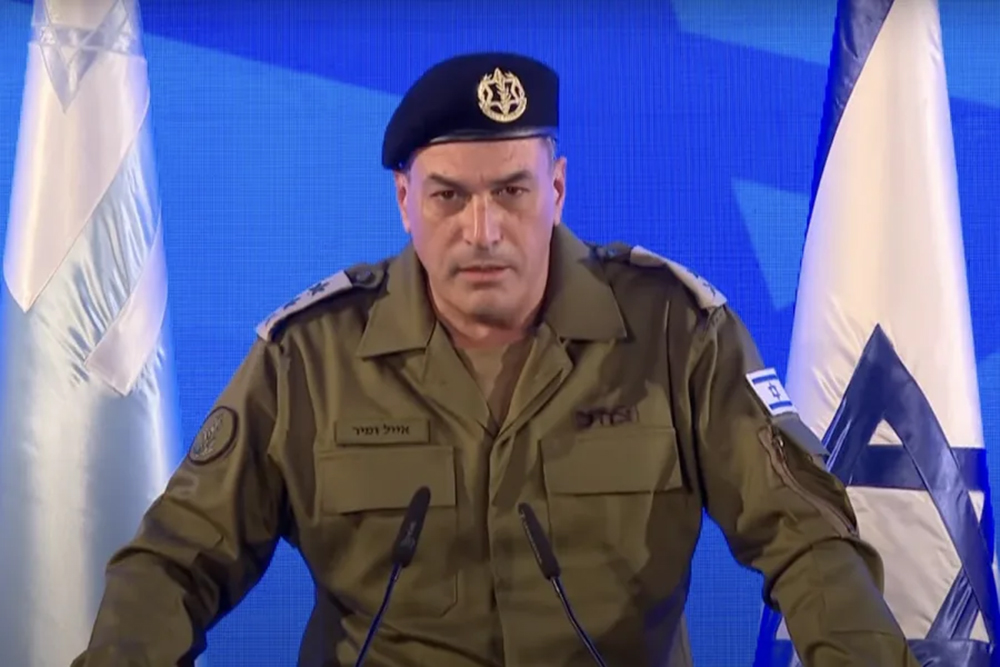
In a decisive and wide-ranging public statement issued Thursday, IDF Chief of Staff Lt. Gen. Eyal Zamir announced that the Israel Defense Forces are entering a new and more aggressive phase in their ongoing war against Hamas, formally shifting the military’s strategic posture from containment to total defeat of the Gaza-based terror organization. As reported by World Israel News on Thursday, Zamir’s remarks signal a turning point in Israel’s months-long campaign, which has been marked by intense military operations, difficult hostage negotiations, and internal political tensions.
“At this time, we are reaching the final stages of Operation Gideon’s Chariots,” Zamir said. “We have met the operation’s objectives and even exceeded them.”
While not detailing the classified achievements of the campaign, Zamir emphasized that the IDF has successfully created a new “security zone” along the Gaza-Israel border—a buffer designed to prevent Hamas infiltration and rocket fire into southern Israeli towns and cities. This zone, he noted, is a key element in a broader reconfiguration of Israel’s defense architecture vis-à-vis the Gaza Strip.
More importantly, however, the Chief of Staff declared that the era of tolerating Hamas’s continued control of Gaza is ending. “We now have the capability to maintain a new security boundary while causing sustained damage to the enemy. We will no longer tolerate containment. We will thwart threats as they form in every sector and continue to act to achieve our objectives,” Zamir said, according to the World Israel News report.
In particularly forceful terms, Zamir vowed that the IDF is now pursuing “the decisive defeat and collapse of Hamas,” stating that military operations will continue “with our hostages before our eyes, and we will do everything to bring them home.”
His comments come just hours before Israel’s security cabinet is scheduled to convene for a critical meeting to determine the next phase of the war in Gaza. According to the information provided in the World Israel News report, two divergent strategies will be debated at the meeting—each reflecting a distinct vision of the military endgame.
One proposal, reportedly favored by many cabinet ministers, calls for a full-scale military occupation of Gaza’s remaining sectors, placing the entire enclave—roughly 25% of which remains outside IDF ground control—under Israeli administration. Such a plan would require significant resources, long-term governance, and complex coordination with international actors, all while exposing Israeli troops to the risks of guerrilla warfare and ambushes in densely populated urban zones.
By contrast, Zamir is advocating for a more surgical approach. Rather than occupying Gaza in its entirety, the Chief of Staff reportedly supports a plan to encircle and isolate key urban areas—such as Gaza City—using a combination of air superiority, armored ground maneuvers, and special operations forces. World Israel News reported that this approach aims to degrade Hamas’s command-and-control capabilities and erode its capacity to govern, while avoiding the political and humanitarian quagmire of direct occupation.
The tension between the military’s operational assessment and the cabinet’s strategic goals reflects a broader debate over the future of Gaza and the nature of Israeli deterrence. In a candid acknowledgment of this dynamic, Zamir addressed the disagreements between himself and political leaders head-on.
“There are disagreements – and this is a vital and inseparable part of the history of the Jewish people,” he said, invoking the long tradition of debate within Israeli society and the military. “It is a vital component of the organizational culture of the IDF – both internally and externally.”
Zamir insisted that such debates are not academic exercises, but rather grave matters of national survival. “We are not dealing in theory – we are dealing with matters of life and death, with the defense of the state, and we do so while looking our soldiers and citizens in the eye,” he stated, as cited by World Israel News.
Thursday’s developments unfold against the backdrop of continued hostilities in Gaza, where IDF troops are still engaged in ground operations aimed at eliminating remaining Hamas infrastructure and fighters. Operation Gideon’s Chariots—named in reference to biblical warfare—has spanned several months and involved intense combat in the central and southern sectors of the Strip.
Despite progress on the battlefield, more than 100 Israeli hostages remain in captivity since they were taken during Hamas’s brutal cross-border assault on October 7, 2023. That massacre, which killed over 1,200 Israeli civilians and soldiers and injured thousands more, triggered the current war and has galvanized Israeli public opinion in favor of a complete dismantling of Hamas rule in Gaza.
World Israel News has reported on the shifting mood within Israel’s defense establishment, noting that Zamir’s ascension to the Chief of Staff role earlier this year marked a new era in IDF strategic planning. Known for his emphasis on technological warfare and integrated intelligence operations, Zamir has overseen major innovations in electronic warfare, drone operations, and urban counterinsurgency tactics.
He is also widely credited for spearheading the implementation of new force deployment models that allow the IDF to maintain prolonged operational pressure on Gaza while retaining readiness on other fronts, particularly Lebanon and in Israel’s biblical heartland known as the Judea and Samaria region. In his Thursday statement, Zamir reiterated that the IDF is prepared to “fight on all fronts” if needed—an implicit reference to potential escalation with Hezbollah in the north.
Meanwhile, the political stakes in Israel remain high. Prime Minister Benjamin Netanyahu, who is presiding over a deeply divided war cabinet, has faced pressure both from right-wing ministers demanding maximalist goals in Gaza and from international allies urging restraint and a clear exit strategy.
As the World Israel News report noted, the cabinet’s upcoming decision may have long-term implications not only for Israel’s security but also for its diplomatic relations with the United States and Arab partners. Washington has continued to urge Israel to minimize civilian harm and to articulate a post-Hamas governance plan for Gaza—something critics say Jerusalem has yet to present in a concrete form.
Despite the internal disagreements, Zamir emphasized the unity of purpose driving Israel’s war effort. “We will continue to act with determination and precision,” he said, “guided by our values and commitment to protect the citizens of Israel.”
As Operation Gideon’s Chariots nears its final stages, the IDF’s pivot toward an unambiguous defeat of Hamas marks a watershed moment in Israel’s approach to the Gaza conflict. Whether through full occupation or strategic encirclement, the outcome of Thursday’s cabinet meeting may well define the trajectory of the war in the weeks to come.
