



|
Getting your Trinity Audio player ready...
|
By: Fern Sidman
The geopolitical reverberations of Israel’s historic decision to recognize Somaliland as a sovereign state are now echoing far beyond Jerusalem and Hargeisa, rippling across one of the world’s most volatile corridors of instability. As Israel National News (INN) reported on Monday, the move has drawn the fury not only of Somalia and its allies, but also of two of the most dangerous jihadist forces operating in the region: Yemen’s Iran-backed Houthi rebels and Somalia’s Al-Qaeda–linked Al-Shabaab.
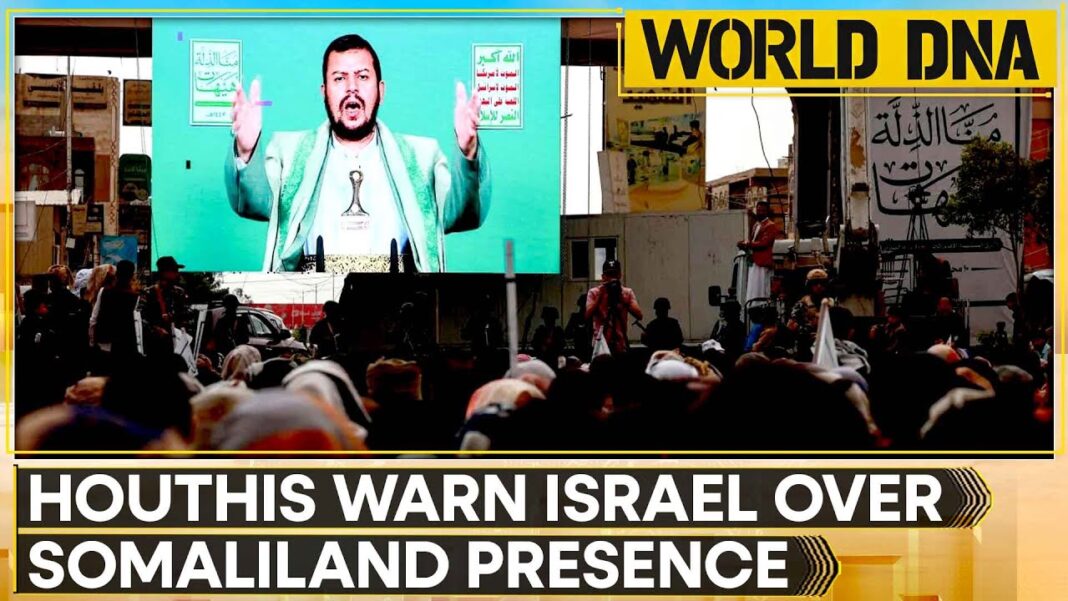
At the center of the storm is Abdul-Malik al-Houthi, the elusive yet incendiary leader of the Houthis, who on Sunday delivered a thinly veiled ultimatum to Jerusalem. Any Israeli presence, he declared, anywhere on Somali territory would henceforth be regarded as a legitimate military target.
“We will not agree to violations of Somalia’s sovereignty or to a security threat against us and against the Horn of Africa region in general,” al-Houthi thundered in a statement that was swiftly picked up by Israel National News. It was not merely rhetoric. For Israelis accustomed to months of missile and drone launches from Yemen during the Gaza war, the threat carried the unmistakable weight of lived experience.
Israel National News has underscored that Israel’s recognition of Somaliland on Friday was a diplomatic earthquake in a region long frozen by dogma over territorial integrity. Somaliland, which declared independence from Somalia in 1991 after the collapse of the Siad Barre regime, has operated for more than three decades as a de facto state. It boasts its own elected government, currency, passport system, police and military forces, and a reputation for stability that stands in stark contrast to the chaos that has consumed much of the Horn of Africa.
Yet despite these credentials, Somaliland has languished in international limbo, denied recognition by every member of the United Nations—until Israel broke ranks.
For Jerusalem, the decision was framed as a strategic and moral alignment with a fellow small nation striving for democracy in a hostile neighborhood. For its adversaries, however, it was read as provocation, intrusion, and—most ominously—expansion.
The Houthis are no strangers to confrontation with Israel. As INN has chronicled, since the outbreak of the Gaza war they have launched repeated barrages of missiles and drones toward Israeli territory, framing themselves as defenders of the Palestinian cause. Those attacks subsided only when a U.S.-brokered ceasefire took effect in October.
Now, with Israel’s gaze shifting toward the Horn of Africa, the Houthis appear eager to reopen a front they consider ideologically and strategically vital. Al-Houthi’s warning was explicit: any Israeli footprint in Somaliland, however symbolic, would be met with violence.
For Israel National News, this escalation underscores the Houthis’ growing ambition to operate not merely as a Yemeni insurgency but as a transregional actor aligned with Iran’s broader campaign to encircle Israel through proxy forces stretching from Lebanon to Iraq to the Red Sea basin.
If the Houthis represent Iran’s spear, Al-Shabaab embodies Al-Qaeda’s blade. On Saturday, the Somalia-based jihadist organization issued its own chilling declaration, vowing to fight any Israeli attempt “to claim or use parts of Somaliland.”
“We will not accept it, and we will fight against it,” the group said in a statement cited by Israel National News.
In language steeped in Islamist absolutism, Al-Shabaab accused Israel of seeking to “expand into parts of the Somali territories” in order to bolster what it derided as the “apostate administration in the northwest regions.” The reference was unmistakable: Somaliland’s secular, pro-Western leadership stands in theological defiance of Al-Shabaab’s radical creed.
The terrorist group’s intervention transforms Israel’s recognition from a bilateral diplomatic matter into a casus belli for one of Africa’s most lethal extremist movements.
As INN has reported, Somalia itself has not remained silent. On Saturday, the Somali government—currently holding the rotating presidency of the United Nations Security Council—formally requested an urgent session to address Israel’s recognition of Somaliland. That meeting is expected to take place on Monday, placing the issue squarely before the world’s highest diplomatic forum.
For Mogadishu, the recognition is an existential affront. Somalia insists that Somaliland remains an integral part of its sovereign territory, and any deviation from that position threatens to unravel already fragile regional borders.
The timing of Somalia’s appeal to the Security Council is not accidental. With Israel newly emboldened and jihadist actors sharpening their knives, Mogadishu hopes to rally international pressure before a symbolic gesture hardens into irreversible precedent.
Israel National News analysts have warned that the convergence of Houthi threats, Al-Shabaab vows, and Somali diplomatic outrage is forging a dangerous new axis of hostility aimed at Jerusalem.
The Horn of Africa occupies a uniquely strategic position astride the Bab el-Mandeb Strait, through which a significant portion of global maritime trade passes. Iranian influence in Yemen, Russian maneuvering in East Africa, and now Israel’s unprecedented recognition of Somaliland have transformed the region into a chessboard on which great and regional powers alike are positioning their pieces.
For the Houthis, Israeli presence near the Red Sea corridor represents a direct challenge to their narrative of resistance and to Iran’s vision of strategic depth. For Al-Shabaab, it is an ideological affront that must be met with jihad.
It is no small irony that al-Houthi’s threats come barely weeks after the Houthis halted their missile campaign against Israel in deference to the Gaza ceasefire. That pause now looks fragile at best.
The recognition of Somaliland may provide the Houthis with the pretext they need to justify renewed hostilities without appearing to break their earlier pledge. Framed as a defense of Somali sovereignty rather than an extension of the Gaza war, new attacks could be sold to their supporters as morally imperative.
For Jerusalem, the stakes could scarcely be higher. As the Israel National News report observed, the decision to recognize Somaliland was never likely to be cost-free. But the intensity of the backlash—from Mogadishu to Sana’a to Al-Shabaab’s jungle strongholds—may exceed even the most pessimistic forecasts.
Yet Israeli officials remain resolute. They see Somaliland not merely as a diplomatic partner but as a strategic anchor in a region where Iranian and jihadist influence has flourished unchecked. By recognizing Hargeisa, Israel is signaling that it intends to play a more assertive role in shaping the future of the Horn of Africa.
The convergence of forces now arrayed against that decision paints a foreboding picture. Israel National News has emphasized that never before have the Houthis and Al-Shabaab spoken in such parallel tones about a single diplomatic act.
Both organizations frame Israel as an intruder into Muslim lands. Both pledge violence in response. Both operate in zones where central governments are weak and international intervention is sporadic.
For Israel, this creates the possibility of a new, southern arc of threat stretching from Yemen across the Red Sea into the Horn of Africa—a belt of instability that complements the already volatile northern front with Hezbollah.
As the UN Security Council prepares to convene at Somalia’s request, diplomats around the world will scrutinize the implications of Israel’s bold move. Yet for the residents of southern Israel who endured months of Houthi missile alerts, and for the Jewish state’s strategic planners, the issue is no longer theoretical.
It is about whether a gesture of diplomatic recognition can become the spark that ignites a new theater of confrontation.
Israel National News has described the moment as a geopolitical inflection point: the intersection of diplomacy, terrorism, and regional ambition in one of the planet’s most combustible zones.
What began as a historic recognition of a long-ignored African polity has now escalated into a test of wills between Israel and an emerging coalition of adversaries who see in Somaliland not an aspiring democracy, but an unacceptable extension of Israeli influence.
The question confronting Jerusalem—and the world—is whether the Horn of Africa is about to become the next front in a conflict that already spans continents.