



|
Getting your Trinity Audio player ready...
|
By: Jason Ostedder-Jewish Voice News
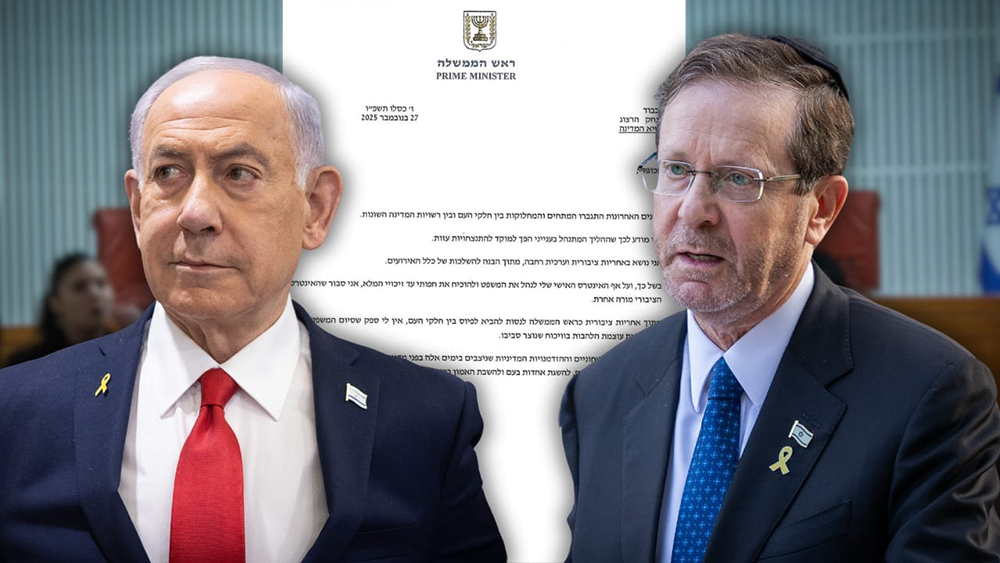
Israeli President Isaac Herzog on Monday delivered his first substantive public response to Prime Minister Benjamin Netanyahu’s unprecedented request for a presidential pardon in his long-running corruption trial, declaring that his decision will be guided “solely [by] the best interests of the State of Israel and Israeli society.” The carefully calibrated statement, released through his spokesperson, underscored both the extraordinary nature of the appeal and the deep national unease it has sparked—an unease now resonating across Israel’s political, legal, and social landscape. As The Jewish News Syndicate (JNS) has reported throughout the ongoing saga, Netanyahu’s gambit represents not only a legal maneuver but a defining test of Israel’s cohesion at a moment of historic strain.
Herzog acknowledged the volatility surrounding the request, saying it is “clearly provoking debate and is deeply unsettling for many people across different communities in the country.” With Israel still grappling with the aftershocks of the October 7, 2023 Hamas massacre, the protracted war in Gaza, spiraling regional tensions with Hezbollah, and an increasingly fragile political environment, the question of whether to halt the trial of Israel’s longest-serving prime minister has moved far beyond questions of personal guilt or prosecutorial overreach. As the JNS report noted, the president’s office described the submission—111 pages delivered through Netanyahu’s attorney Amit Hadad—as an “extraordinary request that carries significant implications,” a phrase that captures the gravity of the moment.
Netanyahu’s written plea, appended to the legal argument, framed the pardon not as an act of self-preservation but as an essential step toward insulating the nation from further internal fracture. “A pardon would enable the prime minister to devote all of his time, abilities and energies to advancing the State of Israel in these critical times,” he wrote, insisting that halting the trial would “mend the rifts between different parts of the nation” and “open the door to lowering the flames,” ultimately strengthening Israel’s national resilience. It is a message that mirrors the prime minister’s consistent refrain that the prosecution represents a politicized effort—what he has previously described as a “deep state” campaign—to undermine the will of the electorate and hobble the country’s leadership in moments of peril.
Netanyahu reiterated this line in a video statement released shortly after Herzog’s remarks, a statement that JNS reported had been disseminated across national media with striking urgency. The prime minister emphasized that his “personal interest has been, and remains, to continue the process until the end, until full acquittal on all charges.” Yet, he argued, the unprecedented geopolitical landscape demands prioritizing national imperatives over personal vindication. “The security and diplomatic reality, the national interest, demand otherwise,” he said. “To repel the threats and seize the opportunities, national unity is required… The continuation of the trial tears us apart from within, fuels this division, and deepens the rifts.”
In the eyes of Netanyahu and his supporters, halting the trial—now in its fifth year—would not be a circumvention of justice but a necessary recalibration of Israel’s legal and political machinery to meet the moment. The country continues to navigate a high-stakes conflict in Gaza, balancing the moral weight of hostages still held captive, growing international scrutiny, and a mounting campaign of diplomatic isolation orchestrated by hostile actors.
Meanwhile, internally, Israel faces fierce disputes over military draft exemptions for the ultra-Orthodox community, rising security volatility in Judea and Samaria, and electoral uncertainty with national elections likely within the next year. Against this backdrop, JNS has frequently highlighted the argument advanced by Netanyahu’s allies: that a single individual, standing trial three times a week, cannot bear the full weight of Israel’s strategic responsibilities at a time when the nation requires maximal concentration, coherence, and unity of command.
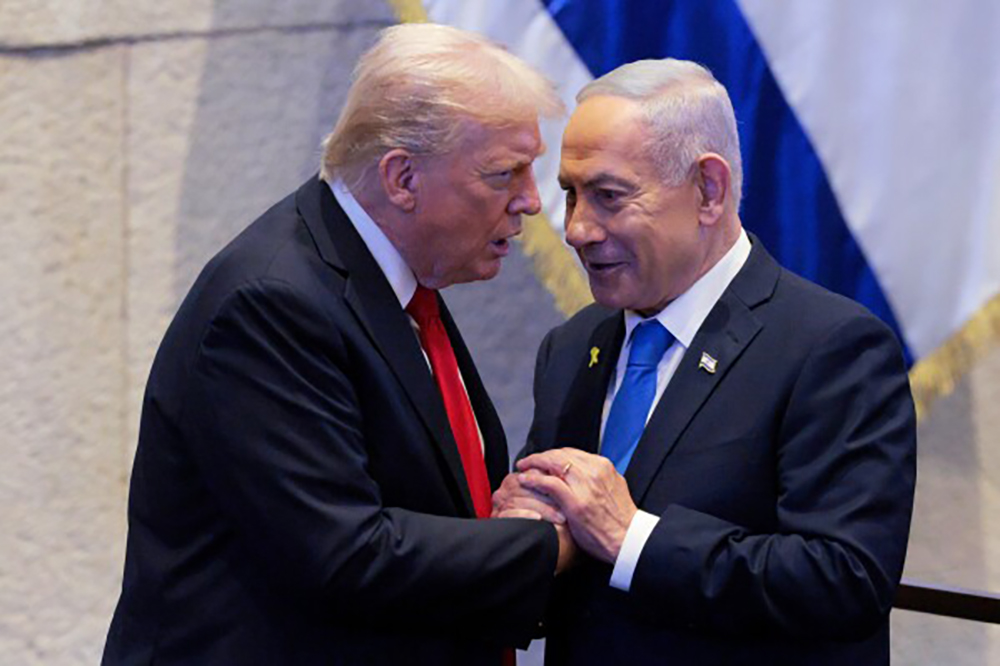
Two weeks ago, CNN revealed that President Trump had sent a personal letter to Herzog urging him to issue a full pardon to Netanyahu.
In the message, which Herzog’s office later circulated publicly, Trump portrayed Netanyahu as a “formidable and decisive War Time Prime Minister” and insisted that Israel now stood “on the cusp of peace under his leadership.” The request, coming from any other American president, would have been an extraordinary intrusion into another nation’s judicial affairs. For Trump, however, it marked merely the latest in a series of overt gestures on behalf of one of his closest global allies.
Trump emphasized in the letter that he “fully respected” Israel’s judicial independence but argued that the charges facing Netanyahu—whom he described as a longtime partner in confronting shared adversaries such as Iran—amount to a politically motivated and baseless prosecution.
Herzog’s office responded with a carefully balanced statement. The president, it said, holds Trump “in high regard” and values his “steadfast support for Israel”—including his role in advancing regional diplomacy, helping secure the release of hostages, and strengthening Israel’s defense posture. Even so, the office stressed that pardons must follow “established procedures,” signaling that no special exceptions would be made.
As Reuters reported, Netanyahu returned to court on Monday for the first time since submitting his own formal request for a presidential pardon. The move has drawn sharp criticism from opposition lawmakers, several of whom argue that any pardon must be conditioned on Netanyahu exiting political life and acknowledging wrongdoing. Others maintain that he should first call new elections—currently scheduled for no later than October 2026—before seeking such extraordinary relief.
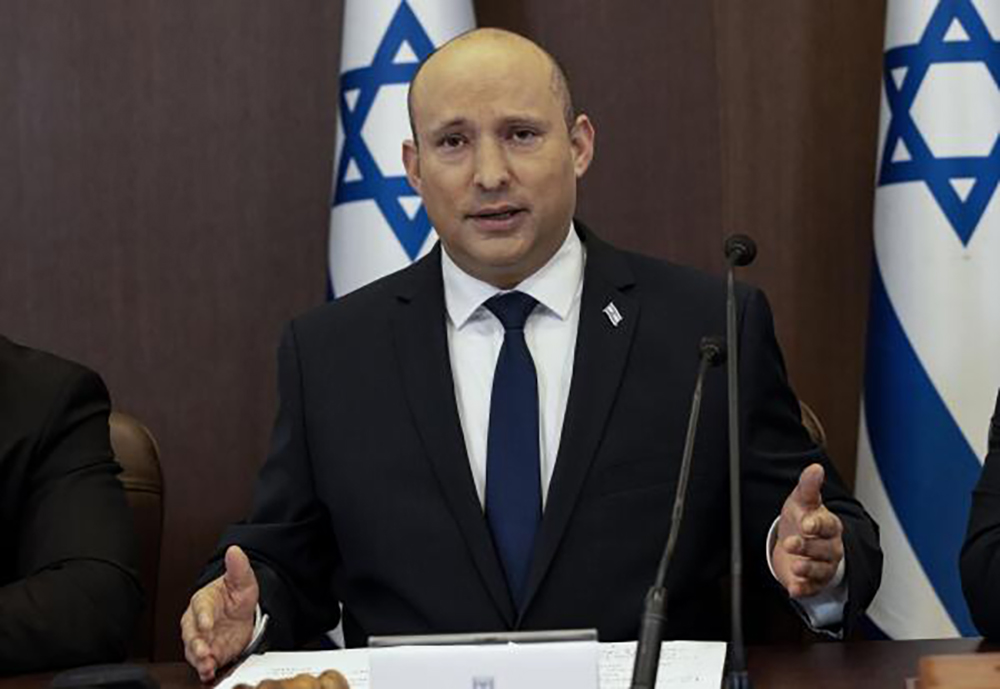
Former Prime Minister Naftali Bennett has offered a conditional endorsement of ending the trial, saying he would support a pardon if Netanyahu agreed to step away from politics entirely. Such a move, Bennett argued, could “pull Israel out of this chaos” and open the way for national healing after years of bitter polarization. Bennett—who briefly led the country after defeating Netanyahu in the 2021 election before Netanyahu reclaimed power a year later—is now seen in multiple polls as the leading contender to form the next government should Netanyahu withdraw.
The charges themselves—Cases 1000 and 2000 alleging breach of trust, and Case 4000 alleging bribery, fraud, and breach of trust—have long polarized Israeli society.
Case 1000 alleges that Netanyahu and his wife accepted gifts—cigars, champagne, and jewelry—from businessmen Arnon Milchan and James Packer, valued at roughly $260,000. The prosecution absurdly claims that these were “bribes” intended to secure favorable treatment, including visa assistance and tax exemptions. In reality, these were personal gifts between longtime acquaintances—gestures of friendship and esteem, as are common among world leaders. To portray a few boxes of cigars as evidence of systemic corruption is to trivialize both justice and logic, according to Netanyahu supporters.
In Case 2000, Netanyahu stands accused of merely discussing with the publisher of Yediot Ahronot the possibility of balanced coverage in exchange for fair treatment of a rival publication. The irony here is that the Israeli media, dominated by leftist editors and journalists, routinely colludes with political figures to shape narratives. Yet when Netanyahu allegedly sought to level the playing field against an openly hostile press, it became a “criminal conspiracy.”
Case 4000, perhaps the most farcical of all, alleges that Netanyahu provided regulatory benefits to the telecom firm Bezeq in exchange for positive news stories on its subsidiary, Walla. Again, the “evidence” boils down to editorial tone—subjective judgments about whether Walla’s coverage was too friendly to Netanyahu.
The drawn-out proceedings, delayed witness testimonies, procedural battles, and conspicuous press leaks have fueled widespread perceptions—especially among right-leaning voters—that the trial has mutated from a legal process into a political battlefield.
It is these divisions that Herzog must now navigate. As the ceremonial head of state, he carries no political mandate but wields immense moral authority, particularly in moments of national crisis. His pledge to weigh only the “best interests of the State of Israel” echoes his role during the fraught judicial reform debates of 2023, when he positioned himself as a stabilizing figure seeking compromise amid mass protests and political deadlock.
Yet the decision before him now is unlike any other. While Israel’s Basic Law grants the president broad pardon powers—including, in rare cases, for individuals not yet convicted—no sitting prime minister has ever sought such relief. As the JNS report explained, the legal precedent is sparse and contested, and granting a pardon could either help restore political equilibrium or deepen public distrust in the justice system.
Netanyahu’s supporters argue the former. To them, the prime minister’s leadership remains indispensable, especially as Israel confronts escalating existential threats. They contend that internal discord weakens Israel’s deterrence posture and that removing the distraction of the trial would allow Netanyahu to refocus on the war effort, regional diplomacy, and repairing the frayed social fabric. JNS has repeatedly noted the widespread sentiment among coalition figures—including Defense Minister Israel Katz—that the trial represents a political weapon deployed against the right.
Opponents, however, warn that a pardon would undermine the rule of law, cement a precedent of political immunity, and reward what they view as improper behavior. They point to Herzog’s need to safeguard the independence of Israel’s judiciary, which has already endured years of public assaults from both sides of the political spectrum.
Herzog’s eventual ruling will reverberate deeply. If he approves the pardon, he will be accused by critics of enabling executive overreach. If he rejects it, he risks exacerbating the very divisions Netanyahu claims the trial has inflamed, potentially weakening the government during wartime.
What remains clear is that the request has thrust Israel into a moment of profound self-examination. As the JNS report emphasized, this is not merely a legal crossroads but a national reckoning over governance, unity, and the durability of Israeli democracy. Netanyahu’s closing message captured the tension at the heart of the debate: “I expect that all those who place the good of the country above all will support this step.”
Whether Herzog agrees is now a question that will shape the trajectory of Israeli politics for years to come.