



|
Getting your Trinity Audio player ready...
|
Hamas Records Reveal Oct. 7 Attack Designed to Derail Saudi-Israel Peace Talks
By: Fern Sidman
Newly uncovered documents from deep within Gaza are shedding fresh light on the motivations behind the Oct. 7, 2023, Hamas-led attack on Israel, offering a clearer picture of how geopolitical strategy and internal resistance to normalization efforts converged in one of the bloodiest single-day assaults in Israeli history. As reported by The Wall Street Journal on Sunday, Israeli military officials say they recovered minutes from a high-level Hamas meeting held just five days before the attack, found in a tunnel beneath the Gaza Strip.
According to the Journal, the minutes reveal that Hamas leadership—spearheaded by its Gaza chief, Yahya Sinwar—intentionally launched the operation to thwart burgeoning U.S.-brokered peace talks between Israel and Saudi Arabia. Sinwar warned his colleagues on October 2 that normalization between Riyadh and Jerusalem was advancing rapidly and posed an existential threat to the centrality of the Palestinian cause in Arab political discourse.
“There is no doubt that the Saudi-Zionist normalization agreement is progressing significantly,” Sinwar said during the political bureau meeting, as quoted by the Journal. He urged Hamas to take bold and immediate action, stating that an “extraordinary act” was needed to derail the process. Sinwar, according to the documents, believed that only a dramatic shift in the regional balance could restore relevance to the Palestinian agenda.
His plan, formulated over two years of clandestine preparation, was designed to ignite a broader conflict that would make it politically impossible for Arab states to formalize ties with Israel. At the time, U.S., Israeli, and Saudi officials had all indicated that differences were narrowing and a historic deal might be within reach. Sinwar feared that such a breakthrough would create a domino effect across the Arab and Muslim world—an outcome Hamas deemed intolerable.
This revelation, based on firsthand review of the documents by The Wall Street Journal, calls attention to how deeply intertwined Hamas’s strategic thinking was with regional diplomacy. The attack, which killed nearly 1,200 people in Israel and triggered a massive Israeli military response, effectively paused normalization efforts but at an unfathomable human cost.
According to the information provided in the Journal, other Hamas documents and intelligence assessments show that this meeting in Gaza was just one of two held on October 2. A parallel gathering in Beirut involved Iranian security officials and representatives from Hezbollah and Hamas. While Iranian officials reportedly approved the general contours of the attack, they were not briefed on the precise timing or scope, according to multiple sources.
These layers of planning and foreign coordination—also reported by The Wall Street Journal—demonstrate the depth of Iran’s long-term support for Hamas. Iran provided military training, funding, and strategic guidance, but also expressed caution. Tehran, along with its Lebanese proxy Hezbollah, made clear it wished to avoid triggering a full-scale regional war with Israel.
Still, the Journal noted, Iran’s financial and logistical support gave Hamas the tools it needed to execute its plans. Intelligence from multiple countries confirms that Hamas operatives received combat training in the weeks immediately preceding the attack.
What stands out from this latest trove of internal Hamas communications is not only the ideological fervor but the calculated political strategy. A previously unseen September 2023 Hamas report, also reviewed by The Wall Street Journal, recommended escalating violence in the Judea and Samaria region and Jerusalem as a means of sabotaging the Saudi-Israel peace track. This was not a spontaneous outburst of violence but a deliberate attempt to shape the trajectory of Middle Eastern geopolitics.
While many of the Hamas leaders behind the plan are now dead—including Sinwar and Marwan Issa, according to Israeli military reports—others remain active or at large. The Israeli military has continued its campaign to dismantle Hamas’s leadership infrastructure. On Tuesday, Israel targeted Mohammed Sinwar, Yahya’s brother and a top figure in Hamas’s military operations. His fate remains unclear.
Among the Hamas leaders killed outside Gaza was Ismail Haniyeh, one of the movement’s most senior figures. Israeli intelligence has made clear that it views the decapitation of Hamas’s leadership as essential to preventing future attacks and restoring stability to the region.
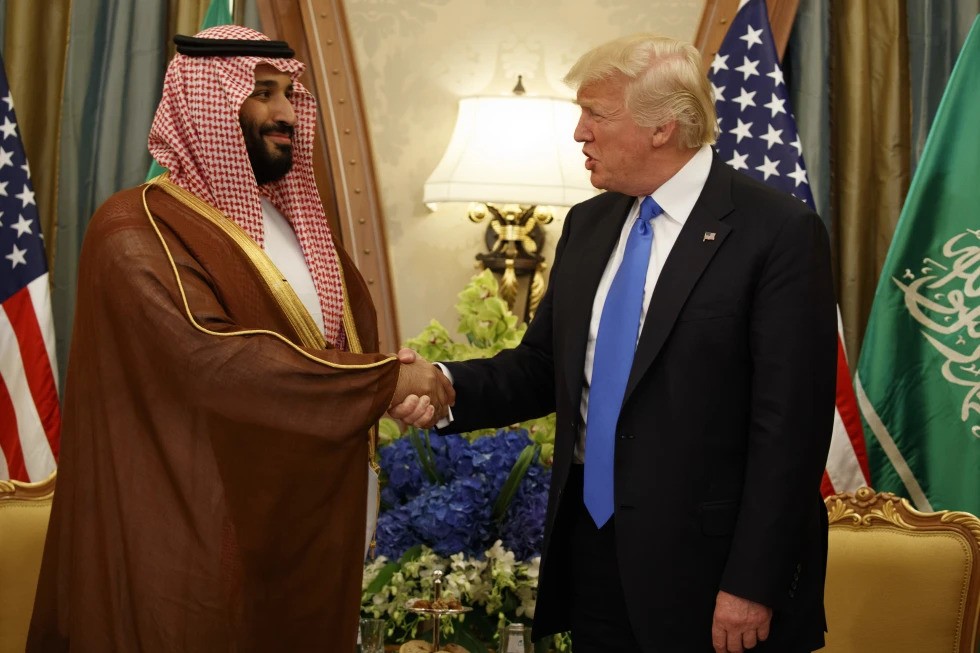
According to The Wall Street Journal, President Donald Trump—who visited Saudi Arabia this week as part of his post-reelection diplomatic initiative—acknowledged the delay in normalization efforts, urging the kingdom to proceed “in your own time.” Yet he emphasized that continued engagement with Gulf Arab states remains a cornerstone of American strategy in the region, both for security and economic reasons.
Despite some media interpretations of Trump’s Middle East tour as a signal of distance from Israel, the president reiterated that fostering ties with Arab nations ultimately serves Israeli interests. His emphasis on rebuilding trust with Arab states appears calibrated to ensure that Israel is not isolated as the region’s tectonic plates shift.
Though the October 7 attacks succeeded in halting normalization efforts—at least temporarily—there is a growing recognition that peace and integration remain vital long-term goals. Even as the situation in Gaza continues to draw international concern, discussions in Washington and Riyadh signal that the path toward regional stability may eventually resume.
Among the most revealing documents is an August 2022 internal Hamas military briefing, labeled “secret,” which underscores the group’s sense of urgency in countering what it describes as a “broad wave of normalization by Arab countries.” The document warns that such efforts aim to “liquidate the Palestinian cause” and calls for repositioning Hamas to preserve its role as a central force in regional resistance.
Relations between Hamas and Saudi Arabia have long been fraught, and the report in The Wall Street Journal noted that tensions have only intensified since Hamas seized control of the Gaza Strip in 2007 from Fatah, its political rival. While the kingdom historically positioned itself as a supporter of the Palestinian cause, its engagement in U.S.-brokered talks with Israel has drawn criticism from Palestinian factions.
The Journal’s report cited Hamas’s perception of Saudi Arabia’s reassurances to Palestinians as “weak and limited steps to neutralize” Hamas. This distrust has only strengthened the group’s resolve to build closer ties with Hezbollah and other Palestinian militant groups. The Hamas leadership, according to the document, viewed these new alliances as essential to mounting a coordinated campaign to disrupt diplomatic efforts perceived as undermining Palestinian resistance.
The seriousness with which Hamas views the threat of normalization is further evidenced in a rather unorthodox find reported by The Wall Street Journal: a job advertisement from Hamas’s own Department of Arab and Islamic Cooperation. Dated October 2022, the notice called for a university graduate with strong negotiation and communication skills. The job’s explicit mandate? “Marketing the movement’s programs to confront normalization,” including by mobilizing grassroots boycotts against Arab entities that support ties with Israel.
From the perspective of Israel and its Western allies, normalization with Saudi Arabia would represent a seismic realignment in Middle Eastern diplomacy. While the Abraham Accords of 2020—establishing ties between Israel and the United Arab Emirates, Bahrain, Morocco, and Sudan—were widely heralded as a diplomatic breakthrough, a formal agreement with Saudi Arabia would eclipse those achievements. It would not only bolster Israel’s regional legitimacy but also advance U.S. efforts to create a coalition to contain Iran’s influence.
As The Wall Street Journal report pointed out, Washington sees Riyadh as a linchpin in any sustainable Middle East peace architecture. With its religious significance and economic clout, Saudi Arabia’s formal recognition of Israel would signal a decisive break from decades of Arab consensus that made Palestinian statehood a prerequisite for such relations.
But the heavy toll of Israel’s military operations in Gaza following the October 7 Hamas attack has complicated this calculus. Saudi Crown Prince Mohammed bin Salman, according to diplomatic sources cited by The Wall Street Journal, has privately stated that two key conditions must be met before Riyadh proceeds: a halt to the conflict in Gaza and a credible diplomatic path toward Palestinian statehood.
Yet within Israel, the fallout from Hamas’s brutal assault on October 7 has made the idea of Palestinian statehood politically toxic. With nearly 1,200 Israelis killed in the single deadliest day in the country’s history, and a nation still grappling with the trauma, the idea of territorial concessions or engaging in statehood discussions has receded further from the political mainstream. Across much of the Israeli political spectrum, the idea has become synonymous with security risk.
This divergence in priorities is placing pressure on U.S. diplomacy, which must now contend with the dual challenge of maintaining regional stability while supporting its Israeli ally, The Wall Street Journal report noted.
Despite Saudi Arabia’s firm stance on linking normalization with progress on the Palestinian issue, the Journal reported that Riyadh remains deeply wary of Hamas, viewing the group as an Iranian proxy. Indeed, the attack of October 7 may have served the group’s short-term goal of halting normalization talks, but it has also amplified regional concerns about Hamas’s destabilizing role and deepened its isolation from traditional Arab power centers.
The documents reviewed by The Wall Street Journal paint a picture of a Hamas leadership that is both ideologically driven and tactically aware of the shifting regional dynamics. Its fear of normalization—particularly with Saudi Arabia—was not only ideological but strategic, prompting efforts to actively sabotage diplomatic overtures and to harden resistance through external partnerships.
For Israel, the normalization of ties with Arab states remains a strategic imperative. Though the road to a formal agreement with Saudi Arabia is now more complicated, the underlying mutual interests—regional stability, economic opportunity, and countering Iranian expansionism—continue to provide a foundation for eventual progress.
As the Wall Street Journal report observed, the regional chessboard has been irrevocably altered by both war and diplomacy. While Hamas’s efforts may have delayed a historic rapprochement, the longer-term trajectory toward normalization is unlikely to disappear entirely. And in this delicate balance between realpolitik and resistance, the quiet resilience of pro-normalization voices may yet shape the next chapter of Middle East diplomacy.
