



|
Getting your Trinity Audio player ready...
|
By: Fern Sidman
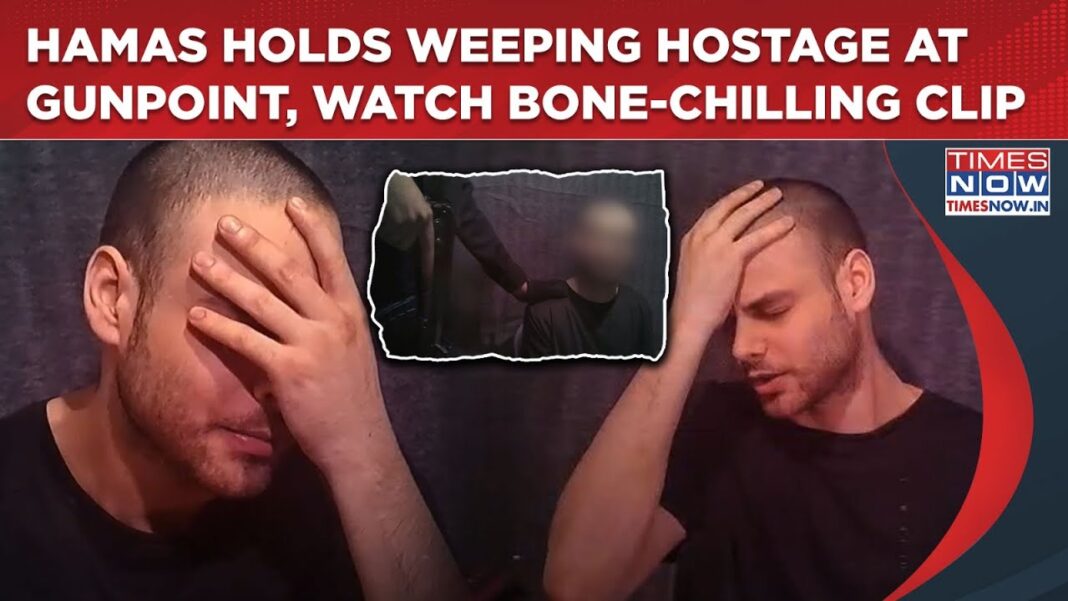
On the eve of Rosh Hashanah, as Israeli families prepared for the solemn and hopeful rituals of the Jewish New Year, the Hamas terrorist organization released a chilling propaganda video featuring Israeli hostage Alon Ohel. The timing of the release—an hour before the holiday began in Israel—was designed to inflict maximum psychological trauma on the Jewish people and to remind the nation of the 48 hostages still languishing in Gaza.\
According to a report that appeared on The Jewish News Syndicate (JNS) website, Hamas has repeatedly weaponized hostage videos as a tool of psychological warfare, aiming to exploit the anguish of Israeli families and extract political concessions. The release of Ohel’s footage was no exception. Within hours, his family, stricken with fear and heartbreak, authorized the publication of a single still image from the video, an attempt to control how his deteriorating condition would be portrayed to the public.
On Wednesday evening, the Hostage and Missing Families Forum issued a statement from Ohel’s parents, Idit and Kobi, who broke their silence with words that echoed the collective agony of Israel.
“Our family is shaken and in pain following the release of Alon’s video by Hamas,” they wrote. “It’s evident that Alon is losing vision in his right eye, and he appears thin and distressed.”
The family called on Israeli and international authorities to demand urgent medical intervention. “We demand that as a precondition for any negotiations or additional assistance to Hamas, eye specialists must examine Alon and provide him with treatment,” their statement continued.
A report on World Israel News (WIN) emphasized that the family’s words carried not only personal desperation but also a broader demand: that humanitarian principles be prioritized in all diplomatic negotiations. For the Ohel family, the visible signs of Alon’s declining health—his emaciated appearance, the deterioration of his vision, the hollowed features of a young man robbed of freedom—underscore the need for decisive international intervention.
The ordeal of Alon Ohel, who hails from Lavon in the Upper Galilee, has now stretched beyond 700 days. On September 5, marking that grim milestone, Hamas released another propaganda video, this time showing Ohel alongside fellow hostage Guy Gilboa-Dalal as they were driven through the streets of Gaza City. At that point, his family authorized the release of a still image, but they refrained from commenting on the distressing footage.
As JNS reported, Hamas’s strategy of releasing staged images or carefully edited clips of captives is aimed at manipulating Israeli public opinion while projecting an image of control to Palestinians and the wider Arab world. It also serves as a reminder to international mediators of the terror group’s leverage in ongoing negotiations.
Further insight into Ohel’s condition came not from Hamas but from the testimonies of Israeli hostages who had been released earlier this year. During the first phase of the ceasefire brokered on January 19, 25 hostages were freed alongside the return of eight bodies. Among them were Eli Sharabi, Or Levy, and Eliya Cohen, who were held in proximity to Ohel.
Their accounts, cited in the World Israel News report, confirmed what his family now fears: that Ohel suffered a devastating injury during the October 7 attacks, when shrapnel blinded him in his right eye. They described his daily struggles, his visible pain, and the constant fear of worsening health under captivity.
In June, his mother, Idit, spoke directly to The Jewish News Syndicate, expressing the haunting uncertainty the family has endured. “We want to save our son, we want him to come home, and we are thinking of ways to make that happen,” she said. “We are very scared about his situation in Gaza; we are scared for his life.”
Her words resonate even more urgently now, as new footage confirms the severe decline in her son’s condition.
Analysts quoted in the JNS report noted that Hamas’s decision to release Ohel’s video just before Rosh Hashanah was calculated to amplify Israel’s collective grief. By exploiting the symbolism of the holiday—a time of reflection, repentance, and renewal—Hamas sought to deepen the psychological torment of both the hostage families and the broader Israeli public.
For Israel, the use of hostages in such a manner is not merely an affront to decency; it is a violation of international humanitarian law. The Geneva Conventions explicitly prohibit hostage-taking and the denial of medical care to captives. Yet Hamas has persistently defied these standards, holding civilians as bargaining chips and using them as tools in its ongoing war of attrition against the Jewish state.
World Israel News has repeatedly highlighted how Hamas turns humanitarian norms upside down: blocking aid from reaching civilians in Gaza, commandeering trucks carrying food and medicine, and at the same time leveraging Israeli hostages to extract political concessions.
The Ohel family’s plea for eye specialists to be allowed to examine their son represents not only a personal cry for help but also a broader call for the international community to act. In recent weeks, mediators from Qatar, Egypt, and the United States have been engaged in indirect negotiations between Israel and Hamas over potential ceasefire and hostage-release agreements.
As the JNS report observed, the family’s appeal highlights the moral responsibility of all negotiating parties to insist that medical care for hostages be a non-negotiable condition. Anything less would effectively sanction Hamas’s cruelty and allow the group to continue exploiting its captives as pawns.
Israel has consistently maintained that the release of hostages must be at the center of any deal. Yet the challenge, as the WIN report pointed out, lies in the terrorist group’s demands: Hamas has called for an end to the war, the withdrawal of Israeli troops, and the maintenance of its own military infrastructure in Gaza—all conditions Israel has flatly rejected.
The case of Alon Ohel is emblematic of the larger tragedy still unfolding nearly two years after the October 7 massacre. At least 20 hostages who many believe are still alive, remain in Gaza, their fate uncertain, their suffering compounded by Hamas’s refusal to provide even the most basic evidence of their well-being.
Each new video or still image released by Hamas underscores the terrorists’ reliance on psychological tactics. By parading the broken bodies and haunted faces of captives, they seek to fracture Israeli resolve and rally international sympathy for their cause.
But as World Israel News reported, the Israeli government and military remain determined to dismantle Hamas’s infrastructure and secure the return of every hostage. IDF officials insist that the dual missions of defeating Hamas militarily and rescuing the captives are intertwined, not separate goals.
As Rosh Hashanah approached, the Ohel family found themselves not in celebration but in anguish, watching the image of their son projected by the very group that robbed him of freedom and health. The release of the video was intended to break spirits, but it has also galvanized new calls for accountability.
For Israel, the plight of Alon Ohel is a microcosm of the broader struggle against Hamas: a fight not only for security and sovereignty but also for the sanctity of human life.
As The Jewish News Syndicate and World Israel News both made clear in their coverage, the ongoing captivity of Israeli citizens is not just an Israeli problem—it is a moral test for the entire international community. The question now is whether global actors will rise to meet that challenge, or whether they will continue to allow Hamas to exploit hostages like Alon Ohel in its relentless war of propaganda and terror.
where is the ICC? with all the talk of illegal violation of international law where is the clamboring about Hamas’s violation of the Geneva convention and international law conceerning treatment of kidnapped civiliains. We are not even talking prisioneer of war.