



|
Getting your Trinity Audio player ready...
|
Freed Israeli Hostages Reveal Harrowing Details of Hamas Captivity: Torture, Isolation, and Religious Coercion in Gaza’s Underground Prisons
By: Fern Sidman
In the days following their release, Israeli hostages freed from Gaza have begun to recount the conditions of their captivity, offering the most comprehensive and devastating portrait yet of Hamas’s system of underground prisons — a network of tunnels and hideouts where men, women, and even children were starved, beaten, and psychologically manipulated for more than 700 days. The testimonies, gathered under the supervision of medical, psychological, and intelligence teams, reveal a pattern of systematic cruelty that The Algemeiner described as “a chilling echo of humanity’s darkest chapters.”
The accounts, many of them shared through family members and verified by Israeli authorities, have stunned the nation and the world. As The Algemeiner reported on Thursday, the freed hostages described prolonged isolation, forced confinement in windowless cells and cages, deliberate starvation, and even attempts by captors to compel religious conversion to Islam. Their stories, corroborated by medical examinations and psychological evaluations, illuminate the depth of the human toll exacted by Hamas since its October 7, 2023 onslaught on Israel — an attack that left 1,200 Israelis brutally butchered and 251 kidnapped into Gaza.
Though all remaining living hostages were freed this week under the U.S.-brokered ceasefire, The Algemeiner report noted that Hamas continues to defy its international obligations by withholding the bodies of 19 deceased captives. Israeli officials have condemned this as a “grotesque violation of both humanitarian law and moral decency,” underscoring that Hamas’s war against Israel “did not end with the guns.”
Among those now safely home is Avinatan Or, 31, whose ordeal became emblematic of Hamas’s brutality. Abducted from the Nova music festival alongside his girlfriend, Noa Argamani, Or was held in total isolation for more than two years — without knowing whether Argamani was alive. When she was rescued in June 2024 in an Israel Defense Forces (IDF) operation, he remained captive, unaware that his partner had been freed.
Medical teams told The Algemeiner that Or had lost as much as 40 percent of his body weight and exhibited symptoms of severe malnutrition, vitamin deficiency, and prolonged sensory deprivation. Relatives described him as “starved and terrified” for extended periods.
“He was kept underground in a small space, without light, for months at a time,” a family source told The Algemeiner. “He could hear footsteps and muffled voices, but never saw another human being for weeks.”
The couple’s abduction was immortalized in a viral video filmed by Hamas gunmen, showing Argamani screaming “Don’t kill me!” as she was driven into Gaza on the back of a motorcycle. The footage became one of the enduring images of the October 7 atrocities, encapsulating the fear and chaos of that morning.
When Or was finally released this week, he was reunited with Argamani in an emotional meeting broadcast across Israel. According to The Algemeiner report, their reunion was both joyous and haunted — a living reminder of the 251 souls taken and the 19 still unreturned.
Another returning hostage, Omri Miran, 48, endured a captivity marked by constant transfers, makeshift prisons, and psychological manipulation. His brother Nadav told The Algemeiner that Omri had been moved between 23 locations — some above ground, others deep within Hamas’s tunnel system — and that his captors often treated him with a strange, alternating cruelty and familiarity.
“At times he cooked for them. They loved his food,” Nadav said. “Sometimes they played cards together. Other times, they disappeared for days, leaving him without food.”
Miran, a father of two from Kibbutz Nahal Oz, returned home this week and was filmed playing with his young daughters — a moment The Algemeiner report called “one of fragile joy amid a sea of national grief.” His brother described him as pale and underweight but emotionally resilient. “His sense of humor is the same,” Nadav said. “That’s Omri’s way of surviving.”
The testimonies of Elkana Bohbot, 36, and Matan Angrest, 22, reveal the hellish existence of those kept in Gaza’s subterranean network. Bohbot, abducted from the Nova music festival, told his wife that he was chained in a tunnel for most of his captivity, unable to discern day from night.
According to the information provided in The Algemeiner report, Bohbot described “a complete loss of time” — a psychological disorientation caused by total darkness and sensory deprivation. “He didn’t know what month it was,” his wife said. “The only day he insisted on marking was their wedding anniversary, when he begged to shower.” His captor, initially resistant, relented and even helped him — one of the few human gestures he experienced in two years underground.
Angrest’s captivity, by contrast, was defined by physical torment. His mother, Anat Angrest, told The Algemeiner that her son, an IDF soldier, had been “beaten until he lost consciousness” in the early months of his imprisonment. She described his captors dragging him through tunnels with his head covered in a black sack and confining him for months in a narrow, unlit cell under “special guard.”
“The psychological abuse was as severe as the physical,” Anat said. “They told him Israel had fallen. They said Hamas had conquered Jerusalem and was preparing another October 7. They even told him his grandparents — Holocaust survivors — were dead.”
When he learned upon his release that his grandparents were alive, Anat said, “it gave him the will to start healing.”
For Gali and Ziv Berman, 28-year-old twins from Kibbutz Kfar Aza, captivity meant separation — the longest they had ever spent apart. According to The Algemeiner report, each was held in solitary confinement for nearly two years, unaware that the other was alive.
“They both said the same thing,” their family told the paper. “They could hear fighting above them — explosions, gunfire, shouts — but they never knew what was happening. They didn’t know if the war was over or if Israel still existed.”
The Bermans described fluctuating conditions — periods of near starvation followed by brief access to food, suggesting Hamas was rationing supplies according to external events such as ceasefire talks or international pressure. Some guards, they said, spoke Hebrew and occasionally hinted at news from the outside world, though much of it was false.
One of the most disturbing revelations concerns the religious coercion faced by some hostages. The Algemeiner reported that Rom Braslavski, a 21-year-old security guard abducted from the Nova festival, was held largely in isolation by members of Palestinian Islamic Jihad, a faction allied with Hamas.
His mother, Tami, told Israeli Channel 13 — as quoted in The Algemeiner report — that her son’s captors demanded he convert to Islam, promising better food and treatment if he read the Quran or observed Ramadan fasts. “He refused,” she said. “They beat him and threatened him. But he refused.”
Upon his release, Rom’s first words were: “I am Jewish. I am strong.” His mother said he immediately asked for his tefillin — the small leather boxes worn by observant Jews during morning prayers. “He prayed the moment he came home,” she said. “That’s how he survived — by holding on to who he was.”
Tami described psychological manipulation as another weapon of Hamas’s captivity. Guards reportedly showed Rom fabricated videos claiming that “Iran had bombed Israel” and that his parents were dead. “They tried to destroy his hope,” she told The Algemeiner. “But he never stopped believing.”
According to the information contained in The Algemeiner report, some hostages experienced a notable change in treatment in the weeks before their release — a shift many families believe was linked to international outrage following Hamas’s propaganda videos of emaciated captives.
Ilan Dalal, father of freed hostage Guy Gilboa-Dalal, said his son and another hostage, Evyatar David, were initially held together in a tunnel. About a month ago, Guy was separated from David and moved to a new cell with Alon Ohel, another hostage from the Nova festival.
Dalal said his son had been “force-fed” by captors in the final weeks, likely an attempt by Hamas to conceal the extent of the malnutrition before international monitors could intervene. “He was very weak,” Dalal told The Algemeiner. “They were trying to make him look healthier, but it was too late — you can see the damage in his eyes.”
The Algemeiner reported that several freed hostages displayed signs of “prolonged starvation syndrome,” a condition typically seen in concentration camp survivors. Israeli medical staff have begun what they describe as “a long, delicate process of physical and psychological rehabilitation.”
The collective testimony of these survivors has reignited debate in Israel and abroad over Hamas’s nature and intentions. “These are not isolated acts of cruelty,” wrote The Algemeiner in an editorial. “They are a doctrine — the deliberate use of dehumanization as a weapon of war.”
Israeli officials have vowed to pursue international accountability. Prime Minister Benjamin Netanyahu said the hostages’ testimonies “confirm what we have always known — Hamas is not a political movement, it is a death cult.” Defense Minister Israel Katz added that Israel would “document every crime and every testimony” for future legal proceedings.
The Algemeiner reported that human rights advocates are urging international organizations, including the International Criminal Court, to investigate Hamas for war crimes and crimes against humanity. Yet many Israelis remain skeptical that justice will come from abroad. “We saw the videos. We heard the screams,” one commentator told the outlet. “Now we have their words. The question is — will the world listen this time?”
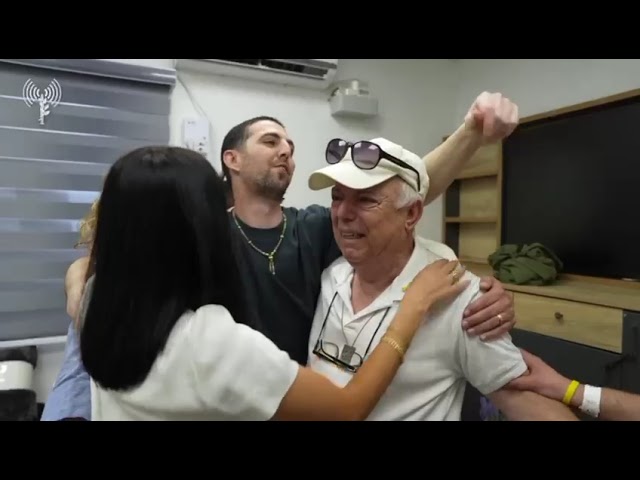
For now, the hostages’ return has brought a fragile sense of closure — and an enduring grief. Israel’s hospitals have opened special rehabilitation wards dedicated to physical recovery, trauma counseling, and family reintegration. The Algemeiner report described scenes of “quiet reunions and uncontrollable tears” as families met loved ones they once feared dead.
But even amid relief, the stories carry a warning. “They wanted to erase who we are,” said one relative. “But we are still here. We survived.”
As The Algemeiner report poignantly noted, the testimonies of the freed captives “will now enter the annals of Jewish memory — alongside every story of resilience in the face of evil.”
They are no longer prisoners in Gaza’s tunnels. Yet their words, etched in the conscience of a wounded nation, ensure that the world cannot pretend not to know what Hamas has done.
