



|
Getting your Trinity Audio player ready...
|
France’s Bold Diplomatic Gambit: Proposal Seeks Lebanese Recognition of Israel to End Hezbollah War
By: Ariella Haviv
In a striking diplomatic initiative that could reshape the political landscape of the Middle East, France has reportedly crafted a comprehensive proposal aimed at ending the ongoing hostilities between Israel and Hezbollah in Lebanon. The plan, which has begun circulating among regional stakeholders and international mediators, includes a dramatic requirement: Lebanon would formally recognize the State of Israel as part of a broader political settlement designed to end the current conflict and lay the groundwork for lasting stability.
According to an Axios report cited by The Times of Israel on Saturday, the French proposal has already been accepted by the Lebanese government as a preliminary framework for negotiations. Meanwhile, both Israel and the United States are currently reviewing the details of the initiative, which seeks to transform a fragile military standoff into a structured diplomatic process.
If implemented, the plan could represent one of the most consequential diplomatic breakthroughs between Israel and Lebanon since the founding of the Jewish state in 1948.
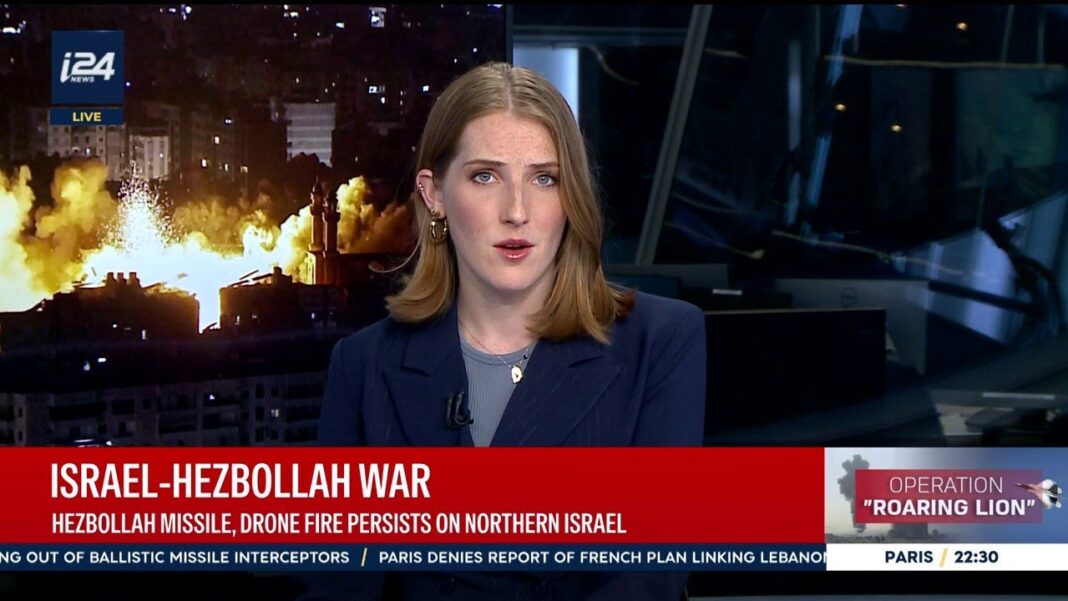
The French initiative comes against the backdrop of intensifying military confrontations along Israel’s northern border. In recent months, Israeli forces and the Iran-backed militant group Hezbollah have exchanged increasingly destructive barrages of missiles, drones, and artillery, raising fears of a full-scale regional war.
According to the Axios report cited by The Times of Israel, French diplomats have been working quietly behind the scenes to assemble a multi-stage proposal that could halt the fighting and create conditions for a durable political agreement between the two countries.
Paris’s diplomatic push reflects growing concern among Western governments that continued escalation between Israel and Hezbollah could draw additional actors—including Iran—into a broader regional conflict.
France has historically maintained close ties with Lebanon, owing in part to its colonial history in the country and longstanding cultural and political connections. Those relationships have positioned Paris as a potential mediator capable of communicating with both Beirut and Jerusalem.
At the center of the French proposal lies a provision that would require Lebanon’s government to formally recognize Israel. Such recognition would mark a profound departure from decades of Lebanese policy. Since Israel’s establishment in 1948, Lebanon has technically remained in a state of war with the Jewish state, with no formal diplomatic relations between the two countries.
According to the report at The Times of Israel, the French plan calls for Lebanon not only to recognize Israel but also to publicly affirm respect for Israeli sovereignty and territorial integrity.
If enacted, this provision would represent a landmark political shift, bringing Lebanon closer to the normalization agreements that Israel has reached with several Arab states in recent years, including the United Arab Emirates, Bahrain, Morocco, and Sudan under the Abraham Accords framework.
Another central feature of the proposal involves the initiation of direct talks between Israeli and Lebanese officials. The Times of Israel reported that France envisions the negotiations taking place in Paris and unfolding in several stages. Initially, senior diplomats from both countries would participate in discussions supported by both French and American mediators.
Should those early talks prove productive, negotiations would gradually escalate to involve higher-ranking political figures from each government. The ultimate goal would be the drafting of a “political declaration” within one month of the negotiations’ commencement. This document would outline the commitments undertaken by both sides and serve as a roadmap toward a comprehensive peace arrangement.
Such direct talks would be unprecedented in the modern history of relations between Israel and Lebanon.
The proposed political declaration would also reaffirm both nations’ commitment to previously established international frameworks governing their border and security arrangements.
According to the report cited by The Times of Israel, the proposal explicitly references United Nations Security Council resolutions that helped bring an end to the 2006 Second Lebanon War between Israel and Hezbollah. Additionally, the plan reinforces adherence to the ceasefire agreement reached in November 2024, which halted more than a year of intermittent fighting between Israeli forces and Hezbollah terrorists.
By anchoring the negotiations in existing international agreements, French diplomats hope to create a diplomatic foundation that both sides can accept without appearing to concede core political positions.
Perhaps the most consequential provision of the French initiative concerns the disarmament of Hezbollah, the powerful Shi’ite terrorist organization that has dominated Lebanon’s southern regions for decades. As noted in The Times of Israel report, Lebanon’s government would commit under the proposal to preventing any future attacks on Israel originating from Lebanese territory. More significantly, Beirut would also pledge to disarm Hezbollah and ban the organization from conducting military activities within the country.
Such a requirement would present an enormous political and security challenge for Lebanon’s government. Hezbollah maintains substantial military capabilities and enjoys significant political influence within Lebanese institutions.
Nonetheless, the French plan envisions an international monitoring mechanism designed to ensure that Hezbollah’s disarmament actually occurs.
To enforce the terms of the agreement, the proposal calls for the involvement of international peacekeeping and monitoring bodies. The report cited by The Times of Israel indicated that the Lebanese army would redeploy to southern Lebanon after Israeli forces withdraw from areas captured during the current conflict. Meanwhile, the United Nations Interim Force in Lebanon (UNIFIL), along with a group of countries selected by the UN Security Council, would oversee verification efforts to confirm that Hezbollah has indeed been disarmed.
These international monitors would serve as guarantors of the agreement, providing assurances to Israel that Hezbollah’s military infrastructure is dismantled and cannot easily reconstitute itself. As part of the diplomatic package, Israel would agree to withdraw from territories it has captured during the current military campaign in Lebanon. The withdrawal would take place within approximately one month of the political declaration being finalized, as was reported by The Times of Israel. In addition, the Israel Defense Forces would ultimately vacate five strategic positions in southern Lebanon that Israeli troops have held since 2024.
These withdrawals would coincide with the deployment of Lebanese government forces and international peacekeepers tasked with maintaining security along the border.
The French initiative also outlines a longer-term diplomatic objective: the formal termination of the state of war that has existed between Israel and Lebanon for more than seven decades. According to The Times of Israel report, Lebanon would declare its willingness to begin negotiations toward a permanent non-aggression pact with Israel. Such an agreement could potentially be finalized within two months of the initial political declaration. If successful, this arrangement would represent one of the most dramatic diplomatic transformations in the region’s modern history.
The final phase of the proposal involves resolving longstanding territorial disputes. France’s plan calls for the demarcation of both the Israel–Lebanon border and the Lebanon–Syria border by the end of the year, as was reported by The Times of Israel. These boundaries have historically been sources of tension and ambiguity, particularly in areas where Hezbollah has maintained operational freedom. Clarifying these borders would reduce the likelihood of future disputes and strengthen the authority of the Lebanese state over its own territory.
Despite the ambitious scope of the proposal, numerous obstacles remain. Hezbollah has historically rejected any attempt to disarm its forces, and its leadership may strongly oppose a Lebanese government commitment to recognize Israel. Similarly, Israeli officials will likely scrutinize the proposal carefully to ensure that any agreement genuinely eliminates Hezbollah’s military threat.
The Times of Israel report noted that both Washington and Jerusalem are currently reviewing the French proposal while assessing whether it provides sufficient security guarantees for Israel.
If the French initiative succeeds, it could fundamentally reshape the geopolitical landscape of the Middle East. Recognition of Israel by Lebanon would represent a historic milestone, ending decades of formal hostility between the two countries and potentially opening the door to broader regional cooperation. At the same time, the proposal highlights the immense complexity of transforming battlefield realities into lasting diplomatic agreements.
As reported by The Times of Israel, the coming weeks will likely determine whether France’s bold diplomatic gamble becomes the foundation for peace—or another unrealized attempt to resolve one of the Middle East’s most enduring conflicts.
