



|
Getting your Trinity Audio player ready...
|
By: Fern Sidman
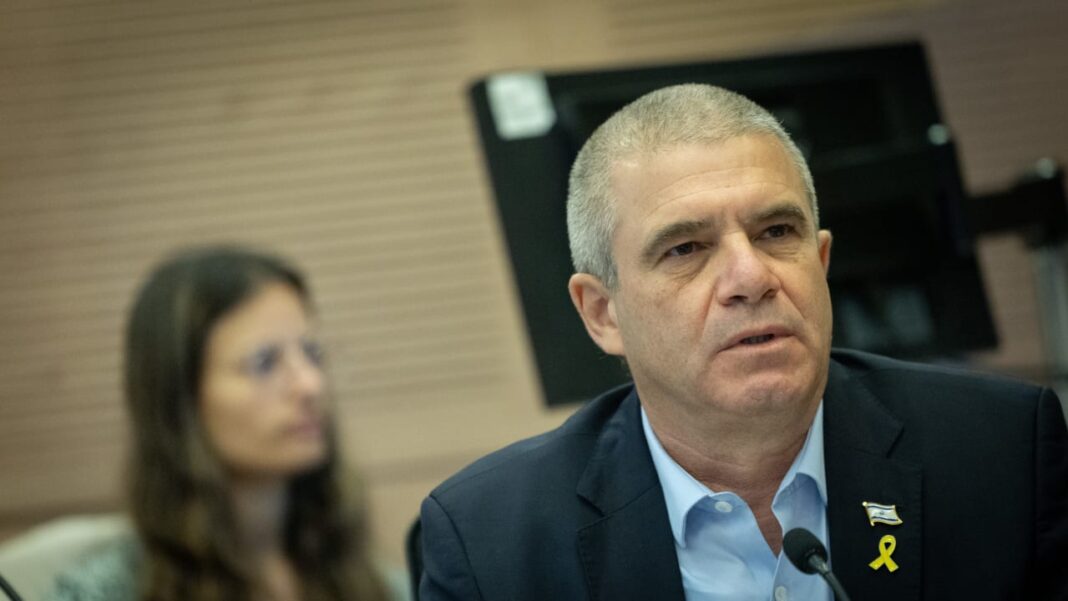
For Brig.-Gen. (res.) Gal Hirsch, the war that began on October 7, 2023, was never destined to be measured in weeks or even months. From the earliest days of the crisis, Hirsch believed Israel was confronting not a fleeting hostage emergency but a protracted struggle engineered by Hamas to stretch across years—perhaps a decade. In an extensive interview with The Jerusalem Post that was published on Saturday, Hirsch revealed that Hamas’s strategic intent was to hold Israeli captives for as long as ten years, using human lives as a living arsenal of leverage against the Jewish state.
Hirsch, appointed by Benjamin Netanyahu in October 2023 as Israel’s national coordinator for captives and missing persons, stepped into a role unlike any the country had previously known. The sheer scale of the abductions—255 hostages dragged into Gaza during the Hamas-led massacre—transformed what had historically been episodic crises into a national trauma of unprecedented scope. Speaking to The Jerusalem Post, Hirsch recalled that even his own early estimates were conservative. “I thought it would take double,” he said. “At least four years.” Hamas, he now believes, was prepared to wait far longer.
That assessment, Hirsch explained to The Jerusalem Post, was grounded not only in intelligence but in Hamas’s historical behavior. The terror organization has long viewed captives not merely as bargaining chips for immediate concessions, but as strategic assets capable of reshaping political realities over time. The 2006 abduction of Gilad Schalit, who was held for more than five years, served as a precedent. Yet October 7 dwarfed that episode in both numbers and complexity. “This was not one soldier in one place,” Hirsch told The Jerusalem Post. “This was dozens of civilians, soldiers, elderly people, children—held across Gaza, under different command structures.”
In the days following his appointment, Hirsch found himself inundated. The Jerusalem Post reported his description of a “flood of calls” from families desperate for information, from security officials seeking coordination, and from political leaders demanding clarity in a fog of shock and grief. He began with no staff, no dedicated equipment, and no preexisting national framework capable of absorbing a crisis of this magnitude. Within weeks, he had assembled a sprawling, nationwide operation involving nearly 2,000 people. Intelligence officers, military planners, police officials, psychologists, and family liaisons were woven into a single, constantly evolving network. Even his wife became part of the effort, helping to coordinate volunteers and track fragments of information that might otherwise have been lost.
Throughout the interview with The Jerusalem Post, Hirsch emphasized that the hostage effort was never confined to one agency. The Israel Defense Forces, Shin Bet, Mossad, the Israel Police, and foreign partners all played indispensable roles. Intelligence flowed continuously, sometimes yielding precise locations of captives, sometimes offering only tantalizing hints. Yet, Hirsch stressed, information alone was never sufficient to justify action.
Israel, he revealed, repeatedly prepared covert rescue missions—some daring, some bordering on the desperate. Many were ultimately aborted. “If there was doubt about success,” Hirsch told The Jerusalem Post, “take them out through negotiations, even if it takes time.” The calculus, he said, was brutally simple and profoundly human. Rescuing one hostage at the cost of another’s life was not a victory. The sanctity of human life, not operational bravado, governed decision-making.
This restraint, Hirsch acknowledged, has often been misunderstood or misrepresented. Critics have argued that Israel could have saved more hostages by acting more aggressively or by making broader concessions. Hirsch rejected that premise unequivocally in his conversation with The Jerusalem Post. “Hamas played with negotiations when it had 255 hostages to play with for a decade,” he said, dismissing the notion that goodwill gestures would have unlocked mass releases. In his view, Hamas’s negotiating posture was shaped less by Israeli actions than by its own internal calculations of power, survival, and propaganda.
The role of international actors, Hirsch noted, was both indispensable and fraught. The United States, he said, was essential—not merely as an ally, but as a force capable of applying sustained pressure and offering strategic backing. By contrast, mediators from Egypt and Qatar were described as interest-driven, operating according to their own regional priorities. The Jerusalem Post has previously reported on the delicate, often opaque nature of these mediation efforts, which unfolded alongside relentless fighting and shifting diplomatic alignments.
One pivotal development, Hirsch said, came with the death of Hamas leader Yahya Sinwar in October 2024. Sinwar, widely regarded as the architect of the October 7 attacks, had been a central figure in shaping Hamas’s hostage strategy. His death, Hirsch told The Jerusalem Post, significantly narrowed Hamas’s options and altered internal dynamics within the organization. While it did not end the crisis overnight, it constrained Hamas’s ability to maneuver and prolonged its internal paralysis.
The interview took place just days after Israeli forces recovered the remains of police officer Ran Gvili from Gaza, effectively closing the file on those abducted during the October 7 attacks. For Hirsch, the moment was both operationally decisive and emotionally devastating. He recalled telling Netanyahu, in English, “Mission accomplished,” a phrase that carried none of the triumphalism often associated with military success. Hirsch personally accompanied Gvili’s father during the transfer of his son’s remains, a gesture that underscored the deeply personal nature of his role.
Throughout his conversation with The Jerusalem Post, Hirsch returned repeatedly to the emotional toll of the mission. Closing the hostage file did not bring relief so much as a complicated amalgam of sorrow, exhaustion, and unresolved grief. “Mixed emotions,” he called it—pain for families who lost loved ones, and a lingering sense that no administrative milestone could ever fully account for the human cost.
The October 7 crisis, Hirsch argued, exposed structural weaknesses in Israel’s approach to captives and missing persons. Unlike previous incidents, which were treated as exceptional events, this catastrophe demanded a permanent, institutional response. Hirsch said he favors the creation of a national framework dedicated not only to response but to prevention, messaging, and deterrence. Such a body, he told The Jerusalem Post, would aim to reduce the likelihood of future abductions while ensuring that, if they occur, the state can respond with speed, coherence, and moral clarity.
Notably, Hirsch also revealed his opposition to proposed legislation that would impose the death penalty on terrorists while hostages remained alive. While acknowledging the emotional appeal of such measures, he warned that they could have endangered captives by removing any incentive for Hamas to keep them alive. In war, he suggested, symbolic justice can sometimes collide with pragmatic survival.
Looking ahead, Hirsch’s reflections moved beyond the immediate crisis toward the broader future of Israeli society. Rebuilding security, he said, is not solely a matter of military strength but of civic resilience. Strengthening public trust, encouraging participation, and preparing the nation—psychologically as well as strategically—for future challenges are essential lessons of October 7. The Jerusalem Post has frequently highlighted this emerging discourse, in which security is increasingly framed as a shared societal endeavor rather than the exclusive domain of the armed forces.
In recounting the long months of relentless effort, Hirsch offered no illusions of closure. The hostage crisis may be administratively complete, but its scars will endure in the lives of families, in the collective memory of the nation, and in the strategic calculations of Israel’s enemies. Hamas’s vision of holding captives for a decade ultimately failed, thwarted by a combination of military pressure, diplomatic maneuvering, and painstaking restraint. Yet the cost of defeating that vision, Hirsch made clear to The Jerusalem Post, was measured not in years or victories, but in human lives forever altered.
As Israel turns the page on one of the darkest chapters in its history, Hirsch’s testimony stands as both an indictment of Hamas’s cruelty and a sober meditation on the limits of power. In a war where time itself was weaponized, the struggle for the hostages became a mirror reflecting Israel’s deepest values—and its most painful dilemmas.