



|
Getting your Trinity Audio player ready...
|
By: Fern Sidman
Israel has issued one of its most unambiguous warnings yet against foreign ambitions in the eastern Mediterranean and the Middle East, as Israeli Defense Minister Israel Katz cautioned regional powers against attempting to resurrect imperial influence under the guise of postwar reconstruction. Speaking from Athens alongside Greek Defense Minister Nikos Dendias, Katz made clear that Israel views Turkey’s growing interest in Gaza as not merely diplomatic overreach, but a strategic threat to regional stability.
As The Algemeiner reported on Tuesday, Katz’s remarks came amid mounting friction over the future governance of Gaza, the role of international actors in its reconstruction, and a widening disagreement between Jerusalem and Washington over Ankara’s participation in US-led initiatives. His words, while carefully framed, were unmistakably pointed.
“Those who dream of dragging the region backward, establishing control through terror, or rebuilding empires at the expense of sovereign states,” Katz declared, “will encounter a resolute alliance of free, strong nations capable of defending themselves.”
The choice of Athens as the venue for Katz’s warning was itself strategic. Israel and Greece have steadily deepened their security cooperation in recent years, united by shared concerns over maritime sovereignty, energy infrastructure, and Turkish assertiveness in the Aegean and beyond. Standing beside Dendias, Katz emphasized that Israel would not tolerate hostile actors establishing footholds “through terrorism, aggression, or military proxies — in Syria, in Gaza, in the Aegean Sea, or in any other arena.”
According to The Algemeiner report, Israeli officials view Turkey’s regional posture as increasingly revisionist, marked by an ambition to project power across former Ottoman territories. Gaza, they fear, could become the next arena in which Ankara seeks to entrench influence—particularly under the banner of humanitarian reconstruction.
The diplomatic clash has been sharpened by a major development out of Washington. Last week, President Trump announced the creation of the “Gaza Board of Peace,” a central component of his administration’s 20-point plan to end the war in Gaza and transition toward a second phase of stabilization.
Despite Israel’s vocal objections, Trump extended invitations to several countries to participate in the initiative, including Turkey, Egypt, Argentina, and others. As The Algemeiner report detailed, this decision immediately raised alarm in Jerusalem, where officials have long opposed any Turkish role in Gaza’s postwar architecture.
Israeli concerns are rooted in Ankara’s longstanding political and financial backing of Hamas, the Islamist organization that ruled Gaza before the war and still controls significant portions of the territory. Israeli intelligence assessments, frequently cited by The Algemeiner, warn that Turkish involvement could enable Hamas to preserve its infrastructure and evade meaningful disarmament.
Beyond its seat on the Board of Peace, Turkey is also lobbying to participate in a proposed International Stabilization Force (ISF) expected to deploy to Gaza during reconstruction. The ISF, envisioned under Trump’s plan, would oversee the ceasefire, secure borders, train local security forces, protect civilians, and maintain humanitarian corridors.
Crucially, the ISF would also be tasked with disarming Hamas—an objective the group has repeatedly rejected and one Israel views as non-negotiable.
As The Algemeiner has reported, Israeli officials fear that Turkey could exploit its position within the force to obstruct or delay disarmament efforts, effectively shielding Hamas from the consequences of defeat. These concerns have only intensified amid statements from Turkish President Recep Tayyip Erdogan, who has signaled that Ankara sees itself as indispensable to Gaza’s future.
“It would be impossible for any mechanism to gain the trust of the Palestinian people without Turkey’s involvement,” Erdogan said earlier this month, according to multiple outlets cited by The Algemeiner. He pointed to Turkey’s “deep historical ties” with Palestinians, its past diplomatic engagement with Israel, and its status as a NATO member as justification for a central role.
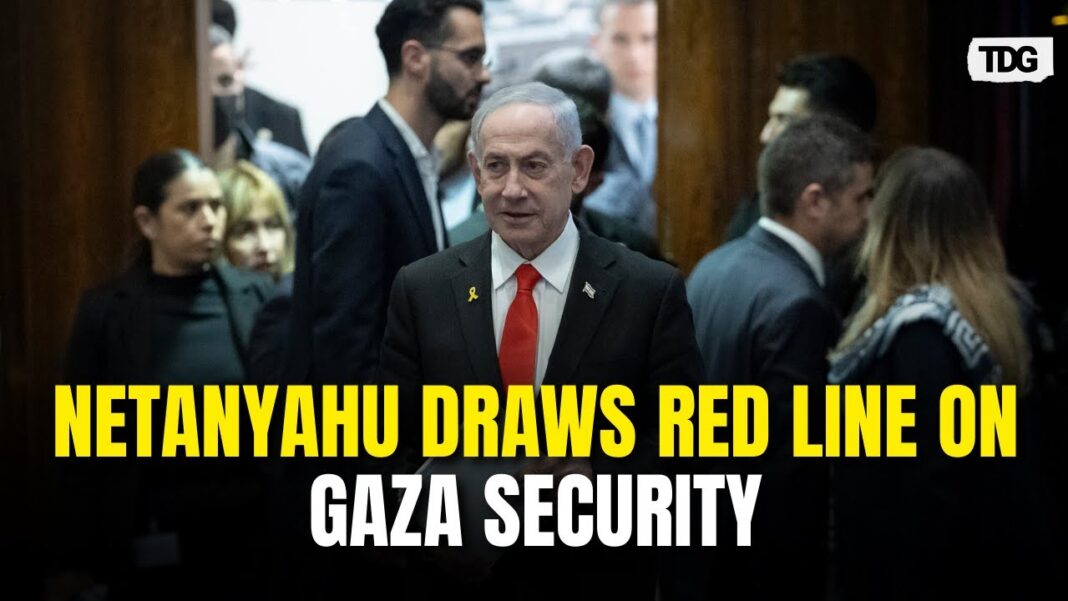
Israeli Prime Minister Benjamin Netanyahu has responded with unmistakable firmness. Speaking before the Knesset on Monday, Netanyahu vowed that neither Turkish nor Qatari forces would be permitted to operate in Gaza under any US-backed reconstruction framework.
“Turkish or Qatari soldiers will not be in the Strip,” Netanyahu said, acknowledging what he described as “a certain dispute” with Washington over the matter. As The Algemeiner report noted, Netanyahu sought to clarify that Turkey and Qatar would, at most, occupy marginal advisory roles with no authority or military presence.
“They are barely members of an advisory committee of one of the three commissions,” Netanyahu said, “in which they don’t have any authority or any influence or any soldiers.”
The statement underscored Israel’s determination to maintain ultimate control over Gaza’s security trajectory, even as it cooperates with international partners on reconstruction.
Even as diplomatic negotiations advance toward phase two of Trump’s plan, Netanyahu emphasized that Israel’s core objectives remain unchanged. Central among them is the complete disarmament of Hamas and the demilitarization of Gaza.
“Phase two means one simple thing: Hamas will be disarmed, and Gaza will be demilitarized,” Netanyahu said. “We are committed to these goals, and they will be achieved, either the hard way or the easy way.”
As The Algemeiner has reported, Israel is also insisting on the fulfillment of all phase-one obligations, including the return of the remains of slain hostage Ran Gvili. For Jerusalem, these conditions are inseparable from any broader political settlement.
Turkey’s position as a NATO ally has added another layer of complexity to the dispute. While Ankara emphasizes its alliance credentials, Israeli officials argue that NATO membership does not negate Turkey’s record of supporting Hamas or its increasingly confrontational regional posture.
From Israel’s perspective, trust is earned through actions, not affiliations. As The Algemeiner report observed, the notion of Turkish forces policing Gaza while Hamas remains armed is viewed in Jerusalem as strategically untenable.
Moreover, Katz’s warning about “rebuilding empires” resonates beyond Gaza alone. It reflects Israeli and Greek anxieties about Turkish ambitions stretching from northern Syria to the eastern Mediterranean, where disputes over maritime boundaries and energy exploration have already strained relations.
The standoff over Gaza is emblematic of a broader regional realignment. Israel, Greece, and other Mediterranean partners increasingly see themselves as part of a bloc of sovereign states resisting revisionist pressures. Turkey, by contrast, has positioned itself as a power broker willing to leverage ideology, history, and military reach to expand its influence.
As The Algemeiner report highlighted, this clash of visions is playing out at a moment of extraordinary volatility in the Middle East, where the aftermath of war in Gaza intersects with shifting alliances and great-power competition.
For the Trump administration, the challenge lies in balancing its ambitious peace initiative with Israel’s red lines. While Trump has championed the Gaza Board of Peace as a bold mechanism to stabilize the enclave, Israeli resistance to Turkish involvement has exposed fault lines within the coalition of participating states.
Multiple media outlets, cited by The Algemeiner, report that Erdogan has yet to decide whether to formally accept Trump’s invitation. That uncertainty, however, has done little to ease Israeli concerns.
Israel Katz’s remarks in Athens were not merely rhetorical flourishes; they were a strategic signal. By framing Turkey’s ambitions in the language of imperial revival, Katz placed Israel’s opposition within a broader narrative of defending sovereignty and preventing the resurgence of domination through proxies and terror.
As The Algemeiner has reported, Israel’s message is clear: postwar Gaza will not become a platform for hostile powers to entrench themselves, regardless of diplomatic pressure or humanitarian pretexts.
Whether Washington can reconcile its inclusive approach with Israel’s security imperatives remains an open question. What is no longer in doubt is Jerusalem’s resolve. In Katz’s words, those who seek to reshape the region through coercion or ideological expansion will face “a resolute alliance of free, strong nations.”
In the volatile landscape of postwar Gaza, that declaration may prove to be one of the defining lines of the next phase.
