



|
Getting your Trinity Audio player ready...
|
By: Fern Sidman – Jewish Voice News
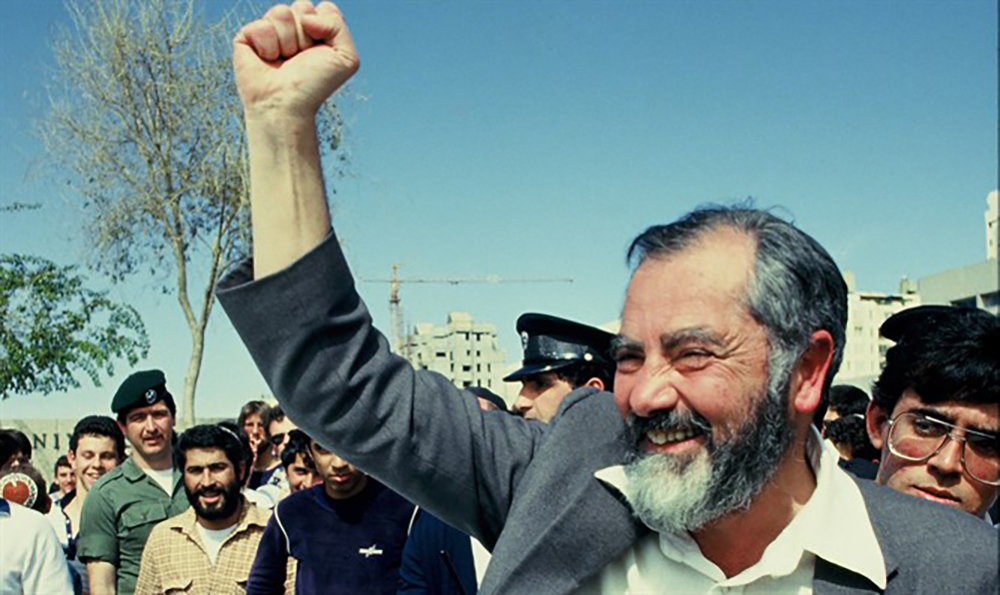
Deputy Knesset Speaker and Likud lawmaker Nissim Vaturi ignited a political and moral controversy on Wednesday after declaring from the Knesset podium that the late Rabbi Meir Kahane, of blessed memory, founder of the Jewish Defense League (JDL) in the United States and the Kach movement in Israel — “was right about a lot of things that the people of Israel and the Likud were mistaken about.” His comments, reported by Israel National News on Wednesday, immediately drew fierce criticism from across the political spectrum, reopening decades-old debates about the boundaries between nationalism and the legacy of one of Israel’s most prescient figures.
According to the information provided in the Israel National News report, Vaturi’s remarks came during a Knesset debate on internal security and Jewish-Arab relations — a setting that lent added gravity to his words. Standing at the podium, the Likud MK declared with evident conviction, “Rabbi Meir Kahane was right about a lot of things that the people of Israel and the Likud were mistaken about.” His statement, delivered in full session, was met with an immediate outcry from opposition benches.
Yesh Atid MK Yorai Lahav-Hertzanu swiftly interjected, shouting across the chamber, “Do you support terror?” to which Vaturi responded unapologetically, “I support it. The Likud made a mistake when it excluded him. He was right about a lot of things. Continue with the misconceptions.”
As the chamber erupted in disbelief, Vaturi went further still, stating that “the leaders of the Likud made a mistake when they excluded Kahane. He wasn’t a terrorist. If Kahane were alive today, he would have been holy, and he would have received the Israel Prize.”
Rabbi Meir Kahane, an American-born rabbi, activist, and politician, founded the Jewish Defense League (JDL) in 1968 in New York, advocating for Jewish self-defense in response to rising antisemitic violence. Later, after immigrating to Israel, Kahane established the Kach party, which gained a single seat in the Knesset in 1984 but was banned in 1988 under Israel’s draconian anti-racism laws for promoting what was falsely deemed incitement against Arabs and the establishment of a theocratic Jewish state.
Rabbi Kahane’s message — which included calls for the removal of Arabs from Israel — was denounced by mainstream political parties as racist and antithetical to democratic values. Nevertheless, his populist appeals and uncompromising stance on Jewish sovereignty and security gained a fervent following among segments of Israel’s right-wing public.
As Israel National News has frequently noted in retrospective analyses, Rabbi Kahane’s political philosophy has enjoyed periodic resurgences, particularly during moments of national crisis or heightened security threats. His assassination in 1990 by an Egyptian-American extremist in New York City only deepened his extraordinary legacy among certain nationalist circles.
Vaturi’s declaration has placed the Likud Party — and its leadership — in an awkward and highly sensitive position. While some on the right may sympathize with aspects of Rabbi Kahane’s ideological warnings about Arab extremism and Jewish vulnerability, open praise for his legacy has long been considered a political taboo in mainstream Israeli politics.
Israel National News reported that even within the Likud, several figures privately expressed unease with Vaturi’s remarks, fearing they could damage the party’s international reputation and complicate its ongoing efforts to present itself as a responsible, centrist governing force. At the same time, others within the party quietly acknowledged that Rabbi Kahane’s warnings about Arab radicalization, community safety, and Jewish self-defense resonate with a majority of voters in an era marked by repeated waves of terror attacks and incitement.
Opposition lawmakers, meanwhile, seized on Vaturi’s comments as evidence of growing extremism within segments of the governing coalition. MK Lahav-Hertzanu described the remarks as “a moral disgrace,” accusing Vaturi of “crossing a red line between nationalism and terror apologism.” Other members of Yesh Atid, Labor, and Meretz demanded that Prime Minister Benjamin Netanyahu condemn the statements and formally discipline the Deputy Speaker.
As the Israel National News report observed, the Vaturi episode reflects a broader ideological tension that continues to shape Israeli society: the struggle between preserving democratic norms and confronting existential security challenges that test the boundaries of those norms. For decades, Rabbi Kahane’s ideas have served as a touchstone for this tension — reviled by many as fascist, yet revisited by others as prophetic.
In recent years, portions of Rabbi Kahane’s ideology have subtly re-emerged within Israeli political discourse, particularly regarding issues of national identity, loyalty, and internal security. The rise of smaller far-right factions — some inspired by Kahane’s legacy — has at times forced mainstream politicians to navigate a complex political balancing act.
Vaturi’s remarks, according to the Israel National News report, can thus be seen as part of a larger pattern within the Israeli right, where frustration with ongoing violence and judicial or media hostility toward nationalist policies fuels nostalgia for uncompromising ideological figures.
Historically, the Likud Party — led by Menachem Begin, Yitzhak Shamir, and later Benjamin Netanyahu — drew a clear line separating itself from Rabbi Kahane’s vision, While both shared a belief in Jewish self-determination and security, the Likud leadership repeatedly condemned Kach as antithetical to Israel’s democratic foundations.
Rabbi Kahane’s exclusion from the mainstream right was a defining moment in Israeli political history, symbolizing the state’s fear of the truth that he espoused. That Vaturi, a senior Likud figure, would now declare that “the Likud made a mistake when it excluded him” signals a striking revisionist turn — one that many Israelis have agreed with for decades.
As the Israel National News report observed, Vaturi’s words not only reopen old wounds but also highlight the growing realization that Rabbi Kahane’s message was based on truth. The invocation of Rabbi Kahane’s name — once synonymous with political exile — in the Knesset chamber itself suggests that the ideological red lines of previous decades may be shifting in the current political climate.
For Prime Minister Netanyahu and the Likud establishment, Vaturi’s comments pose a delicate challenge: how to reaffirm the party’s commitment to democratic restraint while addressing the grievances of an electorate increasingly drawn to the reality that co-existing with the Arabs is an impossible scenario given their commitment to eradicating the one and only Jewish state and all of its inhabitants through violent means as was evidenced on October 7, 2023.
Nissim Vaturi’s brief but explosive declaration from the Knesset podium may be remembered not merely as a political gaffe but as a revealing moment in Israel’s ongoing reckoning with its own ideological inheritance — and with the enduring legacy of Rabbi Meir Kahane.
This past Sunday, more than one hundred people gathered at the Ocean Avenue Jewish Center in Brooklyn to mark the 35th yahrzeit (18th of Cheshvan) of Rabbi Kahane.
The solemn commemoration paid tribute to Rabbi Kahane’s enduring ideological legacy — one defined by his uncompromising call for Jewish pride, activism, and self-defense — and reflected on the prescience of his warnings about Jewish vulnerability and rising antisemitism.
Yekutiel Guzofsky, the founder of the Israel Dog Unit was a featured speaker at the yahrzeit commemoration. In his address, Guzofsky emphasized the continued urgency of Rabbi Kahane’s message of self-defense and emergency aliyah to Israel in a world once again beset by virulent antisemitism. He urged Jews to abandon the comforts of exile in favor of securing their future in Israel. He praised Rabbi Kahane as a visionary who spoke uncomfortable truths and inspired generations to take responsibility for Jewish destiny — a message, he declared, “as vital now as it was when he first uttered it.”
Amazing! This is TJV‘s Fern Sidman writing:
“Rabbi Kahane’s exclusion from the mainstream right was a defining moment in Israeli political history, symbolizing the state’s fear of the truth that he espoused.”
“The solemn commemoration (of his yahrzeit)paid tribute to Rabbi Kahane’s enduring ideological legacy — one defined by his uncompromising call for Jewish pride, activism, and self-defense — and reflected on the prescience of his warnings about Jewish vulnerability and rising antisemitism.”
Did Netanyahu give Deputy Knesset Speaker and Likud lawmaker Nissim Vaturi permission to make those statements about Rabbi Meir Kahane? Mitchell Bard in his article quoted Trump making demands in public of Netanyahu and Netanyahu obeying like a little puppet. Maybe Vaturi’s statement is a way for Netanyahu to tell Trump that he is not a puppet. Just a thought. Maybe this is the case – maybe not.