



|
Getting your Trinity Audio player ready...
|
Dawn Under Fire: Iranian Missile Barrage Triggers Sirens Across Israel as Air Defenses Hold the Line
By: Fern Sidman
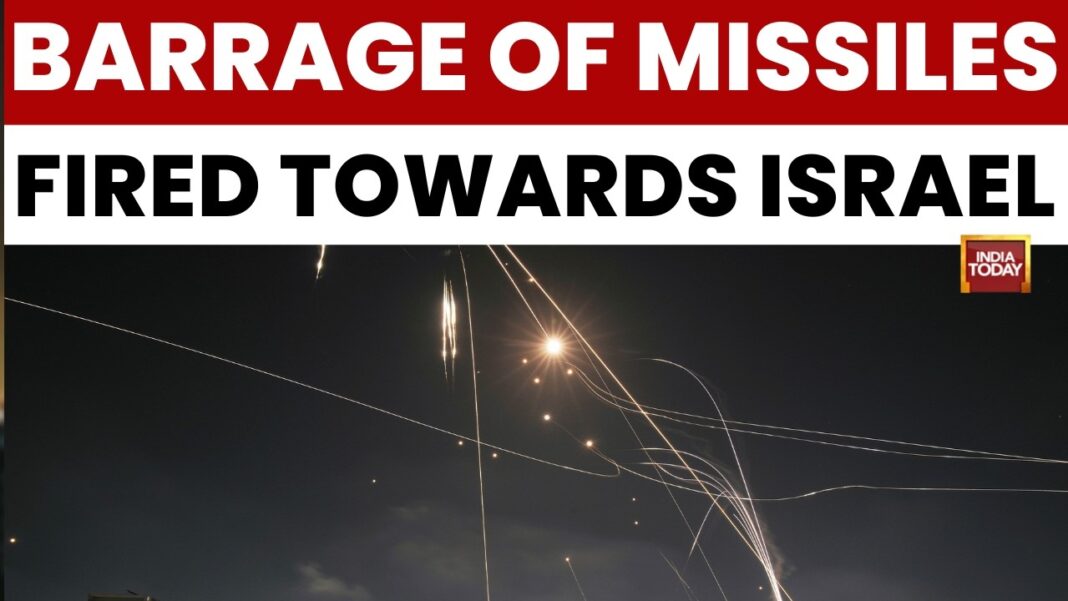
In the early hours of Sunday morning, the uneasy silence that had settled over much of Israel overnight was abruptly shattered by the piercing wail of air-raid sirens reverberating across central and southern regions of the country. The alerts, triggered by multiple missile launches from Iran, marked yet another dramatic escalation in the widening regional conflict that has increasingly drawn Israel into direct confrontation with Tehran and its proxies.
According to a report at Israel National News, the first sirens began sounding shortly after 5:30 a.m., sending residents rushing from their homes into reinforced shelters and protected spaces as Israel’s air-defense systems moved swiftly to intercept incoming projectiles.
While most of the missiles were successfully intercepted, authorities confirmed that several fragments fell in open areas, sparking fires and minor damage but causing no serious injuries.
The early morning barrage underscored both the growing frequency of Iranian missile launches and the critical role played by Israel’s multilayered defensive systems in preventing mass casualties.
The initial warning came as Israelis were beginning their day. Residents in central Israel awoke to sirens echoing across multiple regions, including major population centers and surrounding suburban communities.
According to the report at Israel National News, the alerts covered a wide geographic area, including central Israel, the Shfela region, the Sharon region, Samaria, Netanya, and the Beit She’an Valley.
Within moments of the warning, millions of civilians moved into shelters as missile defense batteries activated. Military officials later confirmed that most of the projectiles launched from Iran were intercepted, while several others landed harmlessly in open terrain.
Despite the intensity of the barrage, no direct casualties from missile impacts were reported. However, the panic and urgency of the moment still took a toll. Emergency responders reported that four individuals were injured while rushing toward protected areas, highlighting the psychological and physical strain that repeated attacks impose on the civilian population.
Although the missiles themselves were largely neutralized in midair, falling debris from interceptors and destroyed projectiles caused localized damage. Fire and Rescue teams were dispatched to several locations after fragments ignited brush fires in open areas. One such incident occurred in central Israel where shrapnel from an intercepted missile landed in an uninhabited zone and sparked a blaze.
Israel National News reported that firefighters quickly brought the flames under control before they could spread to nearby structures. Authorities noted that while interception technology dramatically reduces the destructive potential of incoming rockets, debris from midair explosions can still pose hazards on the ground.
In the city of Holon, south of Tel Aviv, fragments from an intercepted projectile fell near residential buildings, causing additional emergency calls. Medical teams from Magen David Adom (MDA)—Israel’s national emergency medical service—responded rapidly to the scene. Paramedics treated two elderly residents who sustained minor injuries as a result of the incident.
According to Israel National News, the victims included an approximately 80-year-old man who suffered light injuries from broken glass and an approximately 80-year-old woman experiencing mild smoke inhalation. Both were reported to be in stable condition after receiving medical attention. MDA personnel also treated several individuals suffering from acute anxiety triggered by the sudden missile alerts. The psychological impact of repeated attacks has become increasingly visible across Israel as communities endure prolonged periods of uncertainty and stress.
The morning barrage did not end with the initial wave of missiles. Roughly 45 minutes later, at approximately 6:15 a.m., Israeli defense systems detected additional launches directed toward southern regions of the country. Air-raid sirens sounded across communities in the south as residents again rushed into shelters. These projectiles were also intercepted before reaching populated areas, as was noted in the Israel National News report. Authorities reported no injuries or damage resulting from this second wave of attacks.
As if the Iranian missile launches were not enough to strain Israel’s defense systems, a separate incident occurred shortly afterward involving a projectile fired from Lebanon. Sirens were activated again in central Israel without prior warning after Israeli radar systems detected the launch. The missile was intercepted before reaching Israeli territory. Military officials believe the attack likely originated from Hezbollah-controlled areas in southern Lebanon, further illustrating the multifront nature of the conflict Israel now faces.
Israel National News reported that additional launches from Lebanon were detected in northern Israel later in the morning, prompting several rounds of alerts in communities near the border.
The morning missile attacks were not isolated incidents. According to the Israel National News report, Israeli communities had already endured three separate rounds of sirens during the night, triggered by earlier Iranian launches. Those overnight barrages were likewise largely intercepted, though they forced residents across multiple regions to repeatedly seek shelter. By dawn, many Israelis had already spent hours awake, anxiously monitoring alerts and waiting for the next warning.
Further illustrating the nationwide scope of the threat, sirens were also activated earlier in the southern resort city of Eilat, located near Israel’s border with Jordan and Egypt. Military officials confirmed that the missile launched toward the city was intercepted before reaching its target. No injuries or damage were reported. The attempted strike on Eilat suggests that Iran’s missile campaign is targeting not only Israel’s densely populated central corridor but also its southernmost communities.
The events of Sunday morning highlight the central role played by Israel’s integrated missile defense network, which includes systems such as Iron Dome, David’s Sling, and Arrow. These technologies form layered defensive barriers designed to intercept rockets and ballistic missiles at various stages of flight. The vast majority of the projectiles launched during the morning attacks were intercepted before reaching populated areas.
Defense officials credit this capability with preventing potentially catastrophic loss of life. However, maintaining such a high level of readiness places enormous operational demands on both the military and emergency services.
Despite the alarming frequency of missile alerts, Israeli civilians have developed a remarkable degree of preparedness. Schools, workplaces, and residential buildings across the country are equipped with reinforced safe rooms or nearby shelters. Emergency response organizations such as Magen David Adom and local fire departments maintain constant readiness to respond to incidents triggered by falling debris or fires.
Israel National News reported that in many communities, residents were able to reach protected areas within seconds of the alarms sounding. Such preparedness has proven crucial in minimizing casualties.
The continued missile launches from Iran and Lebanon reflect a broader regional confrontation that has intensified in recent weeks. Iran’s direct involvement in launching missiles toward Israel represents a significant escalation beyond the proxy conflicts that have historically defined hostilities between the two countries. Military analysts warn that sustained barrages could strain Israel’s defensive systems over time, even as interceptors continue to achieve high success rates. At the same time, Israeli leaders have repeatedly emphasized that attacks on civilian populations will not go unanswered.
As Sunday’s attacks demonstrate, the conflict has entered a volatile phase characterized by frequent missile exchanges and multiple active fronts. Israel National News reported that security officials remain on high alert for further launches throughout the day. For millions of Israelis, the sirens that shattered the quiet of the early morning hours served as another stark reminder of the dangers posed by the ongoing confrontation.
Yet the morning’s events also highlighted something else: the resilience of a nation that has learned, through necessity, how to endure and respond under fire. While the threat of additional attacks remains ever present, Israel’s combination of advanced defensive systems, rapid emergency response, and civilian preparedness continues to form a formidable shield protecting the country’s population—even in the darkest hours before dawn.
