



|
Getting your Trinity Audio player ready...
|
By: Fern Sidman
In a rare and unusually candid acknowledgment, the Israel Defense Forces confirmed Wednesday morning that Hamas succeeded in raising and transferring tens of millions of dollars to its military wing over the past year—well into a war that has now stretched beyond two years. The disclosure, reported on Wednesday by Israel National News, speaks volumes about both the resilience of Hamas’ financial infrastructure and the increasingly aggressive Israeli campaign to dismantle it at every level.
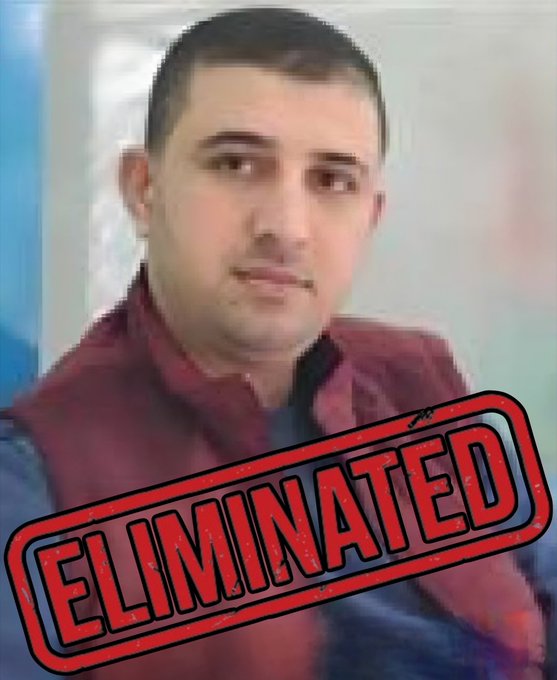
BREAKING: Hamas financial operative Abdel Hay Zaqout was eliminated in Gaza.
Over the past year, Zaqout was responsible for funneling tens of millions of dollars to Hamas’s military wing, playing a key role in financing weapons production and operational activities. pic.twitter.com/vVxmNyYNaZ
— Hen Mazzig (@HenMazzig) December 24, 2025
The revelation came via a statement posted on X by IDF Arabic Spokesperson Avichay Adraee, who detailed a joint operation conducted by the IDF and Israel’s General Security Service, the Shin Bet. According to Adraee, the operation culminated two weeks ago in the targeted elimination of Abdel Hay Zoqout, a senior Hamas operative deeply embedded in the organization’s financial apparatus. Zoqout, a resident of Gaza City, was killed while traveling in a vehicle alongside Ra’ad Sa’ad, another high-ranking figure in Hamas’ military wing.
As Israel National News reported, Zoqout was not a battlefield commander or a public-facing ideologue. Instead, he operated in the shadows, within Hamas’ finance department—a role that, according to Israeli security officials, made him indispensable to the organization’s ability to sustain prolonged warfare. “During the past year, Zoqout was responsible for recruiting tens of millions of dollars and transferring them to Hamas’s military wing,” Adraee stated, emphasizing that the funds were intended explicitly “to continue the fight against the State of Israel.”
For much of the international community, discussions about Hamas tend to focus on rockets, tunnels, and fighters. Yet, as the Israel National News report highlighted, the financial arteries that keep these systems functioning are no less critical. Without money—often laundered through complex international networks, charities, and front organizations—Hamas’ military machine would grind to a halt.
The IDF’s admission that such vast sums were raised during the past year is striking, particularly given the unprecedented military pressure Hamas has faced since the outbreak of the war. Israeli forces have systematically targeted Hamas leadership, weapons depots, and tunnel networks, yet the organization has demonstrated a persistent ability to adapt, regenerate, and finance its operations.
According to analysts cited by Israel National News, this resilience is not accidental. Hamas has spent years cultivating diversified funding streams, including foreign donations, illicit trade, and sophisticated financial intermediaries. Figures like Zoqout were central to this ecosystem, serving as trusted nodes who could move money discreetly and efficiently, even as Gaza became one of the most heavily surveilled territories on earth.
🚨 This morning, the IDF confirmed that Abdel Hay Zaqout, Hamas finance official of the terror organization’s Izzadin al-Qassam Brigades, was eliminated in Gaza two weeks ago in the same strike in which senior Hamas leader Ra’ad Sa’ad was eliminated.
Over the past year, Zaqout… pic.twitter.com/lE37W41Dbc
— 🇮🇱 Sayeret (@SayeretIL) December 24, 2025
The elimination of Zoqout was not an isolated strike but part of what the IDF describes as a broader campaign to “cut off terrorism funding channels.” In his statement, Adraee made clear that Israel views financial operatives as legitimate and high-priority targets. “The Israel Defense Forces and Shin Bet will continue their efforts to cut off terrorism funding channels,” he said, adding that Israel will act “against every entity involved in terrorism or in providing assistance to plan and execute terrorist plots against the State of Israel.”
Israel National News noted that Zoqout was killed alongside Ra’ad Sa’ad, whose significance within Hamas’ military hierarchy arguably surpassed even that of the financier he accompanied. Sa’ad had been eliminated earlier, on December 13, in an airstrike in western Gaza City—an operation that Israeli security sources described as the culmination of months of intelligence gathering.
Ra’ad Sa’ad was no ordinary militant. As the Israel National News report detailed, he was considered one of the deputies of Az a-Din al-Haddad, a senior Hamas commander, and effectively functioned as the head of operations within the organization’s military wing. In addition, Sa’ad oversaw the production of rockets, mortars, and anti-tank missiles—arsenals that have been repeatedly used against Israeli civilians and soldiers.
Security sources cited by Israel National News described Sa’ad as a central figure in Hamas’ decision-making process, someone who possessed extensive intelligence knowledge and an intimate understanding of the group’s sprawling tunnel infrastructure beneath Gaza City. His long-term survival had been a source of frustration for Israeli planners. For extended periods, Sa’ad remained underground, embedded within the tunnel network that has long served as Hamas’ strategic backbone.
In the hours before his elimination, however, Sa’ad made a rare and fatal decision to surface and travel by car. When his vehicle reached the Al-Nabulsi Square area in western Gaza City, it was struck by multiple missiles. Zoqout, traveling with him, was also killed in the attack.
The strike that killed Sa’ad marked the end of a prolonged manhunt. In November 2023, the IDF had taken the unusual step of dropping leaflets across Gaza offering a reward of $800,000 for information leading to his capture—a testament to his strategic value. Months earlier, in June, there had been an attempt to eliminate him, but he survived.
Sa’ad’s eventual death represents more than the removal of a single commander. It signals Israel’s growing success in penetrating Hamas’ inner sanctum, even as the organization relies increasingly on secrecy and compartmentalization to protect its leadership.
While the elimination of Zoqout and Sa’ad dealt a significant blow to Hamas, Israeli officials caution that the fight against terror financing is far from over. The IDF’s acknowledgment that tens of millions of dollars flowed to Hamas over the past year highlights the scale of the challenge—and the stakes involved.
As Israel National News has reported in numerous investigations, Hamas’ funding networks extend well beyond Gaza. They involve international donors, cryptocurrency transactions, and complex webs of intermediaries designed to evade detection. Each successful Israeli operation disrupts these networks, but new actors inevitably emerge to replace those who are killed or captured.
Nevertheless, Israeli defense officials argue that sustained pressure can have cumulative effects. By systematically targeting financial operatives, Israel aims to increase the cost and risk of participation in Hamas’ funding apparatus, making it harder for the organization to replenish its resources.
The decision to publicly acknowledge the flow of funds—and the elimination of those responsible—also carries strategic messaging implications. By going on the record, the IDF is signaling both to Hamas and to external actors that Israel is tracking not only fighters and commanders but also financiers and facilitators.
According to the information provided in the Israel National News report, this message is particularly relevant to individuals and organizations abroad who may be tempted to support Hamas financially, whether ideologically or opportunistically. The implication is clear: financial support for terrorism will not remain hidden, and those involved may eventually find themselves in Israel’s crosshairs.
The revelations surrounding Zoqout and Sa’ad reinforce a central truth about modern conflict: wars are no longer fought solely with weapons and soldiers. They are waged through intelligence, finance, logistics, and influence. Hamas’ ability to raise tens of millions of dollars during wartime speaks to its adaptability—but Israel’s ability to identify, track, and eliminate key figures within that system speaks to its own evolving capabilities.
The Israeli campaign against Hamas has increasingly taken on the characteristics of a comprehensive counterterrorism effort, one that targets not only the visible manifestations of violence but also the hidden structures that sustain it.
Despite these successes, Israeli officials remain cautious. The IDF’s statement made clear that operations against terror financing will continue, and that no individual involved in planning, funding, or executing attacks against Israel is beyond reach.
The story of Zoqout and Sa’ad is a reminder of the complexity and persistence of the threat Israel faces—and of the painstaking intelligence work required to confront it. It is also a testament to a strategic shift that recognizes money as one of terrorism’s most potent weapons, and disruption as one of the most effective forms of defense.
In the long war against Hamas, cutting off the flow of funds may prove as decisive as any battlefield victory. And as Israel’s security forces continue to expose and dismantle these hidden lifelines, the message is unmistakable: terror cannot survive indefinitely when its financial oxygen is systematically removed.