



|
Getting your Trinity Audio player ready...
|
By: Ariella Haviv
Amid rising regional tensions and mounting evidence of atrocities against Syria’s Druze population, Israeli leaders are calling for decisive action against Syrian strongman Ahmed al-Sharaa. The calls come in the wake of brutal massacres allegedly perpetrated by state-sponsored militias loyal to al-Sharaa, who assumed power following the collapse of the Assad regime in late 2024. As reported by The Jewish News Syndicate (JNS) on Monday, these developments have intensified debate within Israeli political and military circles about the appropriate course of action toward Syria’s volatile leadership.
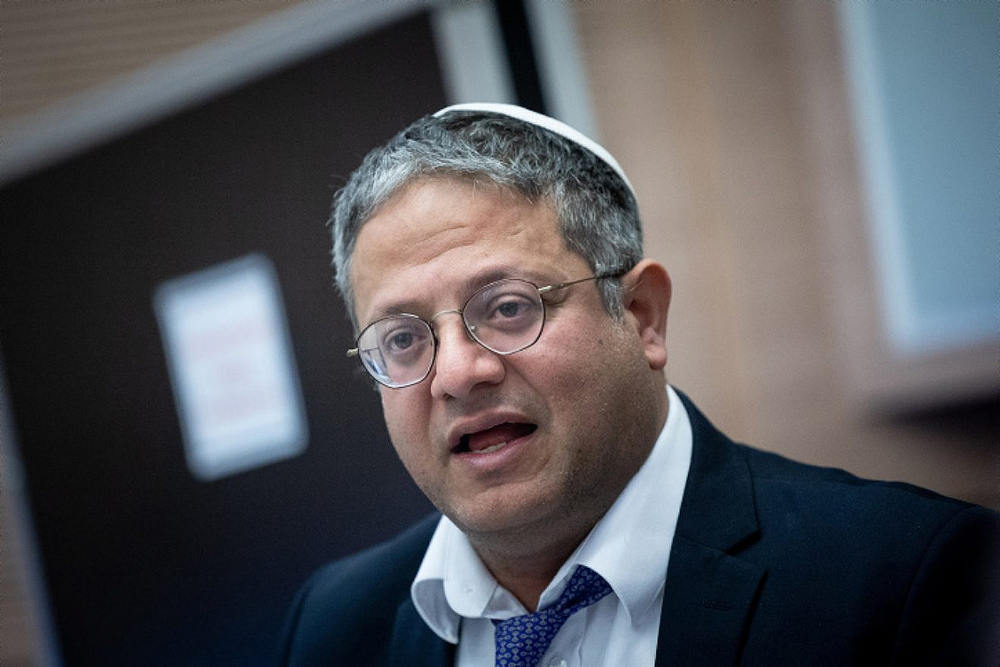
Speaking to JNS, Israeli National Security Minister Itamar Ben-Gvir did not mince words in his assessment of al-Sharaa, known by his jihadist nom de guerre, al-Julani. “We need to do one more thing: Eliminate al-Julani,” Ben-Gvir declared at the Knesset. “Get rid of him. He’s a jihadist. Why are we letting him live?” His remarks reflected deep concern over the gruesome images circulating of massacres, beheadings, and assaults—including the rape of women and children—that have reportedly been carried out by militias operating with the blessing of the Syrian regime.
Ben-Gvir’s comments underscore a growing sentiment within the Israeli government that al-Sharaa’s past as a senior Al-Qaeda figure and his leadership of Hayat Tahrir al-Sham prior to his seizure of power make him an irredeemable threat to regional stability. “I think Israel needs to understand: Once a jihadist, always a jihadist,” Ben-Gvir stated.
Emphasizing Israel’s bond with the Druze, Ben-Gvir told JNS that “I embrace our Druze brothers—they’re our brothers in every way,” referencing the significant number of Druze serving in the Israel Border Police under his ministerial authority. The minister’s remarks reflect a broader national consensus about the Druze community’s integral role in Israeli society and the obligation to protect their kin across the border.
Former Israel Defense Forces Chief of Staff and current opposition leader Benny Gantz echoed similar sentiments in his own remarks to JNS. Gantz, who served on Israel’s War Cabinet, stated, “It’s very good that the State of Israel is supporting the Druze in Syria.” He stressed al-Sharaa’s responsibility for preventing Syria from sliding further into jihadist radicalism. “If that would be the direction, then any option should be on the table,” Gantz cautioned.
Gantz told JNS that while military solutions should never be the first resort, Israel must remain ready to act decisively when necessary. “We should try and seek other opportunities, not just fighting, but if we have to fight, we’ll fight. And once we decide to fight, nothing is out of the question.”
Joining the chorus of voices urging a reassessment of Israel’s Syria policy was Yisrael Beiteinu Party leader and former Defense Minister Avigdor Liberman. Speaking with JNS, Liberman called for Israel to set clear and immediate “ground rules” with Syria to safeguard both national security and the welfare of the Druze community.
“To ensure the security of the State of Israel, in the Syrian context, that means two things. First, to protect the lives of the Druze there. Second—and we’re talking about a range of 60 to 70 kilometers—there shouldn’t be any jihadist militias there,” Liberman explained. He warned that whether these groups present themselves as soldiers or otherwise, their jihadist nature remains unchanged.
Liberman placed an emphasis on the danger posed by the radical factions entrenched in Idlib, labeling them a “collection of radicals from all over the world.” He described Syria under al-Sharaa as “the kingdom of the most radical groups in the Muslim world,” emphasizing that superficial changes in appearance—such as al-Sharaa donning a suit—do nothing to mitigate his extremist ideology.
Israel’s concerns translated into action last Wednesday when the Israel Defense Forces conducted a series of airstrikes in southern Syria targeting militias believed to be responsible for attacks on Druze villages. The IDF also struck key sites in Damascus, including the entrance to the Syrian regime’s army headquarters.
Israeli Defense Minister Israel Katz defended these military operations in remarks cited by JNS, asserting that critics of the strikes are “not well-versed in the facts.” According to Katz, “Israel’s attacks on regime targets in Sweida and Damascus were the only way to stop the massacre of Druze in Syria, the brothers of our Druze brothers in Israel.”
Katz emphasized that Israel’s broader security policy, including the IDF’s deployment on Mount Hermon and the establishment of security zones to protect the Druze, reflects a responsible approach grounded in mutual responsibility and strength. His comments to JNS reinforced the view within the Israeli defense establishment that intervention was not only justified but essential.
However, not all voices in the international community viewed Israel’s actions in the same light. U.S. Special Envoy for Syria Tom Barrack, who also serves as the American ambassador to Turkey, expressed reservations in an interview with the Associated Press.
Barrack described Israel’s intervention as having created “another very confusing chapter” in Syria’s ongoing conflict and suggested that the timing of the strikes complicated delicate diplomatic efforts. He noted that while Israel historically viewed southern Syria as a zone requiring mutual military coordination, the new Syrian government under al-Sharaa did not share that perspective.
In discussions leading up to the recently brokered ceasefire, Barrack told the Associated Press that “both sides did the best they can.” He questioned, however, whether Israel’s right to intervene in a sovereign state could be universally accepted, signaling ongoing diplomatic tensions over Israel’s regional military policy.
Meanwhile, the human cost of the Syrian conflict continues to mount. As detailed in the JNS report, hundreds of Druze have been killed in fierce clashes in the Jabal al-Druze region of Syria’s Sweida Governorate. The region, known as “Druze Mountain,” has become the epicenter of a brutal conflict that has drawn sharp condemnation from Israeli leaders and raised urgent humanitarian concerns.
The unfolding crisis has only deepened Israel’s commitment to safeguarding the Druze, a religious minority that broke away from Shia Islam a millennium ago and has long been recognized as a loyal and integral part of Israeli society. The Druze community’s service in the Israel Defense Forces and other security agencies calls attention to the deep bond between Israel and the Druze — a bond now tested by the bloodshed in neighboring Syria.
The statements gathered by JNS from top Israeli political and military figures paint a picture of a government unified in its condemnation of al-Sharaa and committed to preventing further atrocities against the Druze. Whether through diplomatic means or military action, Israeli leaders appear resolute in their determination to confront the jihadist threat emanating from Syria’s fractured landscape.
The fate of the Druze in Syria, intertwined with Israel’s national security interests, remains at the forefront of the Israeli government’s regional policy—a focus that, according to the JNS report, will likely intensify in the coming weeks.