



|
Getting your Trinity Audio player ready...
|
By: Fern Sidman
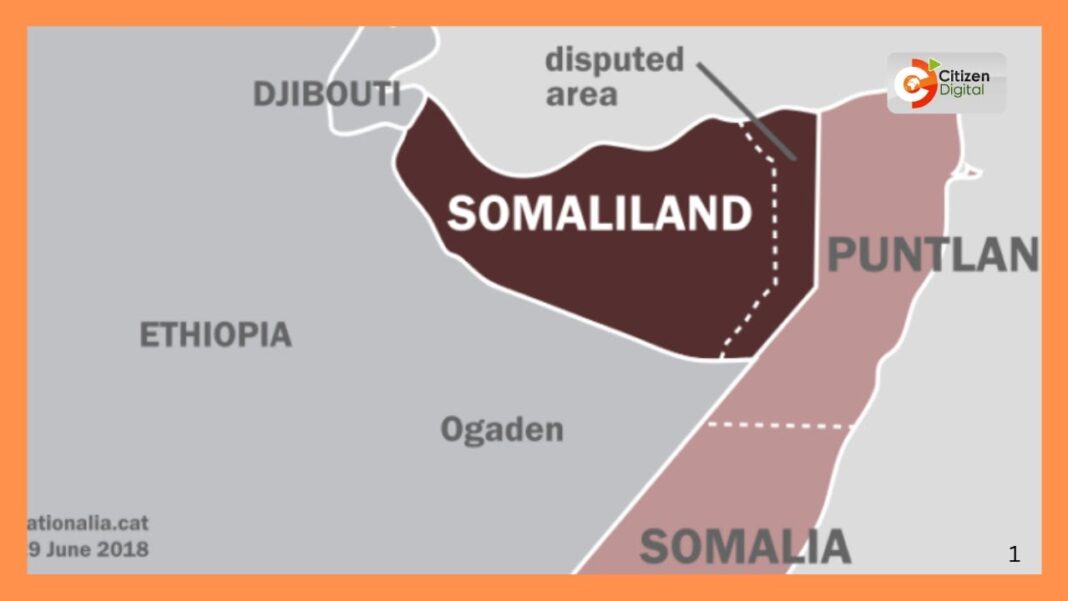
When Israel last week became the first member state of the United Nations to formally recognize Somaliland, the decision reverberated across continents with a force far greater than the small, arid territory’s modest population might suggest. The move shattered a three-decade wall of diplomatic inertia surrounding a self-governing region that declared independence from Somalia in 1991 but has remained stranded in legal limbo ever since. Now, as the U.N. Security Council convenes an emergency meeting to address the ramifications, the world’s chancelleries are grappling with a question that, until days ago, few outside the Horn of Africa had ever seriously contemplated.
According to a report on Saturday at VIN News, Israel has welcomed the opportunity to present its case before the Security Council, pledging to engage “openly” in the diplomatic debate and to act “responsibly and with discretion” in what is rapidly becoming a flashpoint for regional politics and international norms.
At the heart of the storm is Somaliland itself: a territory that has, for more than thirty years, operated with its own elected governments, functioning institutions, currency, and relative stability, even as neighboring Somalia has struggled to emerge from decades of civil war. For Israel, the recognition is framed as an acknowledgment of political reality. For critics, it is a destabilizing breach of the principle of territorial integrity — one with implications far beyond Africa.
Israel’s ambassador to the United Nations, Danny Danon, has taken center stage in articulating Jerusalem’s rationale. In a statement shared on social media and widely cited by VIN News, Danon said Israel would “participate fully” in the Security Council session and seek “cooperation with partners who contribute to regional stability.”
His tone was measured, but the significance of the decision was unmistakable. By becoming the first U.N. member state to recognize Somaliland, Israel has broken with decades of international consensus that treated Somalia as a single, indivisible entity despite its fractured reality on the ground.
Diplomats familiar with the Israeli deliberations told VIN News that Jerusalem views Somaliland not merely as a humanitarian or historical case, but as a strategic opportunity. The territory sits along the Gulf of Aden, one of the world’s most critical maritime corridors linking the Red Sea to the Indian Ocean. In an era of heightened concern about shipping security, piracy, and Iranian naval activity, Somaliland’s coastline has taken on renewed geostrategic relevance.
Yet Israel’s calculation has come at a cost. The African Union, the Organization of Islamic Cooperation, and governments across Africa and the Middle East — including Turkey and Pakistan — have condemned the recognition, arguing that it violates Somalia’s sovereignty and undermines international law. VIN News reported that officials from these blocs have already lobbied Security Council members to use Monday’s emergency meeting to push back forcefully against Israel’s move.
The Security Council session is expected to focus not only on Somaliland itself, but on the broader implications of recognition for the Horn of Africa, a region already burdened by conflict, fragile borders, and competing spheres of influence.
The VIN News report noted that diplomats anticipate a familiar rhetorical clash: Israel emphasizing self-determination, stability, and realism; critics invoking the sanctity of borders and the dangers of legitimizing breakaway regions.
Somalia’s government has been among the most vocal opponents. Officials in Mogadishu argue that recognition of Somaliland will embolden separatist movements across the continent and further weaken a state that is only beginning to claw its way back from decades of chaos.
For Israel, however, the counterargument is that Somaliland is not a separatist movement in the conventional sense. It emerged from the collapse of the Somali state in 1991 and has since maintained de facto independence longer than many recognized countries have existed. VIN News has cited Israeli officials who point out that Somaliland has held multiple elections, built functioning security forces, and kept extremist groups largely at bay — achievements that Somalia proper has struggled to match.
If Israel anticipated that its closest ally would swiftly follow its lead, President Trump’s remarks on Friday dispelled that notion.
“Does anyone know what Somaliland is, really?” Trump said in comments reported by the New York Post and relayed by VIN News, signaling skepticism about the territory’s international profile. Asked whether the United States should recognize Somaliland as well, the president was blunt: “Just say no.”
Trump’s dismissive tone underscores a growing divergence between Washington and Jerusalem on this issue. While Israeli Prime Minister Benjamin Netanyahu has framed recognition as a diplomatic and strategic opening, the U.S. remains wedded to its long-standing policy of supporting Somalia’s territorial integrity.
According to the information provided in the VIN News report, American officials worry that recognizing Somaliland could set a precedent for separatist movements elsewhere — from Africa to Eastern Europe and beyond. In a global system already strained by contested borders, Washington appears reluctant to open a Pandora’s box.
Trump also appeared unimpressed by arguments that Somaliland’s proximity to the Gulf of Aden should weigh heavily in U.S. calculations, downplaying proposals floated by Somaliland officials in recent years that emphasize the region’s potential as a strategic partner.
The core of the controversy lies in the collision between two principles of international law: territorial integrity and self-determination. For decades, the former has been sacrosanct in Africa, where colonial-era borders were largely preserved to avoid endless disputes.
Somaliland’s case challenges that orthodoxy. It was a distinct British protectorate before uniting with Italian Somaliland in 1960. When the Somali state disintegrated in 1991, Somaliland effectively reverted to its previous status — albeit without international blessing.
VIN News has reported that Israeli legal advisers argue this historical context strengthens Somaliland’s claim, distinguishing it from more recent secessionist movements. Critics counter that opening the door even slightly could invite chaos, especially in a region where borders are already contested and insurgencies rife.
Turkey, which has invested heavily in Somalia and maintains close ties with Mogadishu, has emerged as one of the most strident opponents. Ankara views Israel’s recognition as an intrusion into a region where it has sought to expand its influence, and as a blow to the fragile political equilibrium in the Horn of Africa.
Pakistan, another vocal critic, has framed the move as part of a broader pattern of what it calls Israeli disregard for international norms. The VIN News report noted that officials in Islamabad have warned of diplomatic consequences, although the specifics remain unclear.
The African Union, meanwhile, faces an uncomfortable dilemma. Many of its members privately acknowledge Somaliland’s stability and governance achievements. Yet publicly, the AU has long upheld Somalia’s territorial unity, fearing that recognition of one breakaway region could unravel borders across the continent.
For Somalilanders themselves, Israel’s recognition has been greeted with jubilation. After more than thirty years in diplomatic purgatory, the territory has finally been acknowledged by a sovereign state — and one with significant international standing.
VIN News has spoken to Somaliland officials who describe the moment as historic. “We have built our institutions with no help, no recognition, no access to global finance,” one official said. “Now, finally, someone is saying what we have known all along: we exist.”
Yet even within Somaliland, there is caution. Leaders understand that one recognition does not make a state. They are acutely aware that Israel’s move could provoke retaliation from Mogadishu or alienate potential partners who fear being drawn into controversy.
Prime Minister Benjamin Netanyahu has been the architect of Israel’s decision, viewing Somaliland through the prism of a broader effort to expand Israel’s diplomatic footprint beyond traditional allies.
VIN News reported that Netanyahu sees the Horn of Africa as a frontier of opportunity — a region where Israel can cultivate partnerships with emerging political entities that value security cooperation and technological expertise.
From Jerusalem’s perspective, recognition of Somaliland is not an act of defiance, but of pragmatism. “We are not inventing a country,” one Israeli official told VIN News. “We are recognizing a reality that has existed for more than three decades.”
The question looming over Monday’s Security Council meeting is whether Israel’s move will remain an isolated act or become the first crack in a long-frozen dam.
So far, Trump’s comments suggest that Washington is in no hurry to follow suit. European capitals have remained silent, wary of antagonizing Somalia or setting uncomfortable precedents at home.
VIN News has reported that even some of Israel’s closest partners are adopting a wait-and-see posture, watching how the Security Council reacts before making any commitments.
When delegates gather in New York, the chamber will be charged with more than diplomatic rhetoric. The debate will encapsulate competing visions of world order: one rooted in the sanctity of inherited borders, the other in the recognition of functional states that have emerged from the ruins of failed ones.
Israel’s delegation, led by Danny Danon, will argue that ignoring Somaliland’s reality only perpetuates instability. Opponents will insist that recognition threatens to fracture an already volatile region.
The VIN News report emphasized that the outcome of the meeting may not produce any immediate resolution — the Security Council is notoriously slow to act — but it will set the tone for how this issue is framed in the months and years to come.
For now, Israel stands alone in recognizing Somaliland. Trump’s curt dismissal — “Just say no” — encapsulates the caution prevailing in Washington, even as Jerusalem presses ahead.
Whether history judges Israel’s decision as reckless or visionary will depend on what follows. If Somaliland uses recognition as a springboard to build broader international legitimacy, Israel may be credited with catalyzing a long-overdue shift. If the move instead exacerbates tensions and emboldens separatists elsewhere, critics will seize upon it as a cautionary tale.
This is not merely a story about a remote corner of Africa. It is a test case for how the international system adapts to realities that no longer fit neatly into the frameworks of the past.
In the corridors of the United Nations, where flags of recognized states flutter in carefully choreographed harmony, a name that once barely registered — Somaliland — is now on everyone’s lips. And it is Israel, of all countries, that has thrust it into the global spotlight.