



|
Getting your Trinity Audio player ready...
|
By: Fern Sidman
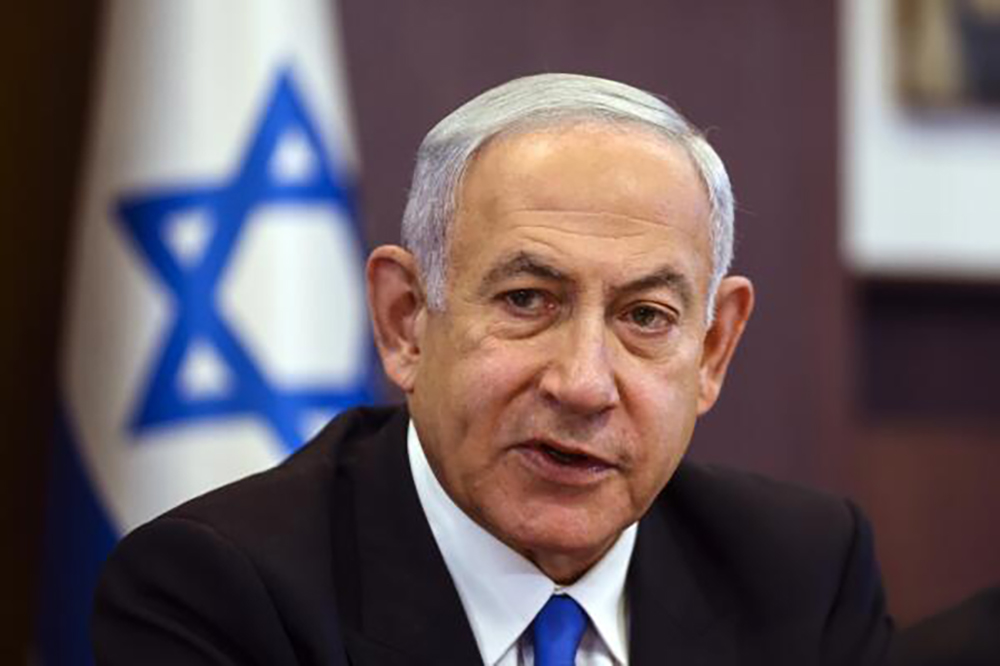
Prime Minister Benjamin Netanyahu issued one of his most forceful warnings to Tehran in years on Monday, declaring before the Knesset that any Iranian military strike on Israel would be met with an overwhelming and devastating response. His remarks, reported on Monday by VIN News. come at a moment of escalating regional instability and deep uncertainty inside the Islamic Republic itself.
Speaking during a special parliamentary session known as a “40-signature debate,” Netanyahu left little room for ambiguity. “If Iran makes a mistake and attacks us, we will respond with a force that Iran has never experienced before,” he told lawmakers, according to the report at VIN News. “No one can predict what will happen in Iran, but one thing is clear: Iran will never return to what it once was.”
The unusually stark language reflects Israel’s growing concern over Iran’s military posture, its nuclear ambitions, and its continued sponsorship of proxy militias across the Middle East. It also signals Jerusalem’s determination to deter any potential Iranian attempt to exploit the current turbulence gripping the region.
As VIN News has extensively documented in recent weeks, the Middle East has entered one of its most volatile periods in years. Anti-regime protests have roiled Iran for months, driven by public anger over economic collapse, political repression, and the regime’s brutal crackdown on dissent. At the same time, Iran’s leadership has sought to project strength abroad, threatening Israel and the United States while attempting to shore up its influence through Hezbollah, Hamas, and other militant allies.
Netanyahu’s comments appeared carefully calibrated to address both dynamics: encouraging the Iranian public while warning the regime that any external aggression would come at an intolerable price.
“The people of Iran deserve freedom and dignity,” Netanyahu said in earlier remarks referenced by VIN News. “Israel stands with those who seek a better future. But to the rulers in Tehran, our message is clear: do not test our resolve.”
Israeli officials have long feared that a cornered Iranian regime could attempt a dramatic foreign adventure—perhaps through missile attacks or coordinated strikes by its proxies—in order to distract from domestic unrest. Netanyahu’s speech on Monday was widely interpreted as an attempt to preempt such a scenario by raising the cost of miscalculation.
According to analysis cited by VIN News, Israel believes it has already dealt serious blows to Iran’s regional capabilities in recent years. Covert operations, airstrikes on weapons shipments, and cyber campaigns have reportedly disrupted Iranian efforts to entrench militarily in Syria and to upgrade Hezbollah’s arsenal in Lebanon.
Netanyahu alluded to those successes in his address, asserting that Iran’s military and technological infrastructure had been significantly weakened.
“We have acted—and will continue to act—to prevent Iran from obtaining nuclear weapons and advanced missiles,” he said. “Their capabilities are not what they once were, and they know it.”
Israeli defense officials have repeatedly warned that Tehran remains determined to rebuild and expand its strategic programs, particularly its nuclear enrichment activities. While international negotiations have stalled, Iran has steadily increased its stockpile of highly enriched uranium, raising alarm bells in Jerusalem and Washington.
Israeli intelligence services are closely monitoring Iran’s nuclear facilities and that contingency plans for military action remain on the table if diplomatic efforts fail.
Netanyahu used the Knesset forum not only to address Iran but also to discuss broader security issues, including the future of Gaza and the ongoing struggle against terror organizations. He reiterated Israel’s longstanding position that Gaza must be fully demilitarized and kept free of hostile foreign influence.
“Gaza cannot become a launching pad for attacks against our citizens,” he said, according to VIN News. “Any arrangement that does not guarantee Israel’s security is unacceptable.”
The prime minister’s comments came amid reports of international proposals to establish new governing mechanisms in post-war Gaza—initiatives that have generated controversy within Israel. Netanyahu has publicly opposed any framework that would empower countries he considers sympathetic to Hamas, particularly Qatar and Turkey.
As the VIN News report highlighted, Israeli officials fear that allowing those nations a role in Gaza’s reconstruction would merely entrench the very forces responsible for years of bloodshed.
The dramatic tone of Netanyahu’s speech also served a domestic purpose. The “40-signature debate” procedure, which compels the prime minister to address the Knesset on a subject raised by opposition lawmakers, has often been a venue for political confrontation. Yet on Monday, Netanyahu sought to frame the Iranian threat as an issue transcending partisan divides.
“Security is not a matter of coalition or opposition,” he said. “It is a matter of national survival.”
Several opposition figures responded by voicing support for a firm stance against Tehran, even as they criticized other aspects of the government’s policies. The exchange underscored the rare areas of consensus within Israel’s deeply polarized political system.
As of Monday evening, there was no official response from Iranian leaders to Netanyahu’s remarks, a fact emphasized in the VIN News report. Historically, Tehran has reacted sharply to Israeli threats, often responding with bellicose rhetoric of its own. The absence of immediate comment may reflect the regime’s preoccupation with internal unrest and economic turmoil.
Analysts quoted by VIN News suggested that Iran’s leadership faces a strategic dilemma. Any direct confrontation with Israel could provoke a devastating counterstrike at a time when the regime is already under intense domestic pressure. Yet backing down publicly could be perceived as weakness, emboldening protesters and regional rivals alike.
Netanyahu’s warning also comes against the backdrop of evolving U.S. policy in the region. The Trump administration has continued to emphasize diplomacy with Iran, but Washington has simultaneously reaffirmed its commitment to Israel’s security and its right to self-defense.
Coordination between Israeli and American defense officials remains close, particularly regarding intelligence sharing and regional military planning. Netanyahu has repeatedly praised U.S. support while insisting that Israel retains full freedom of action to protect itself.
“Our greatest ally understands what is at stake,” he said in previous comments cited by VIN News. “But ultimately, Israel will do whatever is necessary to defend the Jewish state.”
Beyond its immediate tactical implications, Netanyahu’s speech was clearly intended for several audiences at once: the Iranian regime, the Iranian public, Israel’s allies, and his own citizens.
To Tehran, the message was unmistakable—restraint is the only rational course. To Iranian protesters, Netanyahu offered encouragement and solidarity. To the United States and Europe, he signaled that Israel remains vigilant and prepared to act independently if required. And to Israelis, he sought to project confidence at a moment of regional uncertainty.
Whether the warning will succeed in deterring Iranian adventurism remains to be seen. But as VIN News observed in its analysis, the speech underscored a fundamental reality of Middle Eastern geopolitics: the shadow war between Israel and Iran continues to shape the fate of the entire region.
For now, Israel’s defense establishment remains on high alert, closely watching developments in Iran and across its northern and southern borders. Netanyahu’s declaration that Iran “will never return to what it once was” reflects a belief in Jerusalem that the Islamic Republic is entering a period of irreversible decline.
Yet history in the Middle East rarely moves in straight lines. As the VIN News report noted, the combination of domestic upheaval in Iran, shifting alliances, and the ever-present threat of miscalculation creates a combustible mix.
Netanyahu’s message on Monday was therefore both a warning and a prediction: that the coming months may reshape the strategic landscape in ways few can fully foresee—and that Israel intends to ensure it emerges from that transformation stronger and more secure than ever.