



|
Getting your Trinity Audio player ready...
|
Edited by: TJVNews.com
In the summer of the previous year, President Biden and his top national security aides believed that the potential for conflict with Iran and its proxies was under control. As was reported by the New York Times on Sunday, secret negotiations resulted in a deal facilitating the release of five imprisoned Americans in exchange for $6 billion in frozen Iranian funds and the release of some Iranian prisoners. However, recent developments, including Hamas’s invasion of Israel on October 7 and Israel’s subsequent response, have drastically altered the geopolitical landscape.
Following the clandestine talks, Iran’s proxy groups, such as Hamas, Hezbollah, and the Houthis rebels in Yemen, appeared relatively subdued. Iran even slowed its uranium enrichment activities, a crucial aspect of its nuclear program, as a gesture of goodwill. However, the invasion of Israel by Hamas and the ensuing conflict have disrupted this fragile equilibrium, as was noted in the NYT report. Proxy groups linked to Iran have launched numerous attacks across the region, from Lebanon to the Red Sea to Iraq, bringing them into direct conflict with U.S. forces. The U.S. is now openly threatening airstrikes if the aggressive postures persist.

While the Biden administration downplays the issue, the Iranian nuclear program has experienced a sudden acceleration. In late December, international inspectors revealed that Iran had tripled its enrichment of near-bomb-grade uranium. According to rough estimates, Iran now possesses enough material for at least three atomic weapons. According to information provided in the NYT report, American intelligence officials have expressed deep concern that the additional enrichment required to turn this material into bomb-grade could be achieved in a matter of weeks. The situation has led experts to assert that the international community is essentially back to the starting point regarding Iran’s nuclear capabilities.
The complex situation with Iran is described by Nicolas de Rivière, a top French diplomat involved in negotiating the 2015 Iran nuclear deal, as being more intricate than at any point since the 1979 seizure of the American Embassy, as was indicated in the NYT report. American and European intelligence officials believe that Iran does not seek direct conflict with the U.S. or Israel, but they are willing to engage in aggressive actions. Iran is accused of enabling attacks, coordinating strikes on American bases and ships, and pushing the boundaries of nuclear weapons capability.
Adding to the complexity is Iran’s expanding collaboration with Russia. Initially beginning with the sale of Shahed drones to Russia for use against Ukraine, the cooperation has intensified. According to the NYT report, American intelligence officials now warn that Iran is preparing to ship short-range missiles to Russia, raising concerns about their potential use against Ukraine, which is facing shortages in air defense and artillery shells.

In the wake of Russia’s invasion of Ukraine, Iran has experienced a dramatic shift in its geopolitical position. No longer isolated, the country finds itself in an alliance with Russia and China—both members of the U.N. Security Council. This marks a significant departure from a past era when Russia and China supported the U.S. in restricting Iran’s nuclear program. The NYT report also noted that with the demise of the 2015 Iran nuclear deal, Iran not only has powerful allies but also lucrative markets.
Sanam Vakil, Director of the Middle East and North Africa program at Chatham House, underscores Iran’s strategic advantage in the region. “I see Iran as well positioned, and it has checkmated the U.S. and its interests in the Mideast,” Vakli told the NYT. “Iran is active on all the borders, resistant to any sort of change from within, while enriching uranium at very alarming levels.”
Upon taking office, President Biden aimed to revive the 2015 Iran nuclear deal, a pact that some believe curtailed Tehran’s nuclear ambitions until it was abandoned by former President Donald Trump in 2018. After more than a year of negotiations, an agreement was on the verge of being reached in the summer of 2022 to restore most of the accord, the NYT report indicated. The proposed deal mandated Iran to export its newly produced nuclear fuel out of the country, mirroring conditions from 2015.
However, these efforts collapsed, resulting in a setback for diplomatic endeavors. In response, Iran accelerated its nuclear program, reaching unprecedented levels by enriching uranium to 60 percent purity—just below the 90 percent threshold required for weapon production, as was reported by the NYT. This strategic move was calculated to signal to the United States that Tehran was on the brink of nuclear capability, without crossing a line that could provoke an attack on its facilities.
In the summer of 2023, Brett McGurk, the Middle East coordinator for President Biden, orchestrated a series of discreet agreements aimed at managing the complex dynamics involving Iran. According to the NYT report, while one deal focused on the release of American prisoners and the transfer of Iranian assets for humanitarian purposes, a second, undisclosed agreement was struck. This secret pact involved Iran committing to restrain its nuclear enrichment activities and exert control over its proxy forces, setting the stage for potential broader negotiations.
The first deal secured the release of five American prisoners in exchange for imprisoned Iranians and the transfer of $6 billion in frozen Iranian assets from South Korea to a Qatari account for alleged humanitarian purposes. However, it was the second, undisclosed agreement that carried significant implications. The information provided in the NYT report stated that President Biden, preferring to keep it under wraps, brokered a deal with Iran, emphasizing the necessity for them to limit nuclear enrichment and rein in proxy forces before progressing to broader negotiations.
Initial results appeared promising, and several months of relative calm prevailed. Iranian proxies refrained from attacking American forces in Iraq or Syria, and shipping routes in the Red Sea remained unimpeded, according to the NYT report. International inspectors reported a significant slowdown in Iran’s nuclear enrichment activities. Yet, some experts, including Suzanne Maloney, the director of the foreign policy program at the Brookings Institution and an Iran expert, regarded this period as a precarious lull. The NYT report said that she described it as “a Hail Mary they hoped would preserve some calm in the region through the election.”

The situation took an abrupt turn when Hamas launched an attack on Israel. Although American intelligence officials assert that Iran likely had no knowledge or approval of the attack, Iran’s proxy forces seized the opportunity to escalate hostilities, as was noted in the NYT report. While there were indications that Iran sought to limit the conflict due to domestic concerns, the Iranian proxies went on the offensive.
As the conflict unfolded, Israel’s war cabinet contemplated a preemptive strike on Hezbollah in Lebanon, presenting it as part of an Iranian plan to encircle Israel. President Biden’s aides opposed this assessment, suggesting it was inaccurate and potentially avoiding a broader war. However, recent days have seen renewed threats from Hezbollah, firing rockets at an Israeli military post in response to the killing of a senior Hamas leader in Lebanon, according to the NYT report.
The U.S. and Israel find themselves at a crossroads, with Washington expressing concern over a potential Israeli strike on Hezbollah. In recent days the threat of a war with Hezbollah has resurfaced as the terror group fired scores of rockets at an Israeli military post on Friday and Saturday in what it called a “preliminary response” to the killing last week of a senior Hamas leader, Saleh al-Arouri, in Lebanon, as was reported by the NYT.
The U.S. has conveyed to Israel that it would support defensive actions against Hezbollah but not offensive strikes, the report in the NYT said. This underscores the delicate balance in U.S.-Israeli relations, as both nations navigate the complexities of the Middle East’s evolving geopolitical landscape.
Hezbollah, a powerful force in Lebanon, carefully navigates its actions to avoid giving Israel a pretext for military operations. The report said that while Hezbollah has historically served as a deterrent against Israeli attacks on Lebanon, the current focus is on preventing an escalation that could drag Iran into a larger conflict. The intricate dynamics and strategic considerations are essential to understanding the ongoing situation.
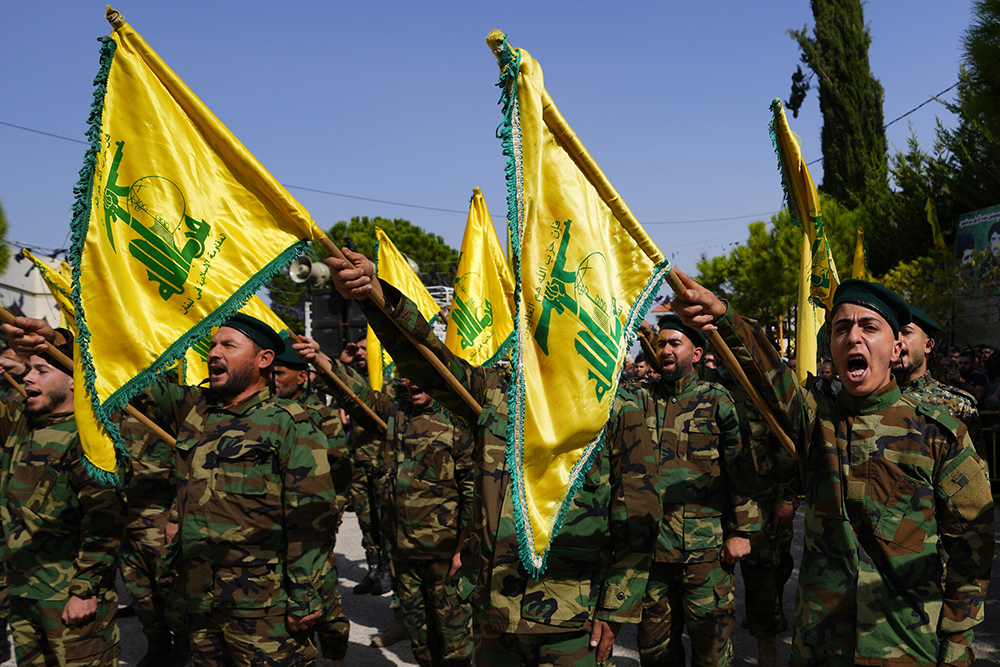
Hezbollah, established by Iran, has emerged as a formidable force in Lebanon and a crucial component of Iran’s regional strategy. Its primary purpose, analysts argue, is to act as a deterrent against a major Israeli offensive on Iran itself. The extensive missile arsenal controlled by Hezbollah poses a significant threat to Israel, making it a crucial asset for Iran’s defense strategy. The NYT report suggested that the fear is that if Hezbollah were to become directly involved in the ongoing conflict, Israel might shift its attention towards Iran, as indicated by previous statements from figures like former Prime Minister Naftali Bennett.
Meir Javedanfar, a lecturer on Iran at Israel’s Reichman University opined that Iran has little interest in escalating the conflict at this stage. According to the information provided in the NYT report, the reasoning behind this caution is the belief that Iran is currently achieving most of its objectives without direct involvement in the conflict. While Hezbollah remains a potent tool in Iran’s regional influence, the leadership appears to be careful in avoiding actions that could draw Israel’s attention away from its current engagements.

Despite Iran’s strategic calculations, American officials argue that Iran does not exercise complete operational control over all its proxies. The intensity of attacks conducted by Iranian-backed militias in Iraq and Syria, which have exceeded 100 incidents, raises concerns about the potential for a larger conflict, the NYT report said. A recent rare American missile strike in Baghdad, targeting a deputy commander of an Iranian-backed militia, underscores the volatile situation and the risk of escalation.
The conflict’s immediate global impact centers on the Red Sea, where Houthi forces in Yemen, armed with Iranian intelligence and weapons, are targeting ships they label as “Israeli,” the NYT report said. The indiscriminate use of heat-seeking missiles poses a significant threat to all vessels passing through the region. The recent incident involving Houthi attacks on a Maersk cargo ship prompted a response from the U.S. Navy, resulting in clashes and the sinking of Houthi boats, according to the report in the NYT. As a consequence, major shipping companies like Maersk have suspended transits through the Red Sea, leading to concerns about supply-chain disruptions for companies worldwide, including Ikea and BP.
The evolving situation presents a complex dilemma for President Biden, who initially sought to shift the U.S. focus away from the Middle East to compete with and deter China. However, the NYT report said that the current events are compelling the administration to reassess its strategy and navigate a delicate balance between deterrence, intervention, and the looming specter of Iran’s nuclear program.
In response to the Iranian-backed Houthi attacks, the United States has rallied a coalition of nations to defend ships in the Red Sea. However, the coalition’s effectiveness is heavily dependent on the American naval presence, leading to a reassessment of U.S. engagement in the region.
The United States and its allies issued a stern warning to the Houthi rebels, labeling their attacks as illegal and demanding the release of unlawfully detained vessels and crews. As per the NYT report, the statement served as a “final warning” to the Houthis, indicating a potential shift towards a more assertive stance. Notably, the warning did not explicitly mention Iran, highlighting the delicate diplomatic dance surrounding the broader regional dynamics.
The Pentagon is reportedly refining plans for targeted strikes on Houthi launching sites in Yemen. The intention is to deliver a sharp warning and restore deterrence in response to any future attacks. As was noted in the NYT report, experts suggest that a significant military response is necessary to counter the Houthi rebels, whom some describe as “Iranian pirates.” The notion of solely patrolling the expansive Red Sea with limited naval assets is deemed unrealistic by military analysts.
The delicate matrix of deterrence, designed to signal a reluctance for regional war but readiness to respond to provocations, may inadvertently drive further escalation.
The NYT report said that Biden’s aides have given up interest in reviving the 2015 accord, because it is now outdated. As initially negotiated, it would allow Iran to produce as much fuel as it wants starting in 2030. “Iran is enriching because they can,” Maloney said, as was reported in the NYT. “Their goal has always been to wait out pressure and give themselves the option of a weapons program.”
(Additional reporting by: Fern Sidman)
