



|
Getting your Trinity Audio player ready...
|
By: Fern Sidman – Jewish Voice News
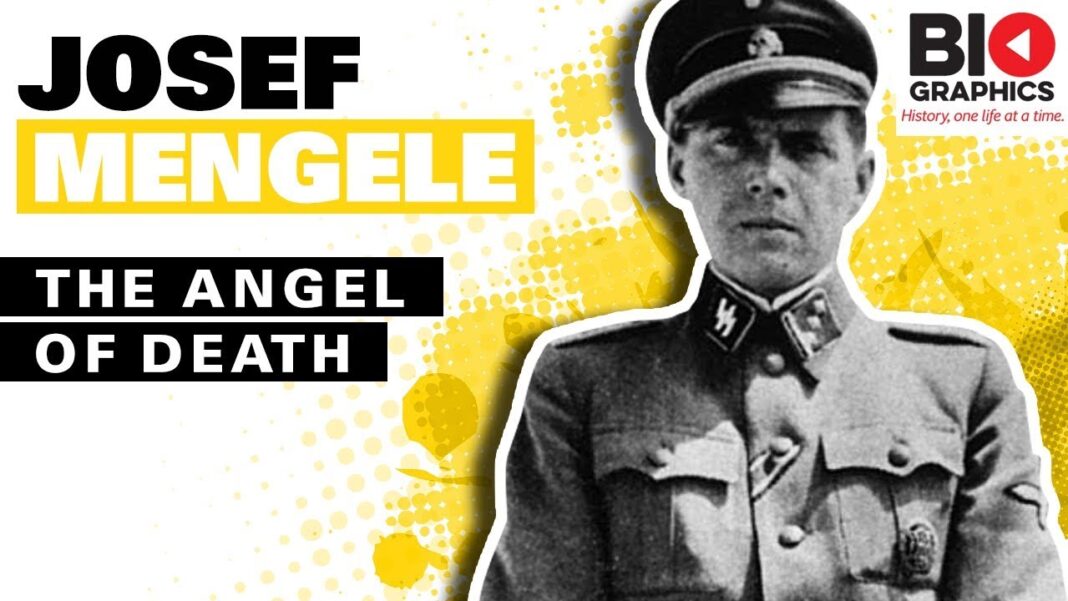
For decades, the trail of Josef Mengele—Auschwitz’s “Angel of Death,” the SS physician whose name became synonymous with the mechanized cruelty of the Nazi killing machine—has remained shrouded in myth, speculation, and scattered intelligence reports that seemed to illuminate his path only dimly. But the recent release of a massive trove of Argentine intelligence documents, declassified earlier this year under an order by President Javier Milei, has dramatically recast the historical record.
These files, as Fox News Digital meticulously reported on Sunday, paint an extraordinary and unsettling picture: Mengele lived for years in Argentina not as a hunted fugitive but as an almost unconcerned resident who enjoyed remarkable freedom, operated businesses, traveled under both false and real identities, and moved among émigré communities with a confidence that could only have been bred by a sense of near-total safety.
The archives show that the Argentine government, by the mid-1950s, knew precisely who Mengele was. Officials understood that “Helmut Gregor,” the identity under which he entered the country in 1949 using an Italian-issued passport, was an alias adopted by the infamous Auschwitz doctor.
The officials tracking him knew that he had secured an Argentine immigrant ID in 1950 under the same false name and that this identity had allowed him to weave himself into the social and economic fabric of Buenos Aires. It is this degree of bureaucratic awareness, rather than ignorance, that makes the revelations contained in the newly declassified files so damning. The Argentine state possessed the necessary information to apprehend or at least restrain the movements of one of history’s most notorious war criminals, yet did almost nothing to pursue him.
What emerges most vividly from the thousands of documents—surveillance summaries, immigration records, correspondence, copied passports, internal intelligence memos, and reports from foreign agencies—is an administration bedeviled by internal fragmentation. As the Fox News Digital report observed, the sprawling archive reflects a government that collected extraordinary quantities of data yet lacked a mechanism for acting on it. Intelligence gathered by one arm of the security apparatus often remained hidden from another.
Communications among agencies were sporadic or siloed. Decisions reached the desks of judges, ministers or administrators only after critical delays. The files capture a country struggling under the weight of its own bureaucratic inertia, and they reveal how this paralysis effectively transformed Argentina into an accidental sanctuary for Mengele and others like him.
One of the most revealing documents unearthed in the archive is an undated press clipping featuring an interview with a survivor, José Furmanski, an Argentine citizen born in Poland who had been imprisoned as a child in Auschwitz. Furmanski recounts meeting Mengele repeatedly at the camp, describing him in detail, down to the chilling juxtaposition of his SS uniform and white medical coat. His testimony, preserved in Argentina’s intelligence files and highlighted in the Fox News Digital report, recounts the horrors inflicted on twins, including the torment of being forced to watch one’s sibling undergo experiments that inevitably ended in death.
Furmanski’s memories of mothers and daughters torn apart, of children murdered under the pretense of science, and of Mengele’s pathological sadism leave no doubt about the scale of the doctor’s crimes—yet Argentine authorities, even with such testimony in their possession, did nothing to move the machinery of justice.
The declassified documents also provide an astonishing portrait of Mengele’s life in Argentina. Far from living quietly or cautiously, he cultivated an existence marked by a kind of audacious normalcy. He married his brother’s widow, raised their child, invested in medical laboratory enterprises, and even entertained the financial support of his father, who is believed to have traveled to Buenos Aires to assist him. Many of these details, previously the subject of speculation or partial confirmation, now appear undeniable.
In one particularly surreal episode reported by Fox News Digital, Mengele successfully obtained an officially legalized copy of his German birth certificate from the West German Embassy in Buenos Aires. Armed with this document, he petitioned a local court to amend his identification and allow him to resume using his true name. The very fact that he sought this change—and that the court approved it—reveals how secure he felt living in the country. The archives now show an environment in which a man internationally recognized as a monstrous criminal could confidently seek state recognition of his real identity.
By 1956, Argentine authorities were well aware of his biographical history, his SS service, the nature of his crimes, and his web of commercial interests. They knew where he lived, tracked his movements, understood that he had entered the country under fraudulent identification, and possessed intelligence from foreign agencies confirming his identity beyond doubt.
They also had reports indicating his nervousness when discussing his past, his admission that he had worked as a doctor for the SS in Czechoslovakia, and his claim that he had been unfairly labeled a war criminal by the Red Cross. But despite this deep institutional knowledge, no coordinated action was ever taken. The country’s judicial system, hindered by political pressures and bureaucratic disarray, refused even a formal extradition request.
The archive contains a particularly revealing document from 1959, when West Germany formally requested Mengele’s extradition. A local Argentine judge rejected the request, declaring that it was based on “political persecution”—an assessment that, in retrospect, can only be described as grotesque. This decision, noted in the Fox News Digital report, underscores the extent to which political expediency and judicial misjudgment combined to shield one of the world’s most wanted men from accountability.
The disorganization of the Argentine state becomes even more apparent in documents showing that arrest warrants, intelligence operations, and searches for Mengele were often initiated only after valuable time had already passed. Press reports alerted him that foreign governments were taking a renewed interest in his whereabouts, enabling him to evade authorities repeatedly. Internal correspondence illustrates how investigations were launched in a disjointed fashion, often after crucial opportunities had evaporated. In some cases, official inquiries into his business ties were undertaken months after he had already dissolved partnerships or relocated.
It was in this climate—one of rising international scrutiny but sustained domestic lethargy—that Mengele fled Argentina in 1959, crossing into Paraguay. The declassified files reveal that he secured Paraguayan citizenship not long after, aided by the regime of dictator Alfredo Stroessner, whose family hailed from the same region of Bavaria as the Mengele family. This familial linkage, combined with Paraguay’s geopolitical orientation, enabled him to live under a regime that was openly sympathetic to German expatriates. From Paraguay, he moved into Brazil, slipping into the country clandestinely through the tri-border region near Paraná sometime in 1960.
The Argentine files, as examined by Fox News Digital, indicate that authorities in Buenos Aires knew he had left the country yet continued to build a dossier of media clippings, foreign intelligence notes, and speculative memoranda. The state’s role became less that of an active hunter than a passive chronicler of its own failure, collecting information that had little prospect of yielding results.
Once in Brazil, Mengele found refuge among German Brazilian farmers and landowners who had maintained strong ideological ties to the Nazi regime. These families—most notably the Bóssert and Stammer households—offered him rural safehouses and protection for years. By the late 1960s, he was living with relative stability in São Paulo state, sometimes under the alias Peter Hochbichler, at other times using the Portuguese version of his real name, José Mengele. The files show that Argentine intelligence was aware of these aliases, even if they lacked the capacity to influence Brazilian enforcement efforts.
Mengele’s life ended quietly and ignominiously in 1979, when he drowned after suffering a stroke while swimming in the coastal town of Bertioga. He was buried under the false name Wolfgang Gerhardt. For several years, rumors persisted that he had survived, and speculation swirled through international circles. Only after Brazilian authorities exhumed the body in 1985 did forensic experts confirm that the remains belonged to him. DNA testing in 1992 further cemented the identification.
The significance of the declassified archival material lies not only in its ability to provide a timeline of Mengele’s movements but in its exposure of how thoroughly Argentina mishandled one of the most serious criminal matters within its jurisdiction. These files portray a country simultaneously aware of a monstrous presence in its midst yet paralyzed by bureaucratic compartmentalization, ambivalence, and sometimes outright reluctance to confront the Nazi diaspora within its borders. As the Fox News Digital report noted, the documents demonstrate Argentina’s uneasy postwar position, at times eager to cooperate with Western democracies but also hesitant to acknowledge how deeply embedded Nazi fugitives were in the social, political, and economic networks of the nation.
The release of this vast archive reflects the Milei administration’s attempt to reckon with a deeply fraught chapter of Argentine history. By exposing material long hidden behind layers of classified status, the government has compelled the country to confront the consequences of the inaction and political evasiveness that allowed Josef Mengele to live freely for three decades, operating businesses, raising a family, interacting with foreign consulates, and even petitioning courts to affirm his identity.
Although this documentation arrives too late to bring Mengele to justice, it clarifies how a man whose crimes epitomized the machinery of genocide could carve out a life in South America with startling ease. It also highlights the fragility of postwar justice systems when confronted with political hesitation, bureaucratic confusion, and entrenched sympathies for authoritarian ideologies. In illuminating this history, the files underscore how evil, when not confronted resolutely, can slip through the cracks of institutions that lack coherence, willpower, or moral clarity.
The revelations contained in these documents, and brought to the global public through reporting by Fox News Digital, do not rewrite Josef Mengele’s life but complete its story. They demonstrate that the accountability he escaped in life has finally arrived in the form of historical truth, and they force a reckoning with the failures that allowed him to evade judgment for so long.
History cannot prosecute the dead. But it can indict the systems that allowed them to live.