



|
Getting your Trinity Audio player ready...
|
UK Justice Officials Review Whether Circumcision Could Be Prosecuted as Child Abuse
By: Abe Wertenheim
A quiet bureaucratic process inside Britain’s Crown Prosecution Service (CPS) has ignited a global storm. What began as a technical draft on prosecutorial guidance has now become a flashpoint in the debate over religious liberty, child welfare, and the uneasy boundary between safeguarding and stigmatization. As first reported by The Guardian and in a VIN News on Saturday, the CPS is considering language that would allow prosecutors to treat male circumcision as a potential form of child abuse in certain circumstances — a move that Jewish and Muslim leaders say risks transforming a millennia-old religious rite into a suspect act.
According to the information provided in the VIN News report, the controversy centers on a draft document addressing so-called “harmful practices,” in which circumcision is listed alongside forced marriage and other abusive behaviors if the procedure is carried out improperly or without sufficient safeguards. While the guidance stresses that male circumcision is not itself a specific criminal offense under the laws of England and Wales, it advises prosecutors that it could nonetheless constitute abuse or an offense against the person when performed in unsafe conditions or by unqualified individuals.
On paper, this may appear to be a narrow technical clarification. In practice, Jewish and Muslim organizations warn that the language blurs a line that has until now been firmly maintained: the distinction between rare cases of malpractice and the overwhelming majority of religious circumcisions that are carried out safely, lawfully, and with deep communal oversight.
“This is not about turning a blind eye to unsafe procedures,” one British Jewish leader told VIN News. “It is about ensuring that criminal law is not weaponized in a way that casts suspicion on an ancient religious covenant.”
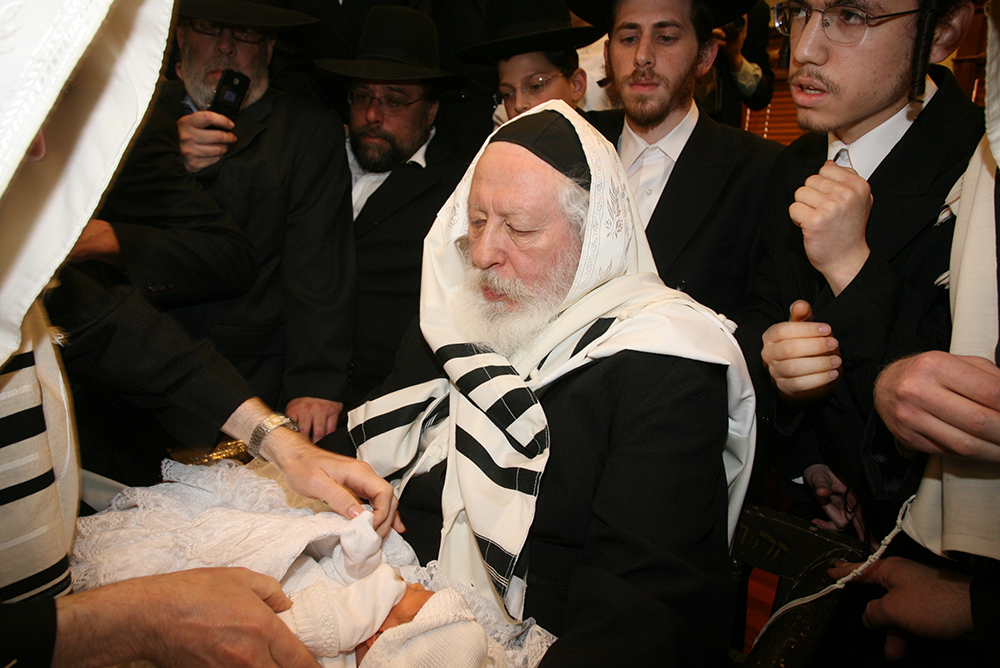
For Jews, brit milah — the covenant of circumcision — is not a cultural artifact but the very foundation of Jewish identity, mandated in the Book of Genesis and observed without interruption for more than three thousand years. For Muslims, khitan is likewise embedded in religious tradition and widely regarded as an essential rite of passage.
In both communities, circumcision is governed by elaborate religious law and communal norms, typically performed by trained practitioners — mohelim in Jewish tradition — whose expertise is both ritual and medical. As the VIN News report emphasized, serious complications are exceedingly rare when procedures are conducted under proper standards.
Yet the CPS draft guidance, now under review, risks recasting this venerable practice through a prosecutorial lens more commonly reserved for coercive or violent acts. Community leaders argue that while no one disputes the need to prosecute reckless or negligent behavior, the framing of circumcision within a “harmful practices” document creates an insinuation that is culturally and legally dangerous.
The CPS has defended the draft as a response to tragic incidents that have occurred in recent years. According to the information contained in the VIN News report, a series of coroner warnings followed the deaths of infants linked to unsafe circumcisions performed by unqualified individuals, often outside established religious frameworks.
These cases, though mercifully rare, prompted renewed calls for tighter regulation of who may perform circumcisions and under what conditions. From the CPS perspective, prosecutors need clearer guidance on when such incidents cross the threshold into criminal conduct.
In its current form, the draft states that male circumcision “may amount to abuse or an offense against the person” if performed in unsafe environments or by those lacking appropriate training. The CPS has stressed that the document remains under review and has not yet been finalized.
But to Jewish and Muslim advocates, the devil lies in the framing. The guidance does not simply outline prosecutorial thresholds; it embeds circumcision within a narrative of “harmful practices,” a category that traditionally includes forced marriage, honor-based violence, and other acts that are inherently abusive.
“This is where the alarm bells ring,” said a Muslim community organizer in London, speaking to VIN News. “We fully support prosecuting malpractice. What we cannot accept is language that implicitly casts our faith traditions as suspect.”
Britain is home to approximately 300,000 Jews and nearly four million Muslims, for whom circumcision is not a marginal custom but a core expression of religious identity. Leaders from both communities have warned that the CPS language could embolden those who already seek to curtail religious freedoms under the banner of child protection.
As the VIN News report noted, European countries have periodically revisited the legality of circumcision, with proposals in Germany, Iceland, and Scandinavia sparking fierce debates about antisemitism, Islamophobia, and the place of religion in secular societies.
In the British context, critics fear a slippery slope: that a prosecutorial guidance intended to target extreme negligence could, over time, be interpreted expansively, chilling religious practice and inviting intrusive scrutiny into family life.
One rabbinic authority told VIN News that the draft risks “blurring the moral universe,” conflating ancient covenantal rites with genuinely coercive abuses. “No one is arguing that a child should be harmed,” he said. “But the guidance must recognize that circumcision, when done properly, is not harm. It is heritage.”
At present, male circumcision is lawful in England and Wales and is widely performed both in medical settings and within religious communities. The CPS draft acknowledges this, but its emphasis on circumcision as a potential offense has created what legal scholars describe as a gray zone — one in which the act itself remains legal, yet its practitioners could find themselves under suspicion.
Jewish and Muslim groups are urging the CPS to revise the language so that it clearly distinguishes between unsafe or negligent acts — which should indeed be prosecuted — and circumcision per se, which should not be categorized as a harmful practice.
Some have suggested that the guidance be rewritten to focus exclusively on the conditions under which any medical procedure becomes abusive, rather than singling out circumcision as a suspect activity.
In a statement cited by VIN News, the CPS confirmed that the draft guidance is under active review and has not been finalized. Officials have indicated they are engaging with community stakeholders and will consider revisions before issuing any binding policy.
For many, this consultation phase is the last chance to avert what they see as a profound misstep. Jewish and Muslim organizations have mobilized swiftly, submitting formal responses and warning that the language, if adopted, could erode trust between minority communities and the justice system.
At stake is more than a paragraph in a prosecutorial manual. The controversy touches on the deeper question of how a liberal democracy balances its commitment to safeguarding children with its obligation to respect religious diversity.
As the VIN News report observed, Britain has long prided itself on being a pluralistic society, capable of accommodating ancient traditions within a modern legal framework. Circumcision, for centuries uncontroversial in the UK, now finds itself entangled in a cultural moment defined by heightened sensitivity to harm and a corresponding unease about religious exemptions.
For Jewish and Muslim Britons, the draft guidance has reopened old wounds, reminding them how quickly religious practices can become politicized — and how fragile the social consensus protecting them can be.
The CPS review process is ongoing, and community leaders remain cautiously hopeful that the final guidance will strike a more nuanced balance. They are not asking for immunity from prosecution in cases of genuine malpractice. They are asking for clarity: that circumcision, when performed according to accepted religious and medical standards, is not to be treated as a form of child abuse.
As one senior Jewish advocate told VIN News, “We want unsafe practitioners prosecuted with the full force of the law. But we cannot accept a framework that treats our covenant as a crime in waiting.”
Whether the CPS will heed that plea remains to be seen. What is already clear, however, is that a draft meant to protect children has instead exposed the fault lines of modern Britain — between secular authority and sacred tradition, between bureaucratic language and lived identity
