



|
Getting your Trinity Audio player ready...
|
By: Fern Sidman
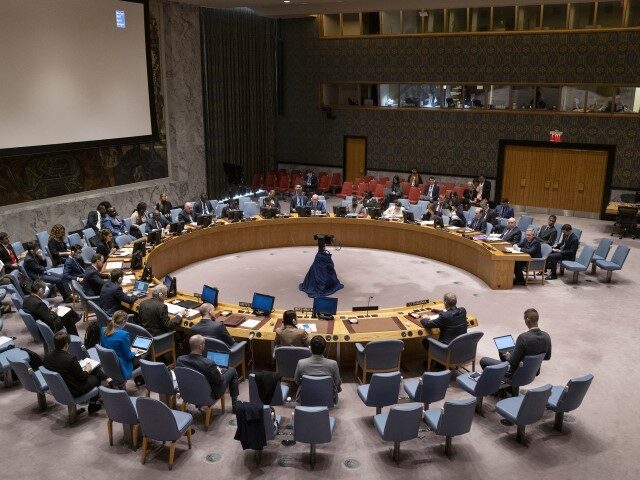
In a strongly worded diplomatic statement on Monday, the Trump administration issued a scathing denunciation of a high-profile international conference co-hosted by France and Saudi Arabia at United Nations headquarters in New York, criticizing the forum as a “publicity stunt” that undermines delicate negotiations aimed at ending the war between Israel and Hamas. The three-day event, intended to advance a two-state solution to the Israeli-Palestinian conflict, was described by the State Department as “unproductive and ill-timed”—an initiative that the administration claims will “prolong the war, embolden Hamas, and reward its obstruction.”
As The Times of Israel has reported, the conference convenes at a particularly fragile moment in Middle Eastern diplomacy. The ongoing war in Gaza—now stretching into its tenth month—has led to widespread devastation in the coastal enclave and unprecedented geopolitical turbulence. Against this backdrop, U.S. officials argue that any international push to preempt or supplant on-the-ground diplomacy—particularly one that involves symbolic gestures such as unilateral recognition of Palestinian statehood—risks emboldening radical factions and disrupting high-stakes negotiations to secure a ceasefire and the release of hostages.
Tammy Bruce, spokeswoman for the State Department, articulated Washington’s formal position during a press briefing on Monday. “This is a publicity stunt that comes in the middle of delicate diplomatic efforts to end the conflict,” she said. “Far from promoting peace, the conference will prolong the war, embolden Hamas, and reward its obstruction and undermine real-world efforts to achieve peace.” Her remarks echoed sentiments expressed earlier by Secretary of State Marco Rubio, who characterized the gathering as “a slap in the face to the victims of October 7th”—a reference to the Hamas-led attacks on Israeli communities that claimed the lives of more than 1,200 civilians and saw over 250 people taken hostage.
The Times of Israel report noted that despite the gravity of the diplomatic rebuke, the Trump administration conspicuously refrained from criticizing Saudi Arabia, which—alongside France—is acting as co-chair of the conference. The omission is widely seen as a reflection of President Donald Trump’s close relationship with Saudi Crown Prince Mohammed bin Salman. That alliance has been strengthened by Saudi Arabia’s strategic investments in the U.S. economy and its evolving role as a key regional interlocutor in peace discussions, particularly as the Kingdom considers normalizing ties with Israel under a broader U.S.-brokered framework.
While the conference seeks to generate momentum for a two-state solution—long a cornerstone of the international consensus on Israeli-Palestinian peace—Trump administration officials have consistently signaled their discomfort with multilateral forums that they believe sideline Israel’s security concerns or fail to confront Palestinian incitement and terrorism. As reported by The Times of Israel, this latest statement from Washington continues that trend, emphasizing skepticism toward externally imposed timelines or “top-down” solutions advanced by international bodies.
Crucially, the U.S. response also included an unambiguous rebuke of French President Emmanuel Macron’s decision to recognize a Palestinian state, which he pledged to formalize in an address before the UN General Assembly in September. According to information provided in The Times of Israel report, U.S. officials pointed out that Macron’s announcement was welcomed not only by the Palestinian Authority, which advocates a two-state solution, but also by Hamas—a terrorist organization that does not recognize Israel’s right to exist. “This reflects a pattern of counterproductive gestures that only embolden Hamas, encourage its obstruction of a ceasefire, and greatly undercut our diplomatic efforts to end the suffering in Gaza, free the hostages, and move the whole Middle East towards a brighter and more prosperous future,” the State Department statement said.
Although the Trump administration has not ruled out support for a two-state solution in principle, it has also declined to explicitly endorse the model—particularly in light of continued Palestinian divisions and Hamas’s control over the Gaza Strip. Instead, U.S. officials have prioritized building regional alliances, supporting Israeli military objectives, and crafting bilateral economic agreements as tools for stabilizing the region and marginalizing radical actors.
The Times of Israel has previously reported on the administration’s approach to peace-building, which includes support for Israel’s right to self-defense and quiet coordination with Arab states to foster economic development and security integration. These initiatives, such as the Abraham Accords, have sought to shift the regional paradigm away from traditional demands of comprehensive peace in favor of incremental normalization and strategic cooperation.
Still, the U.S. statement stopped short of condemning the concept of Palestinian statehood outright. Analysts cited by The Times of Israel suggest this ambiguity reflects the administration’s desire to avoid inflaming regional tensions while maintaining a firm line against Hamas and its political allies. By focusing criticism on France rather than Saudi Arabia, the administration also preserves the integrity of its strategic partnerships, particularly with Gulf states that have expressed openness to working with Israel in areas such as counterterrorism, trade, and infrastructure.
The conference itself, which includes eight specialized working groups, is designed to address a range of issues related to Palestinian statehood, including security arrangements, borders, economic viability, and governance. However, The Times of Israel report noted that Israel is not participating in the proceedings, and that several countries with close ties to the Jewish state have voiced concerns about the structure and timing of the event. U.S. officials share those concerns, arguing that the conference sends the wrong signal at a time when negotiations to release hostages and secure humanitarian aid corridors in Gaza remain precariously balanced.
Observers also point out that the administration’s decision to criticize Macron while sparing Saudi Arabia reflects a broader recalibration of America’s diplomatic toolkit. As the Times of Israel reported, Trump has made no secret of his admiration for Crown Prince Mohammed bin Salman and views Riyadh as a linchpin in the regional effort to isolate Iran and constrain Islamist extremism. With Saudi-Israel normalization talks reportedly underway, the administration appears determined to avoid alienating a potential partner in future peace efforts.
In its closing remarks, the U.S. statement reiterated that the administration remains committed to ending the war, securing the return of hostages, and ensuring long-term stability for both Israelis and Palestinians. However, it warned that premature or politically motivated gestures—such as Macron’s recognition of Palestinian statehood—would only prolong suffering and embolden extremists. As The Times of Israel report indicated, the administration views the path to peace as one that must be rooted in realism, security, and accountability—not in symbolic conferences or sweeping proclamations that lack coordination with parties on the ground.
Ultimately, while the conference proceeds in New York under the banners of France and Saudi Arabia, the absence of the United States underscores a deepening divide in international approaches to the Israeli-Palestinian conflict. The Trump administration’s rebuke signals that, for Washington, peace will not come through staged summits, but through measured diplomacy, regional consensus, and unwavering opposition to those who threaten the very possibility of coexistence
