



|
Getting your Trinity Audio player ready...
|
By: Fern Sidman
The confrontation between Washington and Tehran has entered a perilous new chapter, one defined not merely by diplomatic sparring but by the specter of economic warfare and the shadow of military escalation. According to a report on Monday by Israel National News (INN), President Donald Trump declared that the United States will impose a sweeping 25 percent tariff on any country that continues doing business with Iran — a dramatic attempt to isolate the Islamic Republic as it grapples with its most serious internal unrest in years.
“This Order is final and conclusive. Thank you for your attention to this matter!” Trump wrote in a post on his Truth Social platform, language that the INN report described as characteristically blunt, but unusually categorical even by the president’s standards. The announcement followed days of mounting warnings from Trump that the United States is prepared to respond forcefully if Iran continues to shoot anti-regime demonstrators.
The scope of the tariff is unprecedented. It does not merely penalize Iran; it punishes any state, corporation, or trading bloc that maintains commercial ties with Tehran. Analysts cited by Israel National News note that such a measure amounts to a form of extraterritorial sanctions on steroids — a strategy designed to choke Iran’s economy not through direct embargo, but by forcing the world’s major trading nations to choose between access to U.S. markets and access to Iranian ones.
It is a move likely to reverberate far beyond the Middle East. European firms, Asian energy importers, and regional trading hubs now face a stark dilemma. For many, Iran is not merely a political concern but a significant commercial partner. A 25 percent tariff on all trade with the United States would be economically devastating.
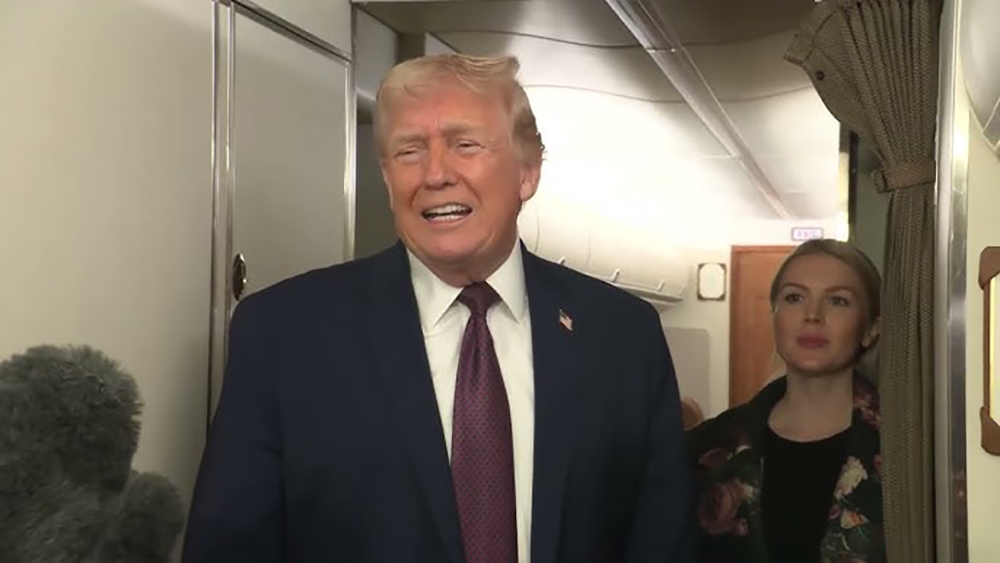
The tariff threat was only one element of Trump’s intensifying rhetoric. Speaking to reporters aboard Air Force One on Sunday, the president said that Iran is “starting to cross my red line,” a phrase INN highlighted as especially ominous.
“There seems to be some people killed that aren’t supposed to be killed,” Trump said, referring to the ongoing protests. “We are looking at it very seriously, the military is looking at it and we’re looking at some very strong options.”
According to the information provided in the Israel National News report, the president emphasized that he is receiving hourly briefings on the situation in Iran, a level of attention that signals just how central the crisis has become to the administration’s strategic calculus.
Trump also issued a stark warning to Tehran against attacking U.S. installations in the region. “If they do, we will hit them harder than they imagined,” he said — a statement that has been interpreted by analysts as both deterrent and prelude.
White House Press Secretary Karoline Leavitt reinforced the sense of uncertainty surrounding the administration’s next steps. “The truth is, with respect to Iran, nobody knows what President Trump is going to do except for President Trump,” she told reporters, a remark quoted by Israel National News. “The world can keep waiting and guessing.”
Leavitt later added that Iran’s aggressive public statements do not necessarily reflect what is being communicated privately. The president, she said, is keenly interested in reviewing those private messages as he weighs his options — an admission that diplomacy, however fragile, has not been entirely abandoned.
Indeed, despite the bluster, quiet communication appears to be ongoing. INN cited an Axios report revealing that Iranian Foreign Minister Abbas Araghchi contacted White House envoy Steve Witkoff over the weekend, as tensions soared.
Two sources familiar with the exchange said the outreach was intended either to ease tensions or to delay additional punitive measures. While neither the White House nor the State Department commented publicly, one source told Axios that Araghchi and Witkoff even discussed the possibility of a meeting in the coming days.
President Trump confirmed on Sunday that Iran had reached out about renewed nuclear talks, suggesting that a meeting was being arranged even as the administration considers punitive action. Vice President JD Vance echoed that line last week, emphasizing that Washington remains open to negotiations — provided Tehran engages “seriously” on its nuclear program.
An Iranian Foreign Ministry spokesman confirmed on Monday that communication between Araghchi and the U.S. special envoy is ongoing, adding that messages are also being passed through Swiss intermediaries. However, he complained that Washington’s messages have been inconsistent — a charge that INN interpreted as evidence of the deep mistrust between the two sides.
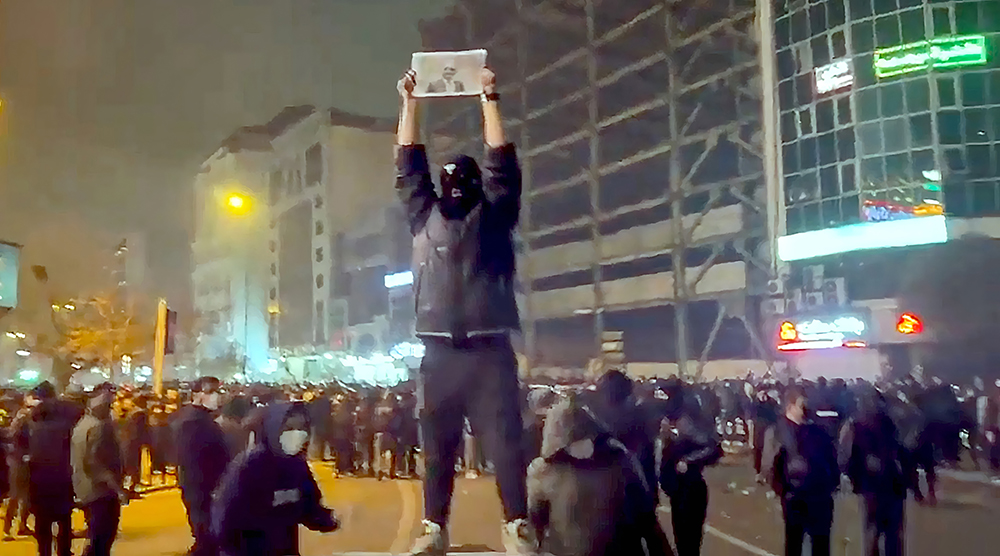
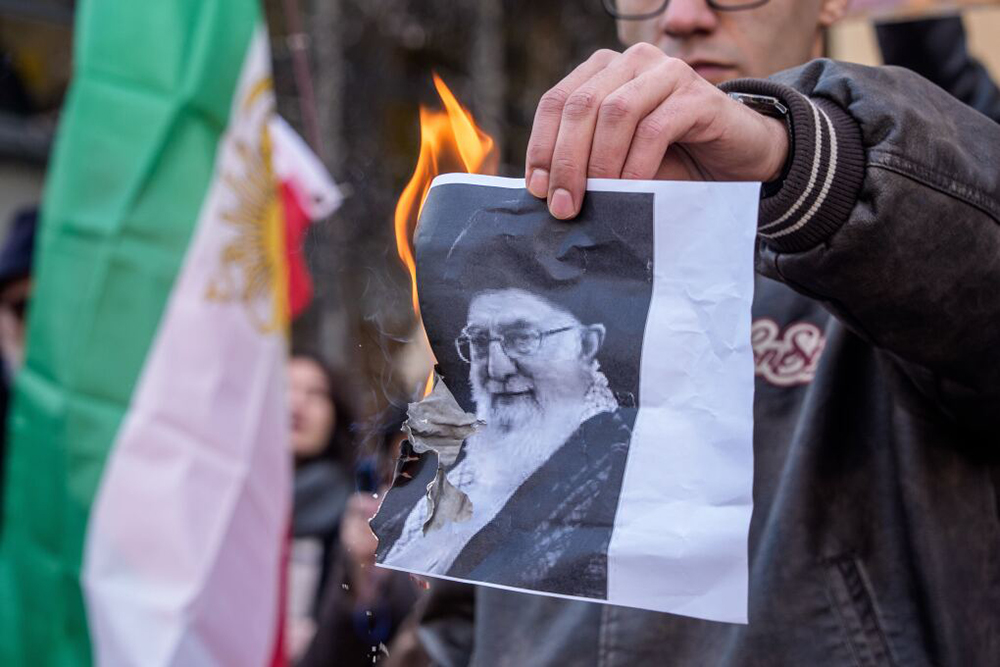
All of this unfolds against the backdrop of Iran’s most volatile domestic crisis since 2019. The protests, now entering their third week, have spread across the country despite internet blackouts and mass arrests. More than 500 demonstrators have been confirmed killed, though human rights groups believe the true toll is far higher.
According to the information contained in the Israel National News report, Ayatollah Ali Khamenei has ordered the Islamic Revolutionary Guard Corps (IRGC) to take direct control of the crackdown — a decision that has intensified international outrage. The IRGC, often described by critics as the regime’s “terror army,” is accused of leading the suppression, deploying both conventional security forces and paramilitary units.
Also this week, Reza Pahlavi, son of the late Shah Mohammad Reza Pahlavi, went on American television and implored President Trump to “partner” with him in the liberation of Iran.
The remarks, aired on Fox News’ Sunday Morning Futures and widely disseminated on social media, have reverberated across the Iranian diaspora and into the country itself. As reported by VIN News, Pahlavi praised Trump as a leader “committed to peace and fighting evil forces,” sharply contrasting him with former Presidents Barack Obama and Joe Biden. In language unmistakably tailored to Trump’s political brand, Pahlavi urged, “Let’s hope we can permanently seal that legacy by liberating Iran so that we, and you, can make Iran great again.”
For a man who has lived in exile since the 1979 Islamic Revolution that toppled his father, the call was both personal and profoundly political. It was also strategic, arriving at a moment when Iran is convulsed by some of the most widespread protests in decades and when Trump has publicly warned Tehran that Washington is “locked and loaded” to respond if the regime continues to shoot demonstrators.
The VIN News report noted that Pahlavi’s comments were not confined to a single television appearance. Clips of the interview circulated widely across Persian-language social platforms, Telegram channels, and diaspora WhatsApp groups, transforming a morning talk-show segment into a viral political manifesto. In the footage, the 64-year-old prince appears composed, earnest, and unmistakably aware of the historic symbolism he is invoking: a scion of the deposed Pahlavi dynasty calling on the world’s most powerful man to help him return.
The appeal was not merely rhetorical. Pahlavi said explicitly that he is “prepared to return to Iran at the first possible opportunity,” casting himself as a transitional figure ready to shepherd the country toward free elections and secular democracy. He has repeatedly emphasized that he does not seek to rule as a monarch, but rather to serve as a catalyst for a post-Islamic Republic order in which “ultimate authority rests with the Iranian people.”
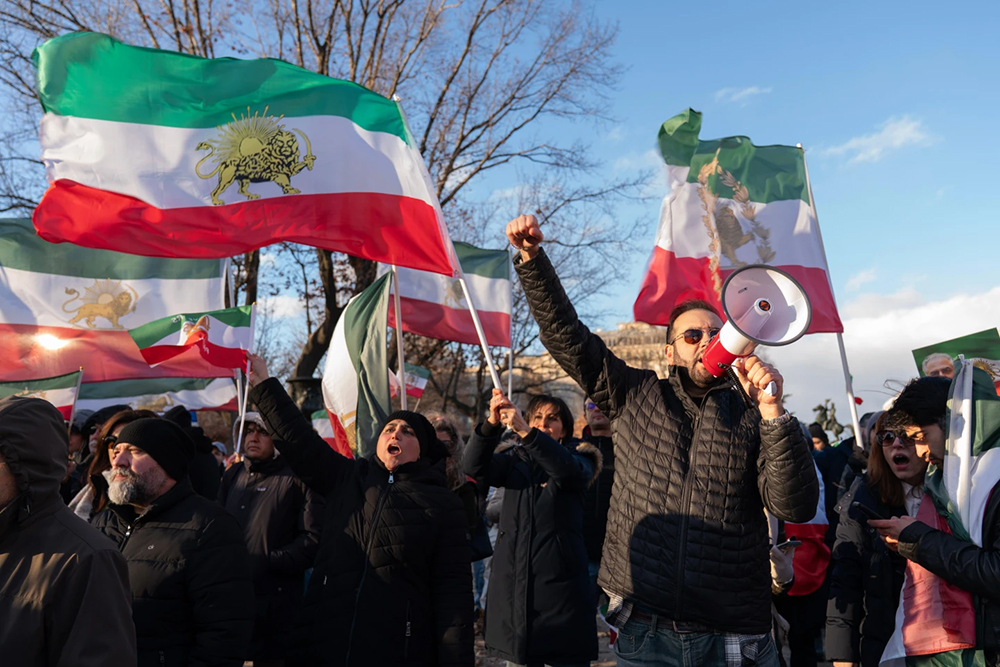
In some areas of Iran, protesters have reportedly renamed streets after Trump — a gesture of gratitude for his bellicose warnings against violent crackdowns. Such acts, while symbolic, reveal how profoundly American rhetoric has penetrated the Iranian political imagination. As the VIN News report observed, Trump’s blunt language — promising that the U.S. would “hit hard” if protesters are killed — has had a “tremendous positive effect,” in Pahlavi’s own words.
Yet for all the convergence in tone, the relationship between Trump and Pahlavi remains conspicuously asymmetrical. The president has so far declined to meet the crown prince, telling conservative radio host Hugh Hewitt that it would not be “appropriate” and that the United States should “let everybody go out there and see who emerges.”
VIN News analysts interpret this as classic Trumpian ambivalence: publicly cheering the cause of freedom while withholding formal endorsement of any single opposition figure. It is a posture that preserves strategic flexibility — allowing the White House to signal moral support for protesters without committing to the restoration of a dynasty or the recognition of a government-in-exile.
The ambiguity also shields Trump from charges of orchestrating regime change, even as his administration weighs a menu of “very strong options,” from crushing tariffs on countries trading with Iran to potential covert assistance to dissident networks.
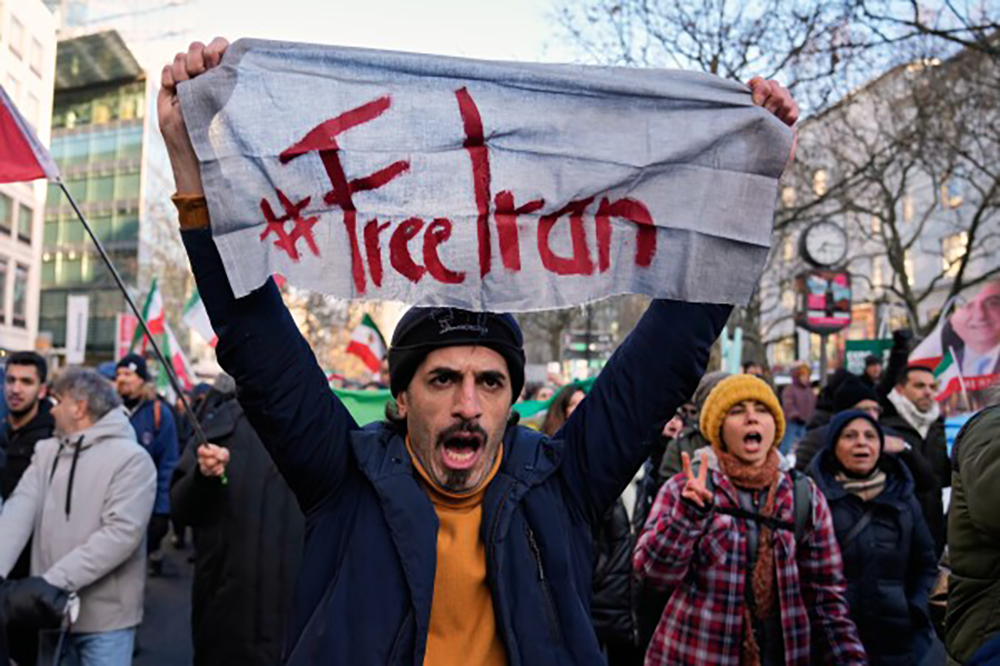
The escalation in Iran has also triggered calls across the political spectrum in Britain to proscribe the IRGC as a terrorist organization. The Telegraph of the UK reported that more than 1,000 demonstrators rallied in London’s Whitehall on Sunday, demanding “Iranian freedom” and urging the government to outlaw the IRGC.
The debate in London has exposed sharp divisions. Former Conservative leader Sir Iain Duncan Smith wrote that the IRGC is “the key tool of the ayatollahs in enforcing their control” and that failure to proscribe it amounts to moral abdication. “Well-meaning platitudes simply don’t work,” he warned, calling for immediate action.
Tom Tugendhat, who served as security minister, admitted that his party should have acted earlier. Reform UK leader Nigel Farage urged Prime Minister Keir Starmer to “stand up to the ayatollah,” while Liberal Democrat leader Sir Ed Davey joined the chorus.
Labour, however, has resisted the move, arguing that banning the IRGC — an official branch of Iran’s armed forces — would effectively sever diplomatic relations. That rationale is now being tested in the court of public opinion, with INN reporting that even opposition leader Kemi Badenoch has suggested she could support Western military action in defense of Iranian protesters, stressing that “the calculation always has to be about our national interest.”
Trump is expected to convene his national security team on Tuesday to review options for supporting the protests and increasing pressure on Tehran. The president has repeatedly referred to “very strong options,” language that, as the INN report observed, is deliberately ambiguous.
Is Washington preparing for targeted sanctions, covert support to dissidents, cyber operations, or something more overt? The answer, for now, remains shrouded — a strategic fog that may be as intentional as it is unsettling.
What is clear is that the United States has dramatically raised the stakes. A 25 percent tariff on any country trading with Iran would ripple through global supply chains, redraw alliances, and potentially ignite a cascade of retaliatory measures. At the same time, the administration is keeping a narrow diplomatic door ajar, even as it warns of consequences more severe than Tehran has yet imagined.
