



|
Getting your Trinity Audio player ready...
|
By: Fern Sidman
As the geopolitical aftershocks of Operation Rising Lion continue to reverberate across the Middle East, President Donald Trump confirmed on Tuesday that he will host Israeli Prime Minister Benjamin Netanyahu at the White House next week for a high-stakes round of diplomatic discussions. The meeting, long anticipated by Washington insiders and foreign policy analysts alike, is expected to center on Israel’s recent military operations in Iran and Gaza, with particular attention to the fate of remaining hostages held by Hamas.
According to a report at Israel National News (INN), Trump emphasized that the meeting will serve as a strategic follow-up to what he described as an “incredible success” in Iran — a reference to the unprecedented U.S.-Israeli joint strike on key nuclear sites earlier this month. “We’re going to talk about the great success we had [in Iran],” Trump told reporters at a press briefing on Tuesday. “That was a precision warstrike — and the word ‘obliteration’ can now be used.”
Trump credited the operation with crippling Iran’s nuclear infrastructure, citing an assessment by the Atomic Energy Commission that parts of the Iranian nuclear program are now beyond immediate salvage. “You can’t even get into the place,” he noted. “It was demolished.”
As INN has reported, Operation Rising Lion marked a turning point in regional dynamics, with Israeli fighter jets — allegedly supported by U.S. intelligence and airspace coordination — delivering devastating blows to Iranian facilities at Fordow, Isfahan, and Natanz. Israeli defense officials described the strikes as “surgical yet decisive,” signaling a shift in posture from deterrence to direct dismantling of Iran’s nuclear threat.
Prime Minister Netanyahu, who announced the trip during a Cabinet meeting on Tuesday, affirmed the historic weight of the visit. “I am due to leave next week for meetings in the U.S. with President Trump,” he said, according to INN. “These are critical meetings following our success in Operation Rising Lion and will focus on regional stability, security cooperation, and the path forward in Gaza.”
Netanyahu’s itinerary includes meetings with a formidable roster of American officials: Vice President J.D. Vance, Secretary of State and National Security Adviser Marco Rubio, Secretary of Defense Pete Hegseth, and Special Middle East Envoy Steve Witkoff. Discussions will also take place with senior congressional leaders and the U.S. Commerce Secretary, suggesting the scope of talks will extend beyond military matters into trade, technology, and bilateral innovation agreements.
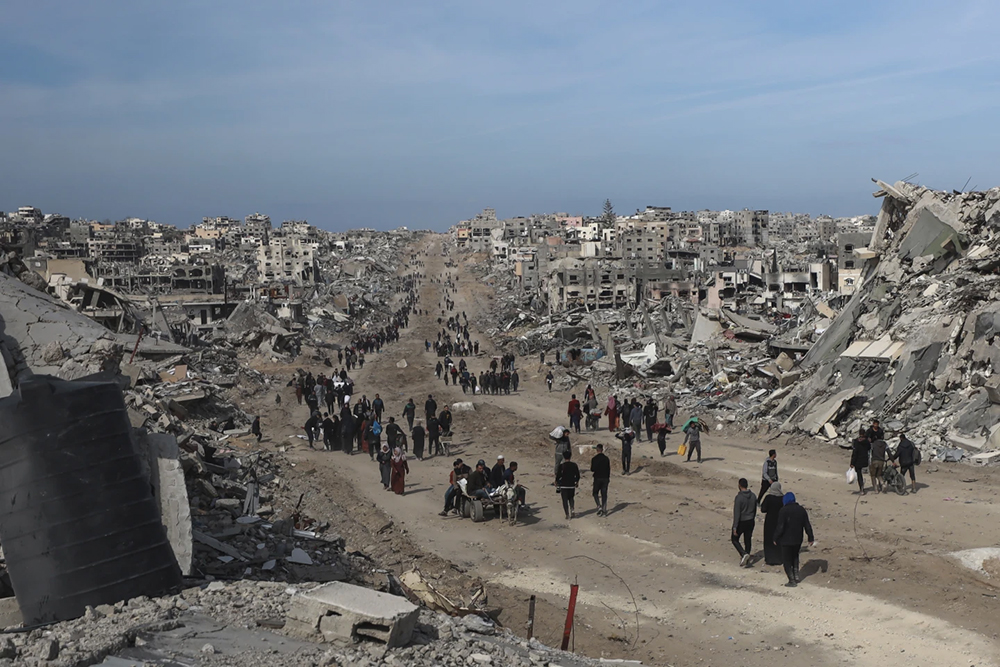
Still, it is the ongoing war in Gaza that appears to weigh most heavily on both leaders. Trump, addressing reporters on Friday, stated, “I think [a ceasefire] is close. I just spoke with some of the people involved. It’s a terrible situation that’s going on in Gaza, and we think within the next week, we’re going to get a ceasefire.”
This aligns with statements published by Israel National News, which reported that backchannel negotiations — supported by Qatari intermediaries and Egyptian diplomacy — have accelerated under American pressure. Though Israeli officials remain skeptical about Hamas’ reliability, there is growing momentum behind a limited ceasefire that could facilitate humanitarian aid and secure the release of remaining hostages.
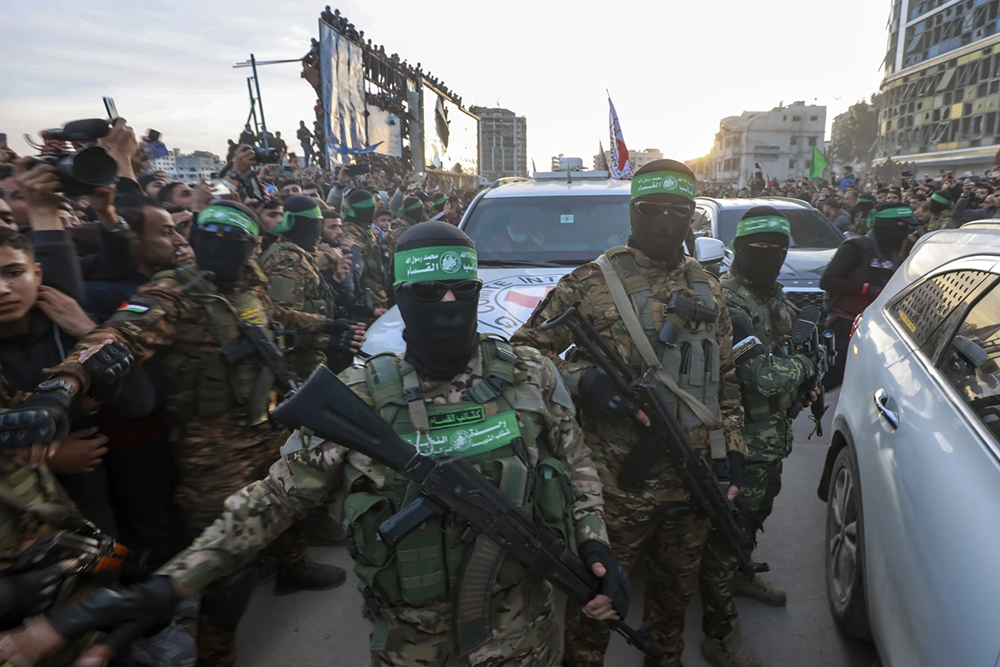
“We got a lot of hostages back, but we’re going to talk about Gaza,” Trump said Tuesday, indicating that the fate of those still held in Hamas tunnels remains a priority. According to the information provided in the INN report, senior U.S. and Israeli officials have crafted contingency plans for special operations, should negotiations falter again. Intelligence cooperation between the two countries has intensified in recent weeks, with INN sources confirming that U.S. satellite and drone capabilities were instrumental in identifying Hamas command nodes during earlier phases of Israel’s southern offensive.

Netanyahu’s visit is expected to be both symbolic and substantive — a demonstration of enduring U.S.-Israel solidarity at a time when the region teeters between fragile detente and renewed escalation. The report at Israel National News noted that this will be the first formal White House meeting between the two leaders since the conclusion of Operation Rising Lion, and it arrives at a delicate moment: the Biden administration’s foreign policy legacy is being measured against Trump’s resurgence and his more aggressive realignment of American power in the Middle East.
Though White House officials have not yet released the full agenda, INN has confirmed that both leaders will likely sign a new security memorandum expanding joint missile defense research and cyber-warfare cooperation. Discussions are also expected to touch on the Abraham Accords, with the Trump administration reportedly pushing for a second phase of normalization that could include Saudi Arabia — a development Netanyahu has long sought as a strategic linchpin against Iranian influence.
Yet even as plans are laid for long-term cooperation, both men face immediate and volatile realities: the rebuilding of Gaza, the return of hostages, and the need to ensure that Iran’s retaliatory threats remain empty.
In a region shaped by cycles of war and wariness, next week’s White House summit may well prove to be a defining moment — one that will test not only the endurance of an alliance, but the clarity of its shared purpose. As Israel National News put it in a recent editorial, “Trump and Netanyahu do not merely share a vision. They now share a war — and possibly, a peace.”
Also on Tuesday, World Israel News reported that in a decisive move underscoring the depth of U.S.-Israel strategic coordination, the Trump administration on Monday announced its intention to sell more than $500 million worth of advanced aerial munitions systems to Israel. The arms sale—centered on over 7,000 Joint Direct Attack Munition (JDAM) kits—is poised to significantly bolster the Israeli Air Force’s precision strike capabilities as the Jewish state emerges from a short but devastating aerial war with Iran and continues intensive combat operations against Hamas in the Gaza Strip.
The deal was swiftly approved by both the Pentagon and the U.S. State Department. The proposed transfer now moves to Congress for final authorization, a process that typically advances with little opposition in cases involving Israel’s core security infrastructure.
JDAM kits, widely used by U.S. and allied air forces, are guidance systems that convert unguided “dumb” bombs—typically 500- and 2,000-pound munitions—into precision-guided weapons capable of striking within a few meters of their targets. These kits are indispensable in urban or sensitive combat theaters where accuracy is vital, such as the dense battlegrounds of Gaza or heavily fortified Iranian facilities.
“The proposed sale will enhance Israel’s capability to meet current and future threats by improving its ability to defend Israel’s borders, vital infrastructure, and population centers,” the Pentagon said in a statement on Monday, excerpts of which were cited by World Israel News. The U.S. Defense Security Cooperation Agency added that “it is vital to U.S. national interests to assist Israel to develop and maintain a strong and ready self-defense capability.”

The timing of the announcement is no coincidence. It follows close on the heels of Israel’s 12-day air campaign against Iran, dubbed Operation Rising Lion, which saw Israeli and American forces collaborate in launching a series of surgical strikes on Iranian nuclear and military assets. As WIN has previously reported, this campaign marked a significant escalation in the two countries’ military posture toward Tehran and signaled a shift from containment to active degradation of Iran’s nuclear capabilities.
The JDAM sale also comes amid renewed fighting in Gaza, where Israeli ground and air forces remain locked in intense combat with Hamas terrorists.
Notably, the same day the arms deal was announced, President Trump formally rescinded long-standing American sanctions on Syria—another signal of Washington’s broader regional ambitions. As WIN reported, Syria has been floated as a potential future signatory to the Abraham Accords, a development that would have been unthinkable just a few years ago but may now gain traction under emerging realignments.
“This sale is not just about replenishment,” said a senior Israeli defense official in comments published by World Israel News. “It’s about expanding our deterrence, sending a message to all fronts—from Tehran to Rafah—that the alliance between the United States and Israel is not only intact but deepening.”
Though the arms transfer is being framed as defensive in nature, the broader regional implications are unmistakable. As the report at World Israel News noted, this sale reinforces the perception—particularly among Iranian and Hezbollah-aligned media—that the U.S.-Israel partnership remains the cornerstone of anti-Iranian deterrence architecture in the region. The fact that it comes immediately after a major offensive campaign only strengthens that view.
American officials appear unbothered by the optics. “This administration stands shoulder to shoulder with our ally Israel in the defense of democracy and the pursuit of regional stability,” said a State Department spokesperson quoted by WIN. “The Iranian regime continues to pursue nuclear weapons and support terrorism. In this environment, we have no higher priority than the security of Israel.”
As Congress takes up the final authorization for the JDAM sale in the coming days, few expect meaningful resistance—especially given the urgency of replenishing Israeli precision-guided munitions stocks after the dual-front operations in Gaza and Iran. What remains to be seen is how this military reinforcement will shape the broader diplomatic landscape, especially in the wake of Trump’s unexpected overture to Damascus.
In a region where the margins between war and diplomacy are increasingly thin, the $500 million sale may be about more than just hardware. As the report at World Israel News puts it: “It is a signal, a policy, and a partnership—all launched with the precision of a JDAM.”
In a damning indictment of the international aid ecosystem, the Gaza Humanitarian Foundation (GHF), a U.S.-based relief organization delivering humanitarian aid to civilians in the war-ravaged Gaza Strip, accused the United Nations of deliberately attempting to sabotage its life-saving operations on the ground. The explosive allegations were made Monday during the State Leadership Summit on Antisemitism and Support for Israel, hosted by the Combat Antisemitism Movement (CAM) in Washington, D.C.
As reported by World Israel News, Johnnie Moore, Executive Chairman of GHF, delivered a blistering speech during the Summit, condemning both the UN and Hamas for what he described as dual forces undermining humanitarian relief. “I’m surprised that something so right, something so simple as feeding people, has become so controversial,” Moore declared, to resounding applause from policymakers, religious leaders, and civil society figures in attendance.
Moore charged the United Nations with issuing an internal directive instructing its agencies not to cooperate with GHF, despite the fact that, by his own estimate, the bulk of humanitarian aid currently entering Gaza is facilitated by his organization. “We were actually told that the United Nations sent a directive to all of their agencies telling them to not work with us,” Moore said. “And yet, most of the aid coming into the Gaza Strip right now is from us.”
The claims, if substantiated, would suggest a grave breach of the UN’s own humanitarian mandate. The report at World Israel News noted that this controversy has taken root at a time when Gazan civilians face acute shortages of medicine, food, and fuel—conditions worsened by Hamas’s reported looting and misappropriation of aid shipments.
Moore further revealed a harrowing incident involving GHF’s own local volunteers, claiming that Hamas militants executed 12 Gazan aid workers, injured several others, and then left their bodies piled outside Nasser Hospital—denying them access to medical care. “The United Nations…didn’t even have the audacity to issue a statement condemning Hamas’ murder of these local Gazan aid workers,” Moore said, his voice thick with outrage.
The World Israel News report has confirmed that no public condemnation of Hamas for this attack has been issued by UN bodies to date, fueling criticism that the global institution’s silence is tantamount to complicity.
The timing of these revelations is particularly significant, occurring just days after the cessation of hostilities in the Israel-Iran conflict and in the midst of Israel’s ongoing campaign against Hamas in Gaza. Against this volatile backdrop, the CAM Summit convened a coalition of state leaders, legal experts, faith leaders, and victims of terrorism to formulate concrete policies for combating antisemitism and reinforcing America’s alliance with Israel.
“The strength that emerges when state leaders unite to confront antisemitism as a moral imperative was clearly visible here,” said David Soffer, Director of State Engagement at CAM, as quoted by World Israel News. Over two days, participants engaged in panels and workshops addressing topics ranging from antisemitism on college campuses to strategies for deradicalization and law enforcement responses.
In a powerful moment emblematic of the Summit’s tone, Iowa Governor Kim Reynolds signed Executive Order 13, officially condemning antisemitism and instructing the state’s Board of Regents to ensure Jewish students receive full protection under federal civil rights law. “Antisemitism has no place in Iowa,” Reynolds said. “We’ve seen an increase across the U.S., and we are making our position unequivocally clear.”
Nebraska Governor Jim Pillen echoed the urgency of state-level action: “We will continue leading, educating, and standing in solidarity,” he pledged, while Kansas Senate President Ty Masterson emphasized the need for clear legal frameworks based on the IHRA Working Definition of Antisemitism. “It takes a unified definition to create a consensus around a policy framework,” he said. “Then, it takes that policy framework to take action, and it’s the action that develops the peace.”
World Israel News also highlighted a stirring address by U.S. Ambassador to Israel Mike Huckabee, who appeared virtually to call for moral clarity in addressing the resurgence of antisemitism. “All the ways in which this irrational system of hate takes place need to be addressed and confronted,” Huckabee said. “You’re learning how to do that in your individual states—and it matters.”
Perhaps the most searing moment of the Summit came during the testimony of Ron Segev, a survivor of the Nova Music Festival massacre on October 7th. His personal account served as a visceral reminder of the human toll of antisemitic terrorism, and the stakes involved in combating hatred both at home and abroad.
As World Israel News observed, the Summit made a compelling case for recalibrating America’s approach to both global humanitarianism and domestic antisemitism. In the wake of the allegations leveled against the United Nations and the appalling violence described by the GHF’s Johnnie Moore, questions are now swirling about the credibility and accountability of international agencies tasked with delivering aid to conflict zones.
At a moment when Jewish communities are under growing threat and humanitarian channels face politicization, the CAM Summit—alongside revelations from GHF—demands not only urgent policy responses but also a reassessment of who can be trusted to deliver help where it’s needed most.
As Moore concluded, “We thought we were poking the bear of a terrorist organization. But we’ve discovered every second of every day the underbelly of the United Nations and organizations around the world. And the people of Gaza—and truth itself—are paying the price.”
