



|
Getting your Trinity Audio player ready...
|
By: Fern Sidman
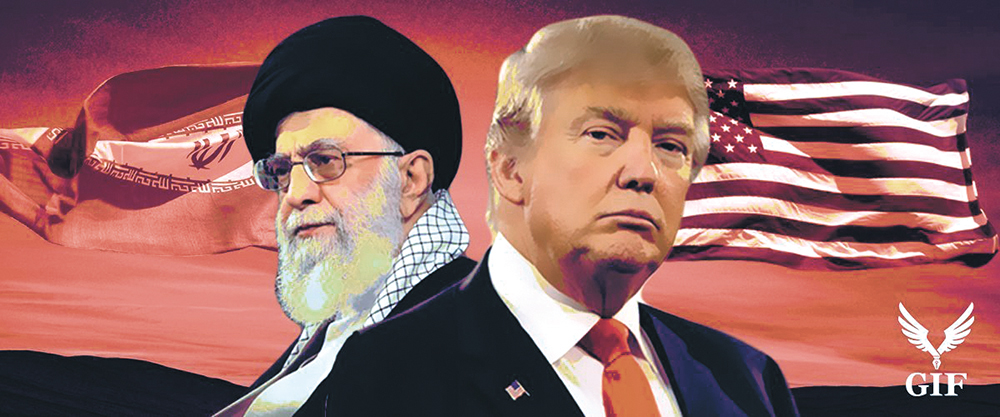
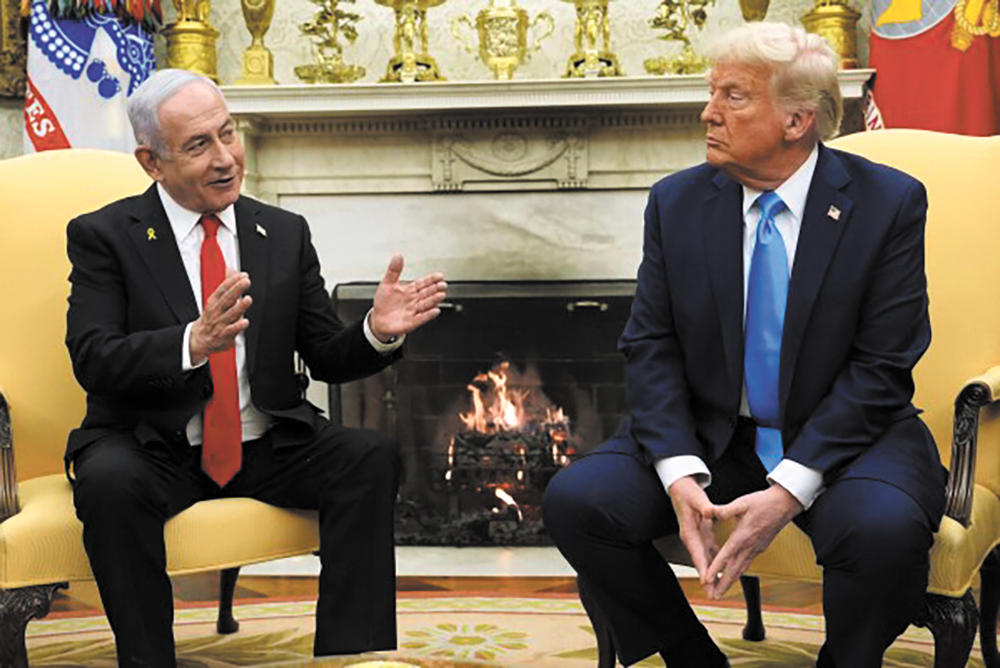
In a pointed public statement from the State Dining Room of the White House on Monday, President Donald Trump delivered a strong rebuke of Iran’s persistent demands in nuclear negotiations, warning that Tehran’s insistence on uranium enrichment remains a serious obstacle to any future agreement with the United States. The comments came just hours after what sources described as an extensive phone conversation with Israeli Prime Minister Benjamin Netanyahu — a call that reportedly focused heavily on the growing threat posed by Iran’s nuclear ambitions, as well as regional tensions in Gaza and southern Lebanon.
According to a report in The Jewish Insider on Monday, which closely tracks U.S.-Israel diplomatic developments, the Trump-Netanyahu call lasted approximately 40 minutes and was described by White House insiders as “intense but constructive.” Trump told reporters afterward that the discussion “went very well,” although he declined to offer specifics. “Iran was the main topic,” Trump confirmed, adding that “Gaza and Lebanon were also discussed in some detail.”
The former president’s remarks made clear that he views Iran’s refusal to scale back its nuclear enrichment as a nonstarter in ongoing negotiations. “They’re just asking for things that you can’t do,” Trump said bluntly. “They don’t want to give up what they have to give up — you know what that is. They seek enrichment. We can’t have enrichment. We want just the opposite.”
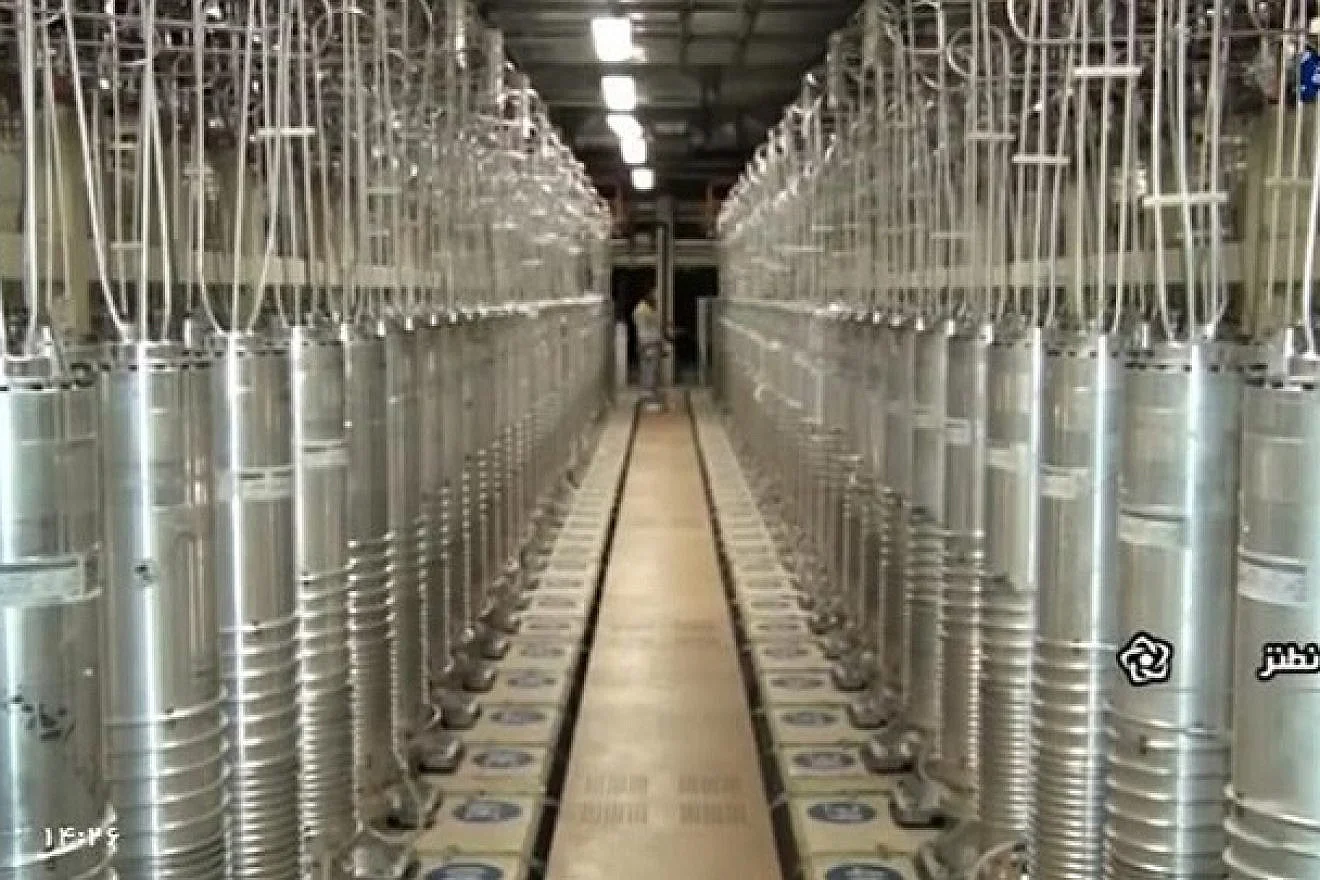
As The Jewish Insider has previously reported, the Trump administration’s diplomatic strategy on Iran hinges on achieving a “zero enrichment” framework, which would prohibit Tehran from refining uranium beyond the low thresholds needed for civilian energy use. This is in stark contrast to the Iranian regime’s long-standing insistence on maintaining its right to enrich uranium — a right enshrined in previous international agreements, but one that the Trump team has rejected as fundamentally flawed and dangerous.
“They are good negotiators, but they’re tough. Sometimes they can be too tough, that’s the problem,” Trump said of the Iranian regime. “We’re trying to make a deal so that there’s no destruction and death. We told them that. I’ve told them that personally. I hope that is the way it works out. It might not work out.”
Iran’s enrichment activity has long been a flashpoint in U.S.-Middle East policy. Under the original 2015 Joint Comprehensive Plan of Action (JCPOA), which Trump withdrew from in 2018, Iran agreed to cap its enrichment at 3.67% and limit its stockpile of enriched uranium. However, Iranian officials have since openly exceeded those limits, with some enrichment activities reaching levels as high as 60%, dangerously close to weapons-grade.
According to the information provided in The Jewish Insider report, Monday’s call between Trump and Netanyahu was followed almost immediately by a security cabinet meeting in Jerusalem, suggesting the two leaders may have exchanged sensitive intelligence or agreed on next steps in their shared efforts to curtail Iranian aggression. Neither the White House nor the Prime Minister’s Office offered a public readout of the call, but Israeli media outlets reported that the conversation had significant strategic implications.
On the American side, negotiations with Iran — which have resumed intermittently since March — appear to have hit another stalemate. President Trump indicated that another round of talks is scheduled for Thursday, though he cast doubt on whether any substantive progress could be achieved. “So far, they’re not there,” Trump told reporters. “They have given us their thoughts on the deal, and I’ve said it’s just not acceptable.”
In response, Iran’s Foreign Ministry issued a brief statement on Monday asserting that Tehran will soon present a counterproposal to the U.S. offer currently on the table. The Jewish Insider reported that Iranian officials are seeking guarantees not only on uranium enrichment but also on the easing of economic sanctions and the protection of regional allies such as Hezbollah and Hamas — all conditions that the Trump administration has dismissed as unacceptable.
Meanwhile, tensions in the region continue to escalate. In Gaza, renewed rocket fire and Israeli airstrikes have raised fears of another full-blown conflict. In southern Lebanon, Hezbollah forces have increased their activity near the Israeli border, prompting a series of IDF retaliatory strikes. These developments further draw attention to the urgency of the Trump-Netanyahu phone call and the growing concern among Israeli and American officials over Iran’s expanding influence in the region.
The report at the Jewish Insider noted that Trump’s tough stance on Iran aligns closely with Prime Minister Netanyahu’s long-standing position that no deal with Tehran can be trusted unless it includes “verifiable and irreversible dismantlement” of its nuclear weapons infrastructure. Netanyahu, who has clashed with previous U.S. administrations over their more conciliatory approach to Iran, is said to have expressed strong support for Trump’s negotiating posture during the call.
Critics of the Trump administration’s policy argue that its “maximum pressure” campaign has failed to stop Iran’s nuclear progress and has instead pushed Tehran to double down. But Trump and his allies counter that a firm stance is essential to prevent Iran from becoming a nuclear threshold state — a scenario that would not only threaten Israel but destabilize the entire Middle East.
In his remarks on Monday, Trump framed the situation in stark terms. “The alternative is a very, very dire one,” he said, alluding to the possibility of military conflict should diplomacy fail. “But they’re not there. And until they are, we have to keep the pressure on.”
With nuclear talks at a critical juncture and regional violence simmering, both the United States and Israel appear to be bracing for a pivotal period. As The Jewish Insider report indicated in its coverage, the coming days could determine whether diplomacy succeeds or whether the world edges closer to yet another confrontation in the Middle East.
On related issues pertaining to the Middle East conflict, Reuters reported that Trump revealed that Iran is involved in ongoing negotiations aimed at brokering a ceasefire between Israel and Hamas. He indicated that the complex multi-party discussions include American and Israeli officials, representatives from Hamas, and now, according to Trump, diplomatic actors from Iran as well.
“Gaza right now is in the midst of a massive negotiation between us and Hamas and Israel, and Iran actually is involved, and we’ll see what’s going to happen with Gaza. We want to get the hostages back,” Trump stated. His comments were reported by Reuters, which noted that neither the White House nor Iran’s mission to the United Nations had responded to inquiries for further details.
The president offered no clarification on the nature or extent of Iran’s involvement in the process, leaving open a wide range of possibilities—from behind-the-scenes coordination with Hamas, to possible direct engagement with U.S. intermediaries, as was reported by Reuters.
According to details confirmed by Reuters, the United States has put forward a proposal for a 60-day ceasefire between Israel and Hamas as part of a wider effort to bring stability to Gaza and secure the release of hostages captured during the October 7 attacks. Under the terms of the deal, 28 Israeli hostages—some alive, others presumed dead—would be returned to Israel during the initial week of the truce. In exchange, Israel would release 1,236 Palestinian prisoners and return the bodies of 180 deceased Palestinians.
While Israel has expressed a willingness to abide by the terms of the deal, Hamas has so far refused to accept the proposal. As Reuters has noted in its ongoing coverage, Hamas’ rejection appears to center on concerns regarding the sequencing of prisoner releases, security guarantees, and broader political recognition of Gaza’s future governance.
President Trump’s remarks highlight a rarely acknowledged facet of the Middle Eastern power struggle: Iran’s deep and sustained influence over Hamas and other regional militias. As Reuters reported, Tehran has long provided financial, military, and ideological support to Hamas in Gaza and Hezbollah in Lebanon. For decades, Iran has maintained that its backing of “resistance movements” is part of its strategic posture against Israel and Western interference in the region.
The dual nature of Iran’s diplomatic role—both as a backer of Hamas and as a nuclear negotiating partner—places Washington in a delicate position. Critics of Trump’s engagement with Iran argue that involving Tehran in hostage negotiations amounts to legitimizing a state sponsor of terror. Supporters, however, contend that Iran’s influence over Hamas is precisely why its involvement is indispensable.
“It’s a geopolitical paradox,” one senior diplomat told Reuters. “Iran may be the arsonist, but at times, they also want to play firefighter—especially when it serves their long-term strategic interests.”
The fate of hostages remains a deeply emotional and politically charged issue in Israel and abroad. Families of the 28 Israeli captives have organized high-profile vigils and protests, urging both the Netanyahu government and foreign allies such as the United States to make their return a top priority.
Trump’s statement on Monday, as reported by Reuters, places hostage recovery at the center of the ceasefire push. “We want to get the hostages back,” he said pointedly, calling attention to the moral urgency behind the diplomatic maneuvering.
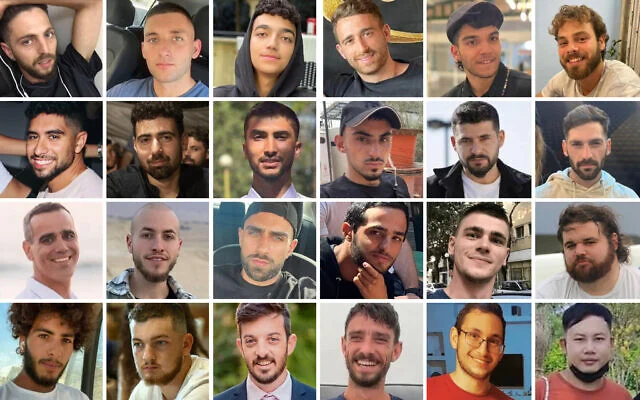
From Hamas’ perspective, the hostages represent one of their most valuable assets—a bargaining chip that could translate into significant political and material concessions. At the same time, Israeli Prime Minister Benjamin Netanyahu is under mounting pressure to resolve the hostage crisis without making what critics in his coalition call “dangerous concessions” to a terrorist organization.
Reuters noted that following Trump’s remarks, Netanyahu convened a high-level security meeting, though no public readout was issued. Israeli media reported that senior defense officials, including IDF Chief of Staff Herzi Halevi and Mossad Director David Barnea, were present—indicating that the talks may be entering a decisive phase.
Trump’s acknowledgment of Iran’s involvement could have implications beyond the immediate ceasefire talks. It signals a broader recalibration of U.S. Middle East policy, one that, at least rhetorically, appears to accept the need for pragmatic diplomacy—even with adversaries.
“This is a high-wire act,” a former State Department official told Reuters. “You’re trying to engage Iran on two tracks—hostages and nukes—while also deterring its proxies from dragging the region into another war.”
The news also lands at a time of political transition in Washington. With the 2026 midterm elections looming, foreign policy has emerged as a key issue for voters. Trump’s reassertion of leadership on the Israel-Hamas crisis could bolster his standing among pro-Israel voters and national security conservatives.
Conversely, his openness to dialogue with Iran may draw criticism from hawkish members of Congress who believe any engagement with Tehran constitutes appeasement.
As the Reuters report indicated, the next major milestone will be the upcoming round of nuclear talks, tentatively scheduled for later this month. Simultaneously, Israeli, American, and Qatari negotiators are expected to press Hamas for further engagement on the ceasefire proposal.
Trump, who prides himself on deal-making prowess, appears to be taking a more visible role in the negotiations.
Just days after a harrowing terror attack in Boulder, Colorado, that left multiple people burned and wounded during a peaceful pro-Israel gathering, Jewish communities across America remain on edge. Yet rather than retreat in fear, thousands of supporters rallied with renewed purpose in New York City’s Central Park on Sunday, staging one of the largest hostage solidarity events held on U.S. soil since the October 7 massacre by Hamas.
As Israel National News reported, the rally was both a cry of anguish and a declaration of moral clarity — a demand to bring home every last hostage still languishing in the hands of Hamas deep within Gaza’s vast terror tunnel network. Against the backdrop of renewed global anti-Semitism and rising threats to Jewish communities, the crowd’s message rang out with unflinching defiance: “We will not be silenced. We will not back down. We will stand by the families’ side until all are home.”