



|
Getting your Trinity Audio player ready...
|
By: Fern Sidman
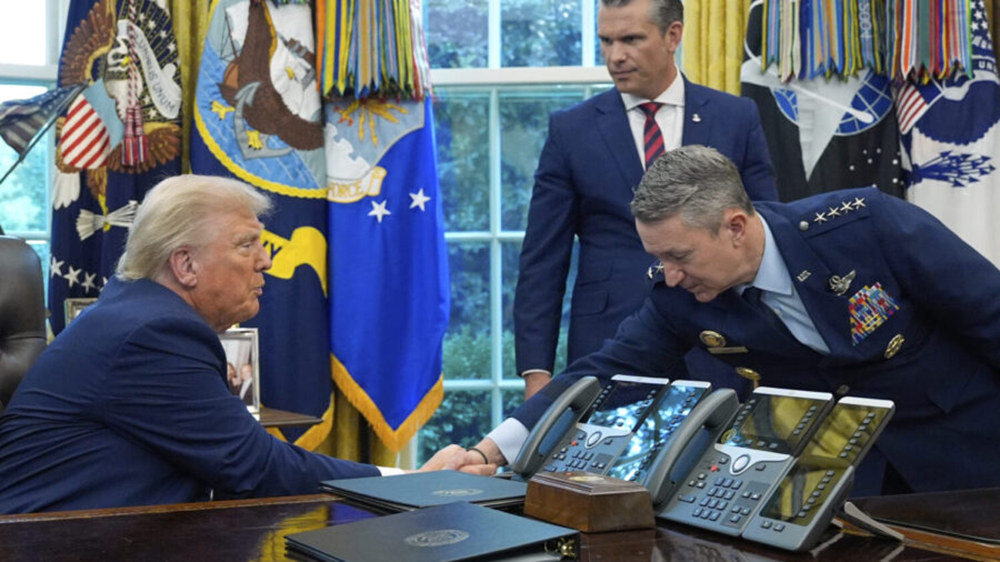
In a moment freighted with geopolitical consequence and rhetorical intensity, President Donald Trump on Monday forcefully repudiated reports suggesting that the Chairman of the Joint Chiefs of Staff, General Dan Caine, had counseled restraint in the face of escalating tensions with Iran. The president’s response, delivered in a characteristically emphatic post on Truth Social, was not merely a rebuttal of a single media narrative but a sweeping denunciation of what he described as a pattern of misrepresentation by the press regarding his deliberations on the possibility of military action against the Islamic Republic.
Israel National News reported on Monday that Trump rejected claims that he was entertaining the notion of “limited strikes,” reiterating instead that while he preferred a negotiated settlement, the failure to reach an agreement would, in his words, result in “a very bad day” for Iran.
The president’s language was unambiguous in its attempt to reassert command over the narrative. According to the information provided in the Israel National News report, Trump wrote that “numerous stories from the Fake News Media” had circulated claiming that General Caine—whom he referred to by the nickname “Razin”—opposed a war with Iran. The president dismissed these reports as “100% incorrect,” asserting that they were unattributed and deliberately misleading.
In Trump’s telling, General Caine, like others in the administration, would prefer to avoid war in principle but was fully confident in the United States’ capacity to prevail decisively should hostilities be authorized. Trump praised Caine as a “Great Fighter” who represents “the Most Powerful Military anywhere in the World,” invoking the general’s role in what he described as “Midnight Hammer,” a prior operation targeting Iranian nuclear development, which Trump claimed had reduced those facilities to “smithereens” through the deployment of B-2 bombers.
The tone of the president’s message was not merely combative but declarative, as though designed to dispel any impression that strategic hesitancy or internal dissent might constrain his freedom of action. Trump insisted he alone would make the final decision regarding military action, adding that while he would “rather have a Deal than not,” the absence of such a deal would entail severe consequences for Iran and, “very sadly,” for its people, whom he characterized as “great and wonderful.”
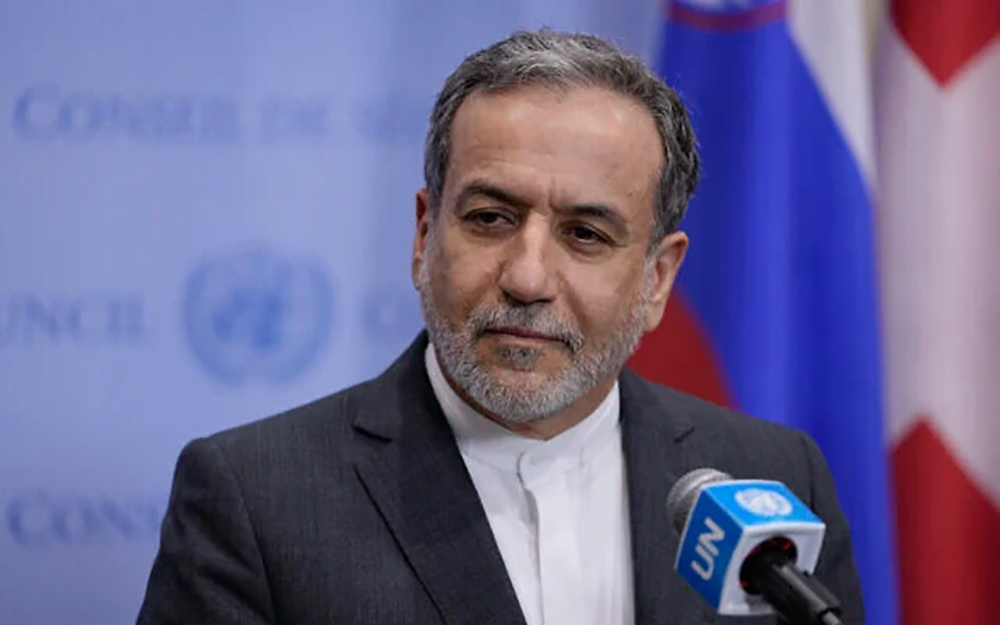
The president’s intervention came in the wake of an Axios report that had described General Caine as advising Trump and senior officials that a military campaign against Iran would carry profound risks, including the danger of entanglement in a prolonged conflict. According to the Axios account, a vigorous debate is unfolding within the upper echelons of the administration, with some advisers urging caution and warning of unintended consequences, while others perceive the president as inclined toward authorizing a strike.
The Israel National News report has situated this internal American debate within a rapidly intensifying regional context. The United States has increased its military presence in the Middle East, a buildup that Iranian officials have interpreted as a provocation rather than a deterrent. Iranian Foreign Minister Abbas Araghchi, in an interview broadcast on CBS, warned that Iran would retaliate against U.S. military bases in the region if attacked.
At the same time, Araghchi expressed hope for a diplomatic resolution to the nuclear standoff, framing diplomacy as the “only way” to address what he described as Iran’s peaceful nuclear program. Araghchi rejected both military escalation and the utility of U.S. force deployments, arguing that “military force cannot exert pressure on us” and that there is “no need for a military buildup, and also no use in it.”
Within the United States, the debate over Iran has revived long-standing fissures in foreign policy thinking. Some advisers, haunted by the specter of past conflicts that spiraled beyond their original scope, argue that even a limited military engagement could ignite a chain reaction of escalation. Iran’s capacity to retaliate through proxies, missile strikes, and asymmetric operations across the region means that any American action could reverberate far beyond its initial targets. The risk of a “prolonged conflict,” as cited in the Axios report, is not merely theoretical; it is grounded in a regional architecture of alliances and enmities that has repeatedly transformed discrete incidents into sustained confrontations.
Trump’s rejection of the notion of “limited strikes” is, in this context, a double-edged assertion. On one hand, The president sought to dispel the impression that he was contemplating half-measures, portraying himself instead as a leader who would either secure a comprehensive deal or, failing that, authorize decisive action. On the other hand, the denial of limited options suggests a narrowing of the policy spectrum, in which the alternatives are framed as binary: agreement or confrontation. Such framing can, paradoxically, reduce diplomatic flexibility by hardening expectations on both sides.
Araghchi’s warnings further complicate the strategic calculus. By explicitly threatening to strike U.S. bases in the region, Tehran signaled that any American attack would be met with immediate and potentially wide-ranging retaliation. This posture underscores the interconnectedness of regional security arrangements, in which U.S. forces are embedded across multiple countries and theaters. The vulnerability of these assets transforms any bilateral confrontation into a multi-front risk scenario, amplifying the potential costs of miscalculation.
At the same time, Araghchi’s insistence on diplomacy as the “only way” forward reflects Iran’s desire to frame itself as the aggrieved party seeking negotiation rather than confrontation. Israel National News has noted that this dual messaging—threatening retaliation while professing openness to diplomacy—is emblematic of Tehran’s broader strategy of deterrence coupled with rhetorical commitment to peaceful resolution. Whether this posture is sincere or tactical remains a subject of intense debate among analysts and policymakers alike.
Trump’s assertion that “everything that has been written about a potential War with Iran has been written incorrectly, and purposefully so” reflects his enduring antagonism toward the media as a purveyor falsehood.
As the standoff deepens, the tension between the desire for a deal and the readiness for confrontation remains unresolved. Trump’s rhetoric oscillates between these poles, projecting openness to diplomacy while warning of catastrophic consequences in its absence. For Tehran, the American military buildup is framed as evidence of bad faith, even as Iranian officials profess commitment to negotiation. This mutual suspicion, compounded by domestic political pressures on both sides, has created a diplomatic environment in which gestures of conciliation are easily interpreted as signs of weakness.
Netanyahu’s Warning to Iran
In a moment of heightened regional tension and strategic uncertainty, Israeli Prime Minister Benjamin Netanyahu on Monday delivered a forceful address to the Knesset plenum, declaring that Israel has “never been stronger” and that the alliance between Jerusalem and Washington has reached an unparalleled depth. Netanyahu framed the present as a juncture of historic consequence, warning that any Iranian attack on Israel would constitute “perhaps the worst mistake in its history,” and vowing a response of such magnitude that Tehran “cannot even imagine” its force.
Israel National News characterized the speech as one of the prime minister’s most assertive articulations of deterrence in recent months, combining strategic confidence with a call for national unity.
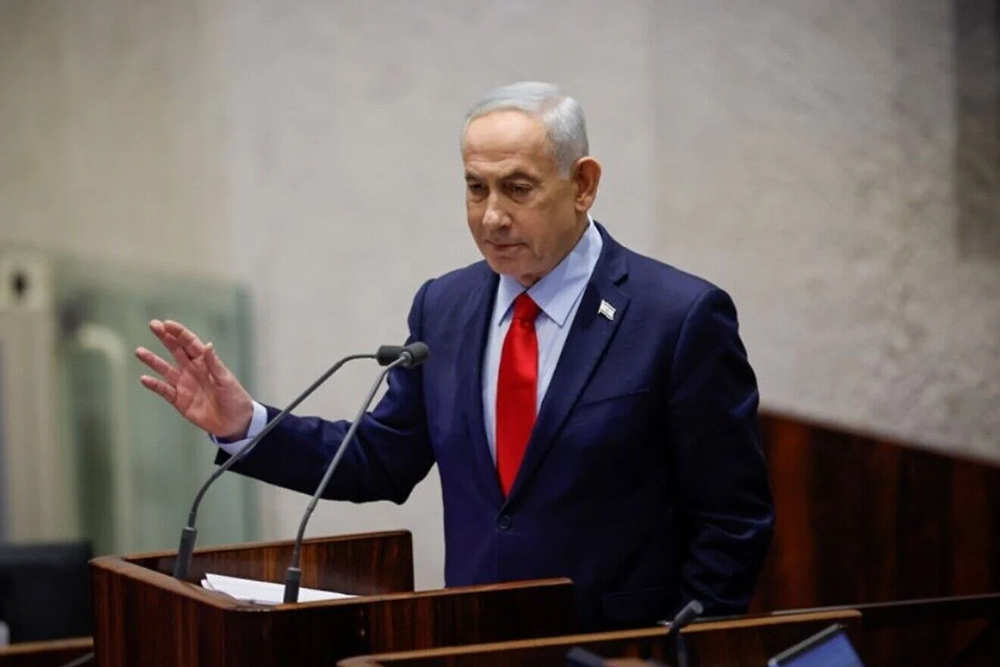
Netanyahu situated his remarks within the context of an exceptionally close relationship with President Trump, noting that he had recently returned from his seventh meeting with the American leader since Trump’s election. According to Israel National News, the prime minister described this relationship as unprecedented in its intimacy and scope, extending far beyond personal rapport to encompass deep operational coordination between the Israel Defense Forces and the U.S. military. “Our security agencies and their security services—there has never been anything like this,” Netanyahu told lawmakers, emphasizing that the strategic convergence between the two allies has translated into tangible outcomes for Israel’s security architecture.
Netanyahu attributed a series of thwarted threats and neutralized dangers to this bilateral cooperation, asserting that together, the United States and Israel have eliminated threats that once loomed over “every Israeli citizen.” In the prime minister’s telling, the present moment represents not merely a phase of tactical advantage but a structural strengthening of Israel’s deterrent posture. His declaration that “Israel has never been stronger” was delivered not as rhetorical flourish but as a statement of strategic assessment, one rooted in intelligence cooperation, military readiness, and diplomatic backing from Washington.
Yet Netanyahu’s confidence was tempered by a sober acknowledgment of the volatility of the regional environment. “No one knows what the day will bring,” he cautioned, according to Israel National News, underscoring the unpredictable rhythms of Middle Eastern geopolitics. Preparedness, in this framing, is not merely a function of hardware and alliances but of psychological readiness for contingency. “We are prepared for any scenario,” he declared, signaling both to adversaries and to the Israeli public that the state’s security establishment is calibrated for a spectrum of possibilities, from covert threats to overt confrontation.
The core of Netanyahu’s address was his message to Iran. In language calculated to resonate as deterrent rather than provocation, the prime minister asserted that any Iranian assault on Israel would be met with overwhelming force. The phrase “perhaps the worst mistake in its history” was laden with historical gravitas, invoking the long arc of Iranian miscalculations in the region and framing a hypothetical attack as an error of civilizational consequence. The promise of a response “they cannot even imagine” was not elaborated upon in operational terms, but its very vagueness amplified its deterrent effect, leaving adversaries to contemplate the breadth of Israel’s retaliatory capacities.
Israel National News contextualized Netanyahu’s warning within a broader pattern of escalating rhetoric between Jerusalem and Tehran, as well as within the shadow of Iran’s regional activities and its nuclear ambitions. While the prime minister did not enumerate specific scenarios, his language suggested a readiness to confront threats across multiple domains, whether conventional, asymmetric, or strategic. The emphasis on U.S.-Israeli coordination served to reinforce the credibility of this deterrence, implying that any confrontation with Israel would be entangled with American strategic interests.
Beyond the external dimension, Netanyahu’s address carried an internal political and cultural resonance. On the eve of Purim, the Jewish festival commemorating deliverance from existential threat in the biblical narrative, the prime minister invoked the language of unity and collective resolve. Israel National News reported that he urged Israelis to “close the ranks of the people” and to “stand shoulder to shoulder,” framing national cohesion as a strategic asset no less vital than military hardware. The invocation of Purim, with its themes of survival against hostile powers, lent the speech a symbolic depth, situating contemporary security challenges within a continuum of historical endurance.
The prime minister’s closing invocation of divine assistance, coupled with his pledge to “ensure the eternity of Israel,” fused secular statecraft with religious-inflected language, a rhetorical synthesis that has long characterized Netanyahu’s public oratory in moments of national peril.
Netanyahu’s warning to Iran was less an expression of belligerence than an articulation of deterrence doctrine, one rooted in the conviction that clarity of consequence can avert catastrophe. Whether this clarity will suffice to forestall miscalculation remains uncertain. What is evident, however, is that Israel’s leadership is intent on projecting a posture of unwavering preparedness, anchored in alliance, unity, and the enduring belief that when Israel stands together, it can withstand even the gravest of storms.
