



|
Getting your Trinity Audio player ready...
|
By: Jason Ostedder
In a sweeping national security initiative with profound geopolitical implications, President Trump on Monday announced that his administration has begun formal proceedings to designate the Muslim Brotherhood as a foreign terrorist organization, aligning the United States with a growing coalition of Muslim-majority nations that have already outlawed the movement. The decision, first detailed in presidential directives released Monday and analyzed extensively by World Israel News, reflects Washington’s accelerating concern about the Brotherhood’s political ambitions, transnational influence networks, and alleged penetration of Western institutions.
The move comes at a moment of intensifying global debate over the Brotherhood’s role in fomenting ideological radicalization. As the World Israel News report emphasized, the organization — founded in Egypt in 1928 — has for decades positioned itself as both a political and religious movement, blurring the line between faith-based activism and political Islamism. The Brotherhood’s critics contend that this duality allows its adherents to operate legally within democratic societies while simultaneously nurturing extremist narratives that threaten liberal democracies from within.
Egypt, the Brotherhood’s birthplace, has already classified the group as a terrorist organization, citing a spate of violent uprisings and subversive activities. Following the ousting of Mohamed Morsi in 2013, Egyptian authorities banned the Brotherhood entirely, accusing it of orchestrating unrest and destabilizing state institutions. Saudi Arabia and the United Arab Emirates subsequently enacted similar prohibitions, asserting that the movement promotes extremist ideology and undermines regional security. The World Israel News report indicated that these nations view the Brotherhood not merely as a political rival but as a direct threat to national cohesion.
Trump’s executive order marks the most significant shift in U.S. counter-Islamist policy in over a decade. The directive instructs Secretary of State Marco Rubio and Treasury Secretary Scott Bessent to initiate the process of designating specific Brotherhood chapters — particularly those in Egypt, Jordan, and Lebanon — as Foreign Terrorist Organizations (FTOs) or Specially Designated Global Terrorists (SDGTs). The White House simultaneously released a detailed fact sheet, as reported by World Israel News, outlining the procedural framework and national security justifications behind the designation.
The order requires Rubio and Bessent to coordinate closely with Attorney General Pam Bondi and Director of National Intelligence Tulsi Gabbard in delivering a comprehensive evaluation of Brotherhood affiliates worldwide. Within 45 days of submitting their report, the secretaries must take formal action on any chapters deemed to meet the statutory criteria for designation. The fact sheet declares the initiative’s broader objective: “to eliminate the designated chapters’ capabilities and operations, deprive them of resources, and end any threat such chapters pose to U.S. nationals and the national security of the United States.”
The designation process represents not merely an administrative undertaking but a fundamental reframing of how Washington perceives the Brotherhood’s ideology. Critics of the movement argue that the organization’s stated aim — the gradual Islamization of society through political activism, civil society engagement, and institutional influence — is incompatible with Western liberal values. Proponents of the designation maintain that by weaponizing free speech protections, exploiting academic environments, and cultivating extensive charitable networks, the Brotherhood has embedded itself within democratic structures while subtly advancing a long-term Islamist agenda.
A newly released study by the Institute for the Study of Global Antisemitism and Policy (ISGAP) amplifies these concerns. The report asserts that the Brotherhood has pursued a multi-generational plan to reshape Western attitudes toward Islamism by exploiting social divisions, leveraging academic platforms, and influencing public discourse. The study argues that the organization’s sustained engagement with Western institutions constitutes a strategic effort to normalize political Islam, weaken democratic resilience, and shift the ideological contours of civil society.
Dr. Qanta Ahmed, a physician and policy scholar long recognized for her research on political Islam, reiterated these warnings in an interview highlighted by World Israel News. Speaking to Fox News, Ahmed recalled urging the U.S. government more than a decade ago to classify the Brotherhood as a terrorist organization. She argued that the movement’s ideological sophistication and soft-power strategy have allowed it to gain footholds within American cultural, educational, and political institutions.
“Post-9/11, we saw Islamophobia, then boycott-divestment-sanctions targeting Israel, and now widespread pro-Hamas protests — that is all part of a multi-generational project to undermine secular democracy using democratic freedoms,” Ahmed stated. She emphasized that the ideological battle is not a clash between Islam and the West, but rather between Islamism — the Brotherhood’s political doctrine — and democratic pluralism. As World Israel News reported, Ahmed has urged policymakers to distinguish between the diverse global faith of Islam and the radical political ideology propagated by the Brotherhood.
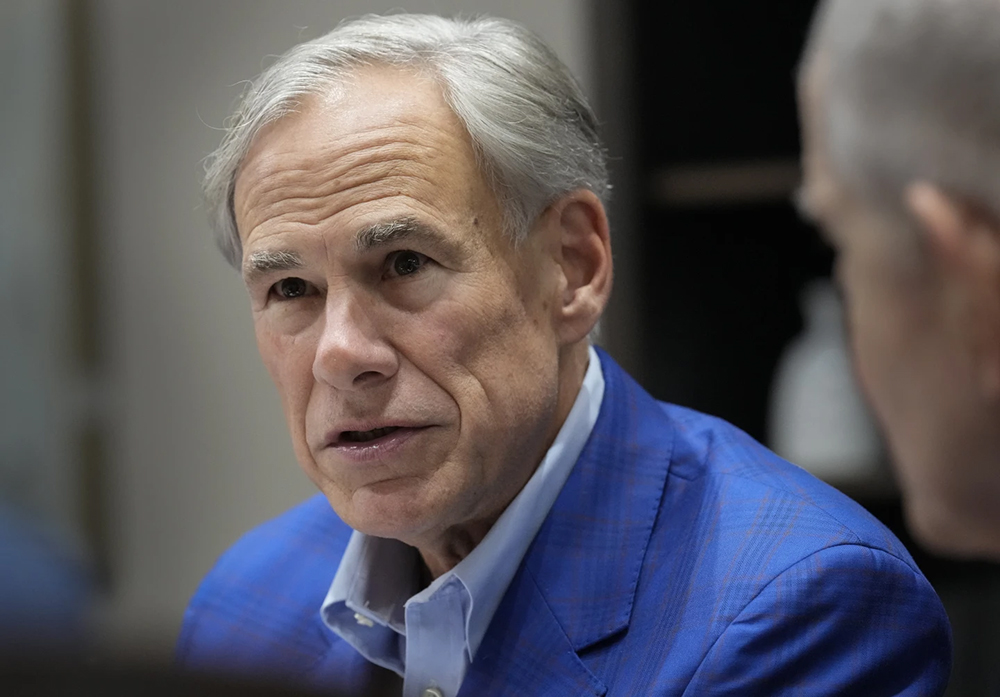
While Trump’s executive order paves the way for a federal designation, certain states have already taken unilateral action. Texas, under Governor Greg Abbott, became the first state to declare the Muslim Brotherhood and the Council on American-Islamic Relations (CAIR) as foreign terrorist and transnational criminal organizations. Abbott accused the groups of attempting to “impose Sharia law” and pursuing “Islam’s mastership of the world,” assertions that were met with immediate legal challenges. CAIR-Texas filed a lawsuit contesting the designation, asserting that “Mr. Abbott is defaming us and other American Muslims because we are effective advocates for justice here and abroad.”
The Texas action reflects a broader trend in which state-level governments and civil society groups are increasingly scrutinizing Islamist organizations and their networks. Yet the federal designation, if completed, will carry far more consequential effects, including travel restrictions, asset seizures, and the criminalization of material support.
Federal officials are already drafting the necessary documents to support the national designation. The interagency review — involving the State Department, Treasury Department, Justice Department, and Office of the Director of National Intelligence — will examine the Brotherhood’s international structure, including its chapters, front groups, financial arms, and communications networks. Analysts believe that certain Brotherhood affiliates may meet the legal criteria more readily than others; for example, Lebanese and Egyptian chapters have been previously linked to operational support for extremist groups.
However, the designation effort is expected to trigger significant legal and diplomatic debates. Critics warn that the Brotherhood’s diffuse structure — consisting of loosely aligned chapters with varying degrees of ideological commitment — complicates a broad classification. Some chapters participate openly in elections, run social-welfare programs, and maintain no documented connection to violence. Others, by contrast, engage in direct coordination with extremist militias or serve as ideological incubators for radicalization.
The report at World Israel News noted that the administration’s strategy appears to acknowledge these nuances. By directing assessments on a chapter-by-chapter basis rather than targeting the Brotherhood wholesale, the order attempts to navigate the complex web of organizations affiliated with the movement. Nevertheless, supporters argue that the Brotherhood’s international network functions as a unified ideological ecosystem, and that political moderation in certain chapters often masks deeper ideological alignment with Islamist extremism.
Diplomatically, the designation may recalibrate U.S. relations with nations in the Middle East, many of which have long urged Washington to adopt a more confrontational approach toward the Brotherhood. Egypt, Saudi Arabia, and the UAE — each of which has been cited by World Israel News as a prominent critic of the movement — are expected to welcome Trump’s initiative. But nations with Brotherhood-linked political parties, such as Jordan, Morocco, and Kuwait, may face increased pressure to curb the organization’s influence.
For the United States, the implications extend beyond foreign policy. The designation will likely provoke contentious debates over civil liberties, religious freedom, and the boundaries of legitimate political activism. Organizations accused of Brotherhood ties, including CAIR, Islamic charities, and student groups, will face heightened scrutiny. At the same time, supporters of the designation insist that the move upholds national security by confronting an ideology they argue has metastasized within Western institutions for decades.
What remains certain is that President Trump’s decision marks a pivotal juncture in America’s confrontation with political Islamism. The administration believes the time has come to fundamentally reassess the Brotherhood’s role in shaping ideological currents at home and abroad. With federal documents already being drafted and interagency evaluations underway, the United States is moving toward a defining moment — one that may reshape not only its counterterrorism posture, but also the parameters of public debate over radical Islamism in the twenty-first century.
In a dramatic escalation with far-reaching political ramifications, Israeli Prime Minister Benjamin Netanyahu endorsed President Trump’s decision to formally designate the Muslim Brotherhood as a terrorist organization, a move that immediately reverberated across Israel’s domestic political landscape. According to the report at World Israel News, Netanyahu not only praised Trump’s determination to challenge Islamist networks worldwide, but also strongly hinted that Israel’s own legal structure would soon follow suit—potentially culminating in the unprecedented disqualification of an Arab-Israeli political party from the Knesset.
Netanyahu’s remarks came only hours after the initial report of Trump’s forthcoming designation. In a carefully calibrated statement delivered in Jerusalem, the prime minister linked Washington’s policy shift to Israel’s own longstanding concerns about the Muslim Brotherhood’s influence across the Middle East. “On this occasion, I also want to commend President Trump on his decision to outlaw and designate the Muslim Brotherhood organization as a terrorist organization,” Netanyahu declared, citing information published by World Israel News. His tone, while solemn, carried unmistakable political intention.
“This is an organization that endangers stability throughout the Middle East and also beyond the Middle East,” Netanyahu continued, underscoring the Brotherhood’s multi-national reach, its history of fomenting radicalization, and its deep ideological hostility toward the West. As the World Israel News report noted, Netanyahu emphasized that Israel had already proscribed certain elements connected to the Brotherhood and was now “working to complete this action soon.” It was this final phrase—“complete this action”—that resonated most forcefully, immediately interpreted by political commentators as a direct reference to the United Arab List (Ra’am).
The UAL, which represents the political wing of the Southern Branch of the Islamic Movement in Israel, holds five seats in the current Knesset. The party’s electoral influence has grown considerably in recent years. The UAL assumed a historic role following the 2021 election, where it briefly held the balance of power and facilitated the formation of the Bennett-Lapid coalition government—a watershed moment that demonstrated the potential political clout of Arab-Islamist parties within the Israeli parliamentary system.
Yet for years, security officials and analysts have scrutinized the Southern Branch’s ideological lineage, noting that while it publicly rejects associations with Hamas or the Muslim Brotherhood, its leadership remains shaped by networks influenced historically by those movements. World Israel News reported that various UAL parliamentarians and senior operatives have held meetings with Hamas figures, despite the party’s insistence that such contacts were strictly humanitarian or communal. Critics, however, maintain that the UAL has failed to sufficiently distance itself from broader Islamist activism in the region.
Israel’s legal precedent on the matter is not ambiguous. The Northern Branch of the Islamic Movement in Israel was outlawed in 2015 after intelligence and court proceedings outlined its direct support for terrorism, its coordination with Hamas-linked networks, and its dissemination of incendiary anti-Israel propaganda. The ban was sweeping, shutting down the Northern Branch’s social institutions, charitable arms, and media outlets. World Israel News has noted that Israeli intelligence regarded the Northern Branch as a conduit for Muslim Brotherhood ideology within Israel—a domestic arm of a transnational entity whose objective remains the destabilization of Western-aligned governments in the Middle East.
The Southern Branch, by contrast, pursued a different approach after the schism between the two factions in the 1990s. It opted to participate in Israeli electoral politics, a strategic divergence designed to secure influence through democratic channels rather than confrontation. The UAL’s political pragmatism—and particularly its willingness to sit with Jewish governing coalitions—was heralded by some as a sign of ideological moderation. Yet, moderation does not necessarily indicate ideological severance. Elements within the Southern Branch continued to draw inspiration from Muslim Brotherhood thought, even as they operated within the Israeli political mainstream.
Netanyahu’s insinuation of a potential ban, therefore, is neither spontaneous nor without context. It reflects years of concern within Israel’s security apparatus regarding the porous boundary between political Islam and terrorist networks. If Trump’s designation of the Muslim Brotherhood is finalized in Washington, Israeli policymakers believe it will provide added international legitimacy for parallel measures in Jerusalem, especially against parties or organizations deemed to operate within the Brotherhood’s ideological orbit.
Qatar supports them all the way, so how does the President reconcile his love affair with Qatar?