



|
Getting your Trinity Audio player ready...
|
By: Jason Ostedder
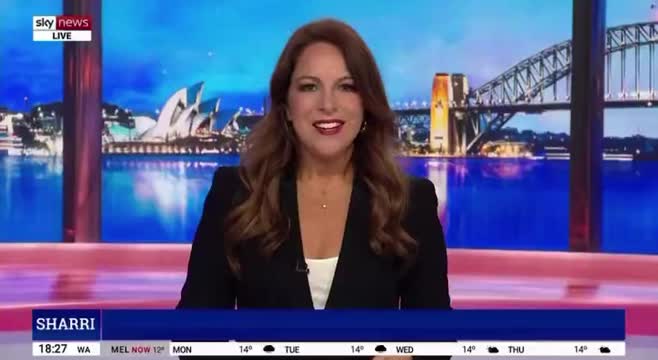
Sky News Australia host Sharri Markson has issued one of the most forceful media indictments yet to emerge from Australia’s intensifying reckoning with antisemitism, accusing several of the country’s most influential news organizations of helping to create the very climate of hatred they now claim to lament. As reported on Sunday by VIN News, Markson argues that years of editorial decisions, narrative framing, and selective outrage by major outlets have contributed directly to the surge in antisemitic hostility now gripping Jewish communities across the nation.
Albanese’s antisemitism crackdown ‘too little, too late’ for Jewish Australians https://t.co/qmsQD0XLd5
— SpeechOntheMeat (@SpeechOnTheMeat) December 21, 2025
Speaking in the aftermath of a deadly antisemitic attack at Bondi Beach—a moment that shocked the country and forced even reluctant institutions to acknowledge the severity of the problem—Markson said the sudden expressions of concern by legacy media rang hollow. According to the VIN News report, she named the Australian Broadcasting Corporation (ABC), The Guardian Australia, and newspapers owned by Nine Entertainment as among those she believes owe Jewish Australians not merely reflection, but a public apology.
“This did not come out of nowhere,” Markson argued, according to VIN News. “For years, Jewish Australians warned that the relentless demonization of Israel, the normalization of anti-Zionist rhetoric, and the marginalization of mainstream Jewish voices would eventually translate into violence against Jews at home.” Those warnings, she said, were routinely ignored or dismissed, often portrayed as attempts to silence criticism rather than as genuine concerns about communal safety.
Markson’s critique goes beyond isolated headlines or individual commentators. She described a sustained pattern within Australian media culture: an ideological fixation on Israel as a uniquely malign global actor, paired with a conspicuous reluctance to confront or even acknowledge antisemitism unless it reached an undeniable and catastrophic threshold. In her telling, this imbalance fostered a moral asymmetry in which Jewish identity became conflated with political wrongdoing, and hostility toward Israel bled seamlessly into hostility toward Jews.
Central to Markson’s argument is the concept of narrative accumulation. While any single article or broadcast might be defensible in isolation, she contends that years of one-sided coverage—particularly since the escalation of Middle East tensions—have had a cumulative radicalizing effect. Markson said that Israeli actions were routinely stripped of context, while Hamas and other extremist actors were framed through euphemism or omission. The result, she argues, was a media environment in which Jewish Australians increasingly felt targeted, delegitimized, and unheard.
She further accused major outlets of privileging “click-driven outrage” over responsible journalism. In an era of digital competition and algorithmic amplification, Markson said, sensationalism too often triumphed over nuance. The VIN News report noted that she argued emotionally charged anti-Israel narratives were rewarded with traffic and engagement, while stories about rising antisemitism, threats against synagogues, or harassment of Jewish students were minimized or ignored altogether.
What makes the current moment particularly damning, in Markson’s view, is that the warning signs were not subtle. Australian security agencies had repeatedly issued public alerts about escalating threats to Jewish institutions and individuals. Jewish community leaders, educators, and parents raised alarms about intimidation in schools, vandalism of community centers, and open hostility at public demonstrations. Yet these developments failed to generate sustained media scrutiny—until blood was shed.
“It should not have taken the killing of civilians and the shooting of dozens of Jewish Australians for this to be taken seriously,” Markson said, according to the VIN News report. The Bondi Beach attack, she argued, did not represent a sudden rupture but the inevitable consequence of years of rhetorical escalation and moral abdication.
In her remarks, Markson rejected the notion that criticizing Israel is inherently antisemitic, emphasizing that robust debate about foreign policy is legitimate and necessary. However, she drew a sharp distinction between criticism and demonization. She said that when Israel is portrayed as uniquely evil, when Jewish self-determination is framed as illegitimate, and when Jewish voices defending Israel are excluded or caricatured, the line into antisemitism is not merely crossed—it is erased.
Markson also took aim at what she described as the media’s selective empathy. While some outlets have now published editorials condemning antisemitism and expressing solidarity with Jewish Australians, she characterized these gestures as belated and insufficient. According to the information provided in the VIN News report, she labeled the response “too little, too late,” arguing that expressions of concern ring hollow when unaccompanied by introspection or accountability.
The call for an apology, Markson stressed, is not about retribution but about trust. Jewish Australians, she said, have lost faith in institutions that claim to speak for the national conscience while repeatedly disregarding their safety and lived experience. A genuine apology would require acknowledging not only failures of omission, but also the active role that unbalanced reporting played in legitimizing hostility.
Her comments have reignited a broader debate within Australian journalism about responsibility, bias, and the power of framing. As the VIN News report noted, media scholars and analysts increasingly argue that the press does not merely reflect social tensions but shapes them—sometimes profoundly. In multicultural societies, that influence carries heightened ethical obligations.
The controversy also underscores a growing divide between mainstream media and segments of the public who feel misrepresented or erased. For Jewish Australians, Markson suggests, the issue is existential. Antisemitism is not an abstract concept but a lived reality with tangible consequences—security guards at schools, police outside synagogues, children afraid to wear religious symbols in public.
Markson concluded her remarks with a stark warning: without honest reckoning, the cycle will repeat. Condemnations after the fact will do little to prevent future violence if the underlying narratives remain unchanged. Journalism, she argued, must rediscover its commitment to fairness, context, and moral clarity—not only when tragedy strikes, but before.
In placing responsibility squarely on the shoulders of Australia’s most powerful media institutions, Markson has forced an uncomfortable conversation into the open. Whether those outlets respond with introspection or defensiveness may determine not only their credibility, but the safety and cohesion of the society they purport to serve.