



|
Getting your Trinity Audio player ready...
|
By: Kevin McGee
The long shadow cast by Jeffrey Epstein over international politics, royalty, and elite social circles has once again lengthened, following the U.S. Justice Department’s release of thousands of pages of documents that revive unresolved questions about power, privilege, and accountability. As reported on Tuesday by USA Today, the newly unsealed materials—made public on December 23—contain references to Britain’s Prince Andrew, reopening public scrutiny of a relationship that has lingered uneasily at the margins of the Epstein scandal for years.
The documents, released without explanatory context and accompanied by explicit cautions that allegations within them have not been independently verified, nevertheless provide a rare and unsettling glimpse into communications, claims, and investigative deliberations tied to Epstein’s network. The USA Today report emphasized that the files do not constitute new findings or legal conclusions; rather, they reflect raw material gathered during years of investigation, some of it fragmentary, some deeply disturbing, and much of it unresolved.
At the center of renewed attention is a 2001 email exchange involving an individual using the alias “The Invisible Man,” who signed off simply as “A.” According to the files reviewed by USA Today, the message was sent to Ghislaine Maxwell—Epstein’s longtime associate, now serving a 20-year federal prison sentence following her 2021 conviction on sex trafficking charges. In the email, “A” writes casually of being “up here at Balmoral Summer Camp for the Royal Family,” a reference that immediately raised eyebrows among investigators and journalists alike.
The tone of the message, as USA Today has reported, is strikingly informal. “How’s LA?” the sender asks, before inquiring whether Maxwell had “found me some new inappropriate friends.” The email continues with a discussion of travel plans, expressing a desire to escape somewhere “hot and sunny with some fun people” before returning to professional obligations in the fall. It concludes with a friendly sign-off: “See ya A xxx.” The files themselves do not confirm the identity of “The Invisible Man,” nor do they explicitly identify the sender as Prince Andrew. Nonetheless, the references to Balmoral—a royal estate in Scotland traditionally associated with the British monarchy—have fueled intense speculation.
USA Today has been careful to underscore that the release of the email does not establish wrongdoing, nor does it prove authorship. A representative for Andrew Mountbatten Windsor was contacted for comment, according to USA Today, but no public response had been issued at the time of reporting. The absence of confirmation, however, has done little to quell public interest, particularly given Andrew’s well-documented past association with Epstein.
Further documents in the newly released cache deepen the intrigue. A 2002 email attributed to “Gx”—widely understood to refer to Ghislaine Maxwell—shows her writing to an unnamed individual to say that she had “just gave Andrew your” phone number, asking the recipient to arrange a trip to Peru for him. The message instructs the recipient to expect a call from a “very English sounding gentleman” and requests that Andrew be shown “a wonderful time,” while being introduced only to friends who could be trusted to be “friendly and discreet and fun.”
As the USA Today report detailed, this email was later forwarded by “Gx” to “The Invisible Man,” who responded succinctly: “Got it I will ring him today if I can.” Once again, the documents stop short of explicitly identifying Prince Andrew as the sender or recipient, yet the circumstantial implications have ensured the correspondence remains a focal point of media scrutiny.
Beyond emails, the released materials also include deeply troubling allegations contained within a partially redacted FBI intake form dated 2020. According to the information provided in the USA Today report, an unidentified individual claimed they were trafficked as a child between the ages of six and eight to what they described as “pedophile ring ‘parties.’” The claimant alleged they were drugged at night and transported by their father, painting a harrowing picture of sustained abuse.
The same intake form contains a particularly explosive allegation: that the individual was struck by a dark blue car allegedly driven by Prince Andrew. The claimant asserted that they were not taken to a hospital despite suffering permanent injuries to their ribs, hip, and leg, and claimed that the car’s hood ornament broke off upon impact and was buried near their home, where it might still be recoverable as evidence. USA Today has stressed that these allegations remain unverified and that no corroborating evidence has been presented publicly.
The release of such claims, untested in court and stripped of investigative context, has reignited debate over the ethics of document disclosure. As USA Today has noted in its coverage, the Justice Department’s decision to release the Epstein-related files reflects growing public demand for transparency, but it also raises concerns about reputational harm when allegations are aired without adjudication.
Another document highlighted by USA Today reveals that, as late as April 2020, U.S. authorities were actively seeking to interview Prince Andrew. The document shows that the U.S. Attorney’s Office for the Southern District of New York and the FBI believed Andrew “may have been a witness to and/or participant in certain events of relevance” to the Epstein investigation. Crucially, the same document explicitly states that Andrew was “not presently a target of the investigation,” and that U.S. authorities had not gathered evidence indicating he had committed a crime under U.S. law.
That distinction has remained central to Andrew’s defense. Nevertheless, his reluctance to cooperate fully with U.S. investigators has been a point of contention, repeatedly noted in reporting by USA Today and other outlets. The perception of evasion, combined with the gravity of the allegations surrounding Epstein, has taken a lasting toll on Andrew’s public standing.
The fallout has been tangible. In October, Buckingham Palace confirmed that Prince Andrew would no longer use his royal titles, marking a symbolic but significant step in distancing the monarchy from the scandal. This decision followed years of mounting scrutiny, particularly after Andrew’s widely criticized 2019 BBC interview, in which he attempted to explain his friendship with Epstein. As the USA Today report recounted, the interview was broadly regarded as a public relations disaster, with Andrew’s explanations failing to persuade both the public and the press.
Andrew stepped back from public duties shortly thereafter, acknowledging that the “circumstances relating to my former association” with Epstein had become a “major disruption.” Since then, his role within the royal family has been markedly reduced, a trajectory that USA Today has characterized as one of steady withdrawal from public life.
The renewed attention prompted by the latest document release coincides with the publication, in October, of a posthumous book by Virginia Giuffre. Giuffre, one of Epstein’s most prominent accusers, reiterated her long-standing claim that Epstein trafficked her to Prince Andrew when she was 17 years old. Andrew has consistently denied the allegation, and no criminal charges have been brought against him in connection with it. USA Today has covered Giuffre’s claims extensively over the years, noting their central role in shaping public perceptions of Andrew’s association with Epstein.
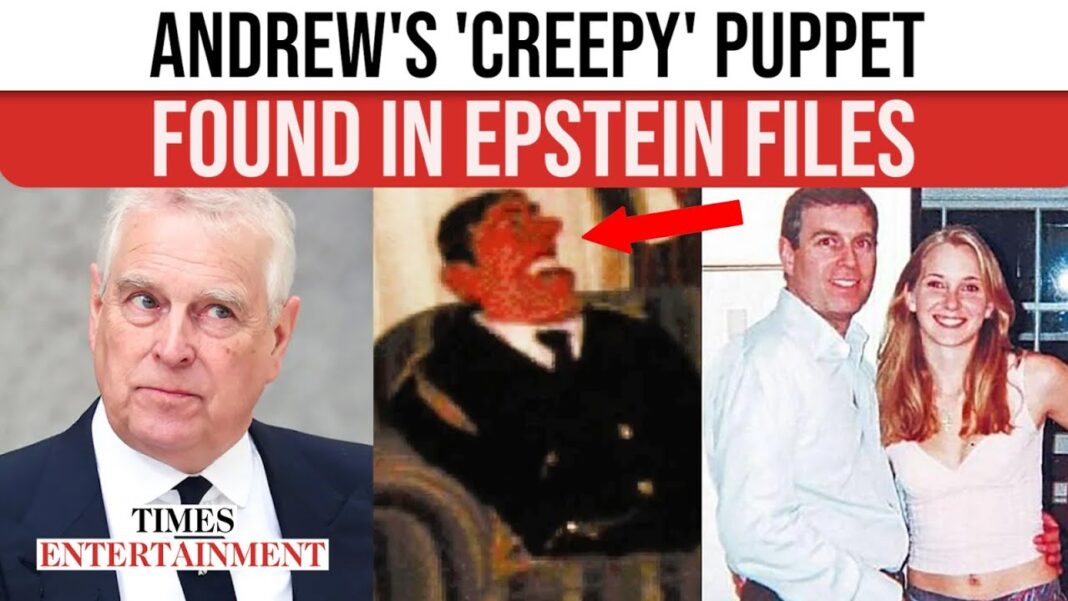
Adding to the accumulation of troubling imagery, earlier Epstein files released on December 19 included a photograph depicting Andrew reclining across the laps of five women while Maxwell looks on. The women’s faces were obscured, limiting the image’s evidentiary value but amplifying its symbolic resonance in the public imagination.
Collectively, the newly released documents underscore a recurring theme emphasized by USA Today: the Epstein scandal is less a closed chapter than an unresolved ledger of influence, secrecy, and unanswered questions. The files do not deliver definitive conclusions, nor do they establish guilt. Instead, they illuminate the complexity of investigating crimes alleged to have occurred within rarefied social strata where power, privilege, and discretion often intersect.
For Prince Andrew, the documents represent yet another wave in a scandal that has already reshaped his life and legacy. For the broader public, they serve as a stark reminder of how institutions—from royal households to justice systems—grapple with accountability when allegations implicate the powerful.
As journalists, historians, and legal observers continue to parse the Epstein files, one reality remains unchanged: transparency, while essential, is rarely tidy. The documents released by the Justice Department offer fragments rather than final answers, provoking scrutiny without resolution. The Epstein saga endures not because it is fully understood, but because its most unsettling questions remain unanswered—echoing long after the man at its center is gone.