



|
Getting your Trinity Audio player ready...
|
By: David Avrushmi
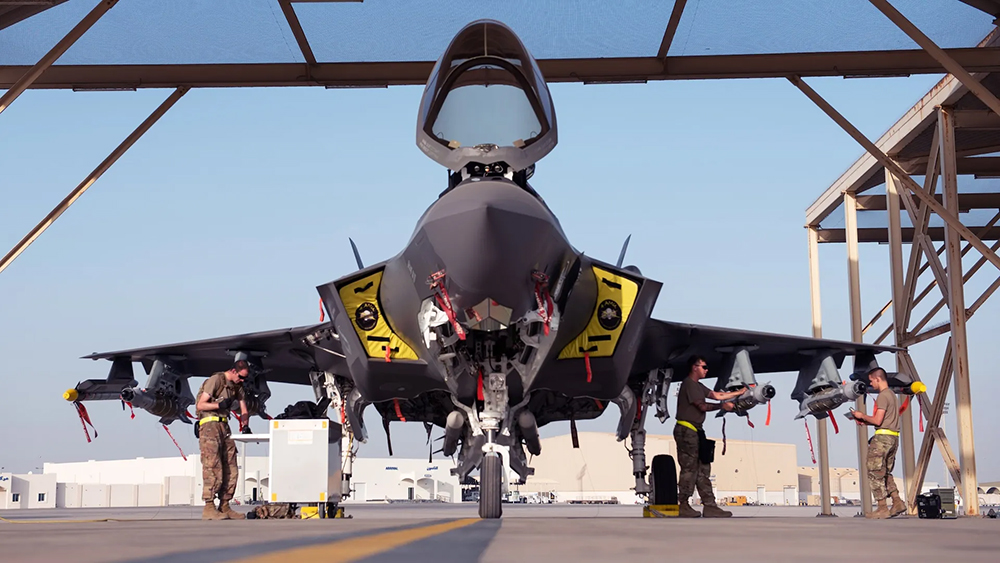
For nearly two years, Israel has dominated the skies of the Middle East with a precision and invulnerability unmatched by any of its regional adversaries. Its air force, bolstered by a growing fleet of F-35s—the most advanced stealth aircraft ever deployed—has carried out operations stretching from Lebanon to Yemen, from Gaza to Iran, without losing a single plane. As The Wall Street Journal (WSJ) reported on Wednesday, Israel’s aerial supremacy has not merely shaped its military doctrine; it has become the backbone of its national security, its deterrence posture, and its qualitative military edge (QME), the U.S.-mandated principle ensuring Israel’s technological superiority in a hostile region.
But this dominance now faces its most serious test in years.
A pledge by the Trump administration to sell F-35s to Saudi Arabia has triggered alarm within Israel’s defense establishment—a warning siren echoing from the highest echelons of its intelligence agencies to the former heads of its National Security Council. What concerns Jerusalem is not the prospect of Saudi pilots attacking Israeli cities; today, Riyadh is neither foe nor rival. Rather, as the WSJ report underscored, Israeli leaders fear that the sale to Saudi Arabia could irreversibly open the floodgates, enabling other states—most troublingly Turkey—to demand equal access to the world’s most transformative fifth-generation fighter jet.
If that occurs, Israel’s air supremacy—painstakingly built over decades—could be eroded in a matter of years.
The F-35: The Aircraft That Keeps Israel Safe
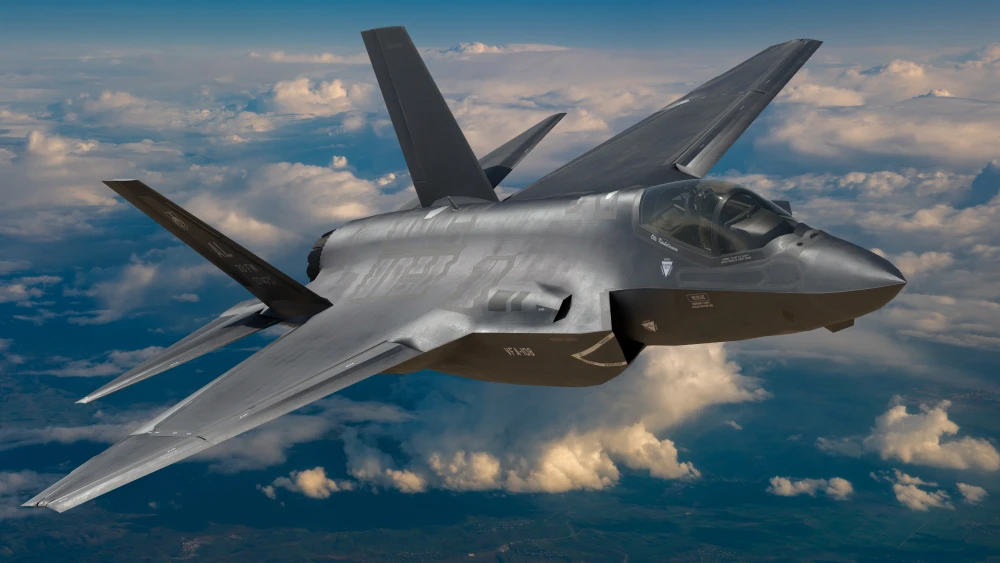
The F-35 is unlike any plane Israel has ever flown and unlike any aircraft its neighbors have ever possessed. With a price tag of roughly $100 million per unit, as the WSJ noted, the jet is not only an engineering marvel but a system of systems—stealth, range, advanced radar, fused sensor arrays, and battlefield networking capabilities rolled into one integrated platform.
Israel’s version, the F-35I “Adir,” goes even further. Israeli engineers have modified its avionics, electronic warfare suites, and munitions compatibility. These upgrades—considered classified—are so sophisticated that Israel wants a veto over whether they are shared with other regional buyers, according to former National Security Adviser Yaakov Amidror, speaking to the WSJ.
The F-35’s advantages extend far beyond stealth. Its onboard sensors give Israeli pilots unprecedented visibility deep into enemy airspace. The aircraft is capable of flying more than 1,300 miles without refueling, delivering heavy payloads, and coordinating with swarms of autonomous drones.
These attributes are not theoretical.
In June’s 12-day war between Israel and Iran, the F-35s were the decisive factor. As the WSJ reported, the jets shredded Iran’s air defense systems—destroying radar sites, missile batteries, and command nodes before Tehran understood what had happened. Israel lost no pilots, and its only casualties were unmanned platforms.
“It shows you the level of air force that can be built around the F-35,” Assaf Orion, a former IDF strategist, told the WSJ.
Israel’s air force now operates 50 of the aircraft, with an additional 25 ordered last year, bringing its future total to 75—the largest F-35 fleet of any country outside the United States.
But the cornerstone of Israel’s strategy has always been exclusive access. The F-35’s dominance derives not just from its platform but from the fact that no other Middle Eastern nation can see it, track it, or match it.
The Trump–Saudi deal may change that.
Saudi Arabia’s F-35s: A Regional Game Changer
Saudi Arabia already operates a formidable air force, including fourth-generation F-15s, Eurofighter Typhoons, and British Tornados. While these planes boast powerful engines and heavy payloads, they remain detectable—loud, large, and non-stealthy. They are lethal in daylight, predictable at night.
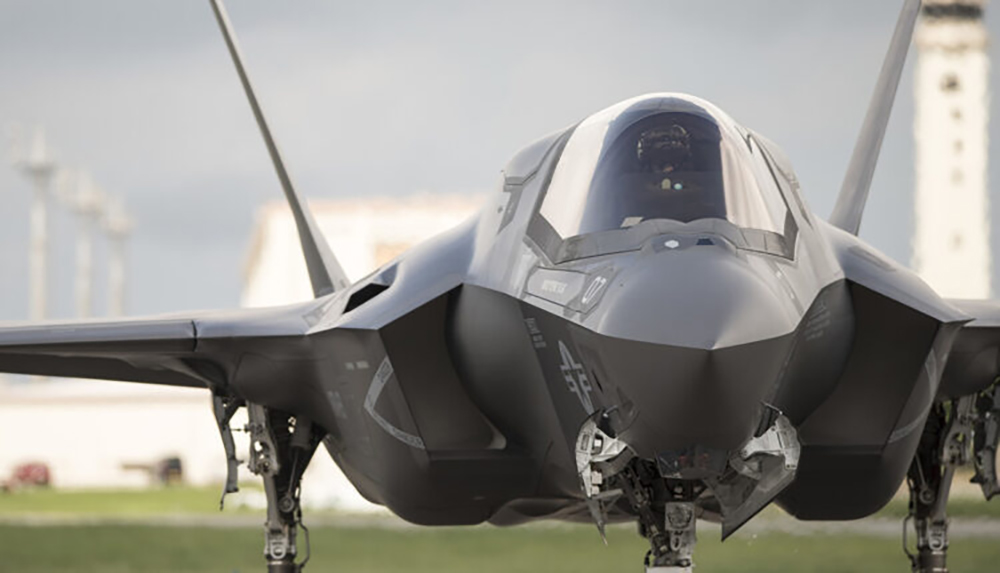
But the F-35 is different. If Saudi Arabia obtains it, Riyadh would leapfrog into the exclusive club of stealth-capable nations.
This is where Israeli strategists grow uneasy.
Why Israel fears Saudi F-35s
- Stealth parity erodes Israel’s invulnerability.
If the Saudis operate F-35s, they could potentially detect or track Israeli F-35s—a deeply unsettling prospect outlined by Amidror in the WSJ report.
- Access today may not equal intentions tomorrow.
Saudi Arabia is friendly now. But regimes change. Alliances shift. Weapons outlive governments. As Orion pointed out to the WSJ, “Iran still flies U.S.-made F-14s—proof that aircraft can outlive political realities.”
- Precedent matters.
If Washington sells F-35s to one Arab state, others—especially Turkey—will demand the same. Ankara already tried to purchase the jet before being removed from the program for buying a Russian missile system. A reopened door for Turkey would be a nightmare scenario for Israel.
- Geography makes proximity a threat.
From bases near Tabuk or the Red Sea coast, Saudi F-35s would be minutes from Eilat. Even a friendly state’s stealth aircraft sitting so close to Israeli airspace poses strategic risks.
For decades, Israel’s survival strategy has rested on staying a generation ahead of its neighbors. An F-35 sale to Saudi Arabia threatens to compress that gap—perhaps fatally.
Arab States Stunned by Israel’s Aerial Dominance
The last two years have seen a series of Israeli operations so technologically sophisticated that Arab militaries were reportedly stunned by the speed, accuracy, and reach of the attacks. According to the WSJ report, regional governments were particularly rattled by Israeli airstrikes deep in Iran, covert drone operations across Yemen, electronic warfare attacks against Syrian and Lebanese targets, remote detonations of pagers given to Hezbollah operatives and highly classified sabotage missions conducted under the F-35’s stealth umbrella.
These operations revealed that Israel could act globally with impunity. But Israel’s enemies were not the only ones watching.
Arab partners—Saudi Arabia, the UAE, Egypt, and Jordan—were also alarmed by the lopsided balance of power. Their fighter jets could not penetrate Israeli airspace, while Israel could penetrate theirs at will.
This imbalance is one reason Arab states have clamored for the F-35. And it is precisely what Israel fears losing.
The Regional Arms Build-Up: Egypt and Turkey Loom Large
Israel’s concerns extend beyond Saudi Arabia.
Egypt
Once one of Israel’s most dangerous adversaries, today a military ally of convenience, Egypt continues a massive military expansion. Cairo is investing in fleets of submarines, French Rafale jets, and a growing drone arsenal.
Turkey
Under President Recep Tayyip Erdoğan, Turkey has adopted an increasingly aggressive posture—from Syria to Libya to the eastern Mediterranean. Ankara’s desire for F-35s is well known. If the U.S. offers the jet to Saudi Arabia, Turkey will almost certainly demand equal access.
In a region where alliances can turn on a dime, Israel cannot dismiss these dangers.
As Eyal Hulata told the WSJ, “Israel is struggling to maintain its qualitative military edge also because we are in a growing quantitative disadvantage.” Israel cannot afford to gamble on the future intentions of nations whose political landscapes shift rapidly.
A U.S.–Saudi Deal That May Never Happen
It is far from inevitable that Saudi Arabia will receive the F-35. The Trump administration’s pledge remains subject to multiple obstacles.
As the WSJ report emphasized, Congress has long been wary of undermining Israel’s QME. Leading lawmakers in both parties—especially those aligned with the pro-Israel caucus—will scrutinize every provision.
The UAE’s 2020 F-35 deal—also approved by President Trump—collapsed due to disagreements over technology transfer and Chinese influence.
Saudi Arabia may encounter similar hurdles. Even if approved, it could take a decade before the Saudis receive operational jets. Israel hopes to use that time to negotiate compensatory advantages.
Several former U.S. and Israeli officials told the WSJ that the shared interests of Washington and Jerusalem provide multiple paths to preserve Israel’s edge.
- Access to “Five Eyes” technologies
Avner Golov, a former National Security Council official, suggested that Israel could request access to technologies currently restricted to the U.S., U.K., Canada, Australia, and New Zealand. These could include advanced AI systems, quantum computing infrastructure, high-end signals intelligence tools and semiconductors and microelectronics used in next-generation warfare.
Such upgrades could widen Israel’s technological lead even if F-35s proliferate.
- Enhanced joint military ventures
The U.S. could deepen intelligence sharing, integrate missile-defense systems, and co-develop future aircraft or drone swarms.
- Conditioning the F-35 sale on Saudi–Israel normalization
Hulata told the WSJ that normalization between Jerusalem and Riyadh would be “the single most transformative shift in the region.”
If Saudi recognition of Israel became part of the deal, the strategic threat calculus would change. Israel cannot stop geopolitical change—but it can shape it.
The Geopolitical Gamble at the Heart of the F-35 Debate
The Trump administration’s decision to offer Saudi Arabia the F-35 is not merely an arms deal. It is a bet on how the Middle East may evolve over the next 20 years.
If Saudi Arabia normalizes relations with Israel, the sale could stabilize the region.
If Turkey regains access to the jet, Israel could lose its most precious asset—stealth superiority.
If political upheaval shifts alliances, a future adversary could inherit a platform designed to evade Israeli radar.
If the U.S. compensates Israel with next-generation technologies, the balance may be preserved.
The stakes could not be higher.
The Future of Israel’s Aerial Supremacy Lies in Washington’s Hands
Israel has won wars, deterred enemies, and reshaped the region through its dominance of the air. But as The Wall Street Journal report makes clear, the Trump administration’s promise to deliver the F-35 to Saudi Arabia could mark a turning point—a moment when Israel’s unchallenged advantage faces unprecedented pressure.
Saudi Arabia is not the threat. The precedent is.
Israel now enters a diplomatic sprint, seeking safeguards, compensations, or normalization agreements to prevent an erosion of its aerial supremacy. The F-35 transformed Israel’s military identity. And the question now is whether it will remain Israel’s exclusive shield—or become a shared regional asset with unpredictable consequences.
Israel’s future, in many ways, still depends on its ability to control the sky. But as of now, the decision rests not in Tel Aviv—but in Washington.