



|
Getting your Trinity Audio player ready...
|
By: Fern Sidman
Antisemitic incidents in the United Kingdom spiked sharply following a widely publicized call to violence against Israeli soldiers during the Glastonbury Festival in June, according to a newly published report from the Community Security Trust (CST), a prominent nonprofit organization dedicated to protecting British Jews.
As reported on Wednesday by The Algemeiner, the CST’s biannual report — released Wednesday — details 1,521 recorded antisemitic incidents across the UK between January and June 2025. This figure marks the second-highest ever for the first half of any year since CST began monitoring such data, surpassed only by the unprecedented 2,019 incidents documented in the same period in 2024 in the immediate aftermath of the October 7 Hamas terrorist massacre in Israel.\
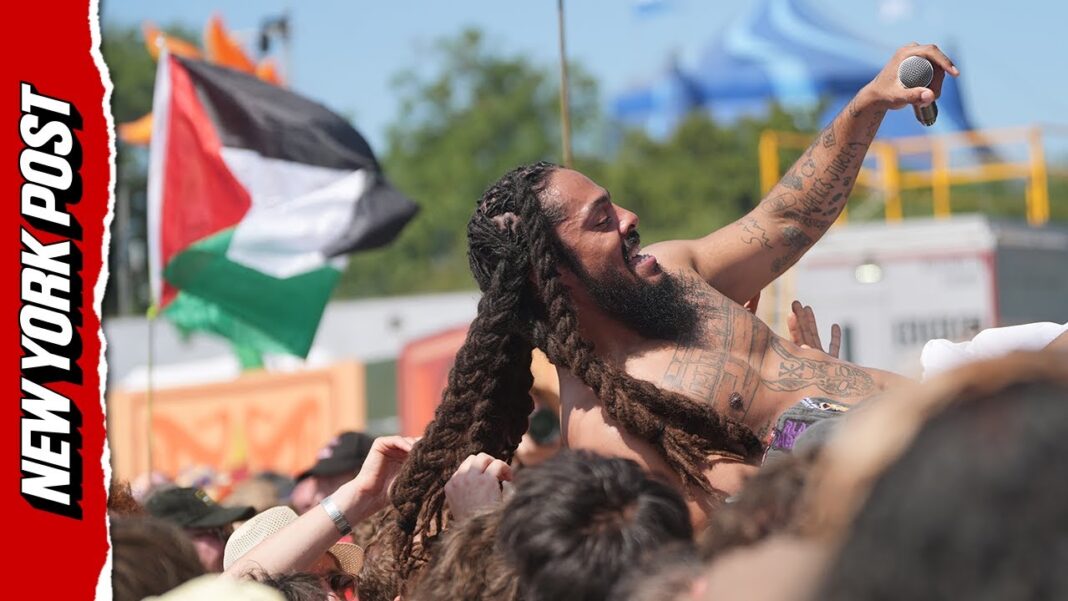
Among the most alarming revelations in the latest CST findings is the dramatic surge of antisemitic activity on June 29, 2025 — the day after the punk-rap group Bob Vylan, performing at the Glastonbury music and arts festival in Somerset, led thousands of attendees in chanting “Death, Death to the IDF,” a reference to the Israel Defense Forces. According to the information provided in The Algemeiner report, this chant was broadcast live by the BBC, drawing widespread condemnation across political and civil society sectors.
The CST reported 26 antisemitic incidents on June 29 alone, including 16 online abuses, making it the single worst day for anti-Jewish activity during the first half of 2025. In its analysis, CST directly attributed the rise to “anti-Jewish responses” sparked by Bob Vylan’s performance and the ensuing public discourse. The organization characterized the chant as “an expression of mass hatred” and “utterly chilling,” a sentiment echoed by Jewish community leaders and international observers.
“The data indicates a direct correlation between inflammatory rhetoric targeting Israel and surges in antisemitic actions, both virtual and physical,” CST stated in the report, which was also cited in The Algemeiner report. “In all of these incidents, anti-Jewish language, motivation, or targeting was evident alongside the rhetoric linked to Israel or Zionism.”
The controversy surrounding Bob Vylan has reverberated far beyond Glastonbury. The band’s frontman, Pascal Robinson-Foster, used the stage not only to chant anti-IDF slogans but also to accuse an unnamed former employer of being a “f—king Zionist,” while encouraging the crowd to shout “Free, free Palestine.”
The backlash was swift. According to the information contained in The Algemeiner report, Bob Vylan’s talent agency severed ties with the band, and multiple concert venues and music festivals across the globe cancelled scheduled performances. The U.S. Department of State also revoked the duo’s visas, barring them from entering the country for future tours. Meanwhile, British police have launched an investigation to determine whether the Glastonbury remarks constitute a criminal offense under laws prohibiting incitement to racial and religious hatred.
In a rare public rebuke, the BBC issued an apology for airing the segment, describing the performance as “offensive and deplorable behavior” that should not have been broadcast. The BBC’s apology came amid mounting criticism from both government officials and Jewish organizations, many of whom viewed the broadcast as enabling antisemitic messaging under the guise of political expression.
As detailed in The Algemeiner’s coverage of the CST report, the Glastonbury fallout was not an isolated data point. The report identified June 29 as the day with the highest number of antisemitic incidents in the first half of 2025, with 26 total cases logged — more than half of which occurred online. These incidents included direct threats, harassment, and the circulation of antisemitic memes and conspiracy theories, often using Bob Vylan’s remarks as justification.
The second-highest day for recorded antisemitic incidents was May 17, one day after Israel publicly confirmed it would expand its military operations in the Gaza Strip. Nineteen incidents were reported that day, including several targeting Jewish community centers and schools in the UK.
In both cases, CST emphasized that the incidents were “not simply anti-Israel in character but were explicitly anti-Jewish,” underlining the increasingly blurred line between criticism of Israeli policy and the expression of antisemitism.
“These cases illustrate how sentiment and rhetoric towards Israel and Zionism influence, shape, and drive contemporary anti-Jewish discourse, online and offline, often around totemic events that grab mainstream public attention,” CST wrote.
In its comprehensive breakdown, CST found that 51% of all recorded antisemitic incidents during the January–June 2025 period referenced Israel, Palestine, the October 7 Hamas attacks, or the subsequent military conflict in Gaza.
The Algemeiner reported that many of these incidents involved graffiti, physical intimidation, and verbal abuse at protests or in public settings. Others were cyberattacks targeting Jewish institutions, doxing campaigns against Jewish students, and antisemitic hate speech on platforms like X, formerly known as Twitter.
The CST’s report pointed to a worrying trend in which global events — particularly those involving Israel — catalyze localized antisemitic expression in the UK. This aligns with broader international data showing spikes in antisemitism following news cycles involving the Israeli-Palestinian conflict.
Jewish leaders in the UK, along with allies in the political establishment, have called for stronger enforcement of hate crime laws in light of CST’s findings. The Algemeiner reported that Members of Parliament across party lines expressed concern that cultural platforms like Glastonbury were being used to normalize rhetoric that endangers Jewish communities.
Marie van der Zyl, President of the Board of Deputies of British Jews, praised CST’s work and called for immediate action. “What happened on that stage was not political commentary — it was incitement,” she said. “The fact that antisemitic incidents surged immediately afterward is not a coincidence. It’s the consequence of unchecked hate.”
Meanwhile, advocacy groups have urged British authorities to adopt a more robust definition of antisemitism, echoing the International Holocaust Remembrance Alliance (IHRA) working definition, which includes certain expressions of anti-Zionism as forms of antisemitic rhetoric.
The CST report follows a pattern of rising antisemitism across Europe and the West since October 2023. According to the report at The Algemeiner, Jewish communities in France, Germany, and the United States have also seen increases in antisemitic activity linked to pro-Palestinian demonstrations and cultural events featuring anti-Israel rhetoric.
In the UK, Jewish schools have reported elevated security concerns, and synagogues have ramped up protective measures. The CST continues to advise community institutions on best practices and collaborates with law enforcement to track incidents and provide real-time responses.
In its conclusion, the CST warned that the persistence of antisemitism in UK public life, especially when normalized through popular culture, poses a grave threat to Jewish safety and civic cohesion.
“The normalization of inflammatory language directed at Jews under the banner of anti-Zionism must be treated with the seriousness it deserves,” the report stated.
As The Algemeiner noted in its coverage, the Bob Vylan episode is not merely a cultural controversy but a cautionary tale of how rhetoric can escalate into real-world hostility. With another contentious election season ahead in both the UK and the U.S., and with tensions in the Middle East ongoing, Jewish communities and watchdog groups are bracing for continued volatility.
The CST has called for continued vigilance, urging media institutions, event organizers, and public officials to take responsibility in curbing rhetoric that fuels hatred. In the words of one CST spokesperson, as quoted by The Algemeiner: “When chants become chants for death, and applause becomes license for hate, the line between art and antisemitism has been decisively crossed.”
