



|
Getting your Trinity Audio player ready...
|
By: Jeff Gorman
The revelations emerging from inside the world’s largest cryptocurrency exchange have the cadence of a cautionary tale for an industry that has long promised frictionless finance while struggling to reconcile that ideal with the demands of law, security and geopolitical reality. According to records and accounts reviewed by The New York Times, a team of internal investigators at Binance last year uncovered evidence suggesting that Iranian-linked entities had accessed the exchange at scale and that vast sums—measured in the billions—had coursed through accounts with potential ties to terror financing networks.
The episode, as reported on Monday by The New York Times, underscores how the architecture of global crypto markets continues to test the boundaries of sanctions enforcement even after public pledges of reform.
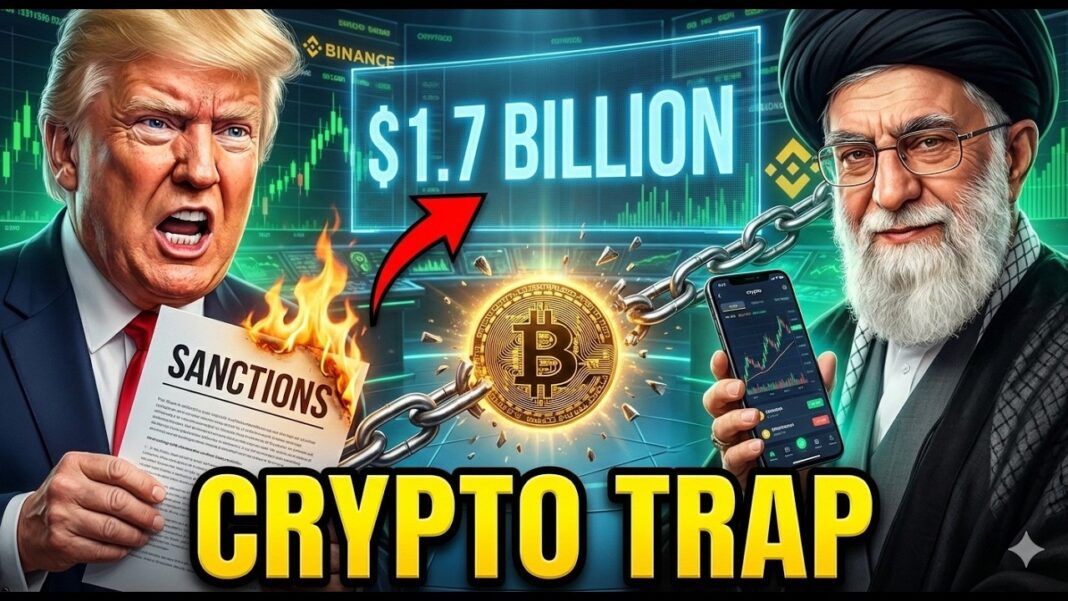
The investigators’ findings were as unsettling as they were complex. Over the preceding year, individuals located in Iran had succeeded in accessing more than 1,500 Binance accounts, despite long-standing prohibitions against servicing customers from sanctioned jurisdictions. More troubling still, roughly $1.7 billion was traced from two Binance-linked accounts to entities with connections to Iran, including networks alleged by foreign law enforcement to be associated with terrorist groups.
One of those accounts, investigators found, belonged to a vendor that performed services for Binance itself. The discoveries were elevated to senior executives, as Binance had promised to do when it entered a historic guilty plea in 2023 for violations of U.S. anti–money-laundering statutes and sanctions regimes. Yet, within weeks of the disclosures, at least four employees involved in the probe were dismissed or suspended, according to documents reviewed by The New York Times and corroborated by people with knowledge of the matter.
Binance has forcefully disputed any suggestion that the disciplinary actions were retaliatory. Rachel Conlan, a spokeswoman for the exchange, told The New York Times that the company had acted to remove the implicated accounts and notify authorities, adding that the investigators were not punished for raising compliance concerns but rather for what the company characterized as unauthorized disclosures of sensitive client data.
“Any suggestion that Binance knowingly allowed sanctionable activity to continue unchecked is incorrect and defamatory,” she said. Yet the sequence of events—internal warnings followed by abrupt personnel actions—has fueled unease among former compliance staff and external observers alike, particularly given Binance’s recent history and the geopolitical stakes involved.
The backdrop to the controversy is a firm that, by its own admission in federal court, once permitted sanctioned actors to transact freely on its platform. When Binance pleaded guilty three years ago, it agreed to pay $4.3 billion in penalties and committed to building a formidable compliance apparatus staffed by veterans of law enforcement and financial regulation.
The company pledged to share intelligence with authorities and to sever ties with bad actors. Since then, Binance has repeatedly emphasized, in statements to The New York Times, that it has invested heavily in forensic tools and personnel capable of tracing illicit flows across the blockchain’s public ledger.
Yet last year’s investigation suggested that the promise of a reformed Binance remains incomplete. The probe was triggered, in part, by outreach from Israeli law enforcement officials who sought assistance in mapping terror-financing routes connected to Iran. According to documents reviewed by The New York Times, the inquiry focused on a Hong Kong–based entity called Hexa Whale Trading Limited, which had used Binance to move hundreds of millions of dollars into wallets associated with Iranian actors.
At one juncture, Israeli officials reportedly warned Binance investigators that the network may have been financing the Houthis, the Iran-backed militia that controls much of northern Yemen. Binance says it notified the U.S. Justice Department and removed the account, a step that, while necessary, illustrates the reactive posture that still characterizes much of the industry’s compliance response.
The Iranian nexus ran deeper still. Investigators discovered that attempts to log in from Iranian territory had spiked, and they documented transactions linked to a fleet of Russian cargo vessels suspected of evading sanctions. Binance maintains that attempted logins do not equate to servicing sanctioned persons and that the vessels themselves were not subject to sanctions. Such distinctions, while legally salient, do little to allay concerns about the porousness of digital financial networks in an era of intensifying geopolitical confrontation.
Perhaps the most consequential discovery centered on a Hong Kong firm called Blessed Trust, which functioned as a “fiat partner” for Binance, facilitating payments and currency conversions. According to internal records reviewed by The New York Times, roughly $1.2 billion flowed from Blessed Trust’s Binance account to Iranian-linked entities over a two-year period. Investigators traced connections between those entities and wallets associated with Iran’s Islamic Revolutionary Guards Corps, a group designated as a terrorist organization by the United States and other governments.
Binance has argued that multiple intermediary wallets separated Blessed Trust from the Revolutionary Guards, and that the company ceased working with the vendor earlier this year. Blessed Trust, for its part, denies knowingly facilitating any sanction-busting transactions, insisting that its role was limited to routine operational disbursements.
The technicalities of blockchain tracing—degrees of separation between wallets, the opacity of beneficial ownership in offshore jurisdictions—are precisely what make enforcement so arduous. Crypto’s promise of transparency is mediated by the ingenuity of those who seek to exploit its complexity. As The New York Times has reported, even the most sophisticated compliance teams confront a landscape in which illicit actors can layer transactions through multiple intermediaries, obfuscating their origins while remaining within the letter of platform rules.
The episode is unfolding against a charged political backdrop. Binance’s founder, Changpeng Zhao, who served a four-month prison sentence in 2024 for his role in the company’s earlier violations, was pardoned by President Trump. The Trump family’s crypto venture, World Liberty Financial, has cultivated business ties with Binance, and Mr. Zhao recently appeared at a conference at Mar-a-Lago.
White House officials have framed Mr. Zhao’s prosecution as part of what they describe as a misguided “war on cryptocurrency” waged by the prior administration, an argument that resonates with a segment of the industry eager to portray regulatory enforcement as hostility to innovation.
Yet the geopolitical stakes are stark. Iran remains a principal adversary of the United States, and its ties to militant groups across the Middle East have made terror finance a central concern of Western security policy. When Binance admitted in 2023 that it had facilitated nearly $900 million in transactions involving Iran, it did so in recognition of the grave consequences such flows can have in enabling violence far beyond the blockchain.
The new findings, reported by The New York Times, suggest that despite reforms, the platform continues to be tested by the very vulnerabilities it vowed to eliminate.
There is, too, an institutional dimension to the controversy. In recent months, several senior compliance officials have departed Binance, including managers responsible for sanctions oversight. The potential exit of the company’s chief compliance officer has further unsettled observers who view continuity of leadership as essential to sustaining a culture of compliance.
Binance insists that its investigation into the Iranian-linked transactions continues and that it is preparing additional reports for U.S. authorities. But the churn within its compliance ranks raises questions about whether the firm can maintain the rigorous internal scrutiny required of an institution that processes a substantial share of global crypto trading.
The broader lesson, as The New York Times has often argued in its coverage of digital finance, is that the crypto industry’s maturation will be measured not by soaring valuations or technological novelty but by its capacity to internalize the obligations that accompany financial power.
The Binance case illustrates how even after public contrition and massive penalties, structural incentives can collide with the imperatives of national security. Crypto exchanges profit from scale and velocity; sanctions enforcement demands friction, verification and, at times, the willingness to forgo lucrative business.
There is no simple remedy. The forensic tools available to compliance teams are improving, but so too are the methods of those who seek to evade detection. International cooperation, as evidenced by the involvement of Israeli officials in the Binance probe, is indispensable, yet it operates within a fragmented legal landscape in which jurisdictions differ in their enforcement priorities.
For regulators, the challenge is to craft frameworks that preserve innovation while closing the apertures through which illicit finance flows. For platforms like Binance, the imperative is more existential: to demonstrate, in practice rather than in press releases, that the lessons of past transgressions have been fully absorbed.
In the final analysis, the revelations reported by The New York Times are less an indictment of a single company than a mirror held up to an industry still grappling with the consequences of its own success. Crypto has reconfigured the mechanics of global finance, but it has not repealed the laws of geopolitics or the moral urgency of preventing terror financing. If the promise of digital assets is to endure, it will depend on whether platforms can reconcile their libertarian origins with the sober responsibilities of operating at the intersection of money, security and international law.
