



|
Getting your Trinity Audio player ready...
|
By: Tzirel Rosenblatt
As the Middle East edges through one of its most volatile periods in recent memory, fresh intelligence assessments suggest that Iran is quietly but decisively reactivating the machinery of its regional power projection. According to multiple reports cited by i24News on Sunday, Tehran has resumed development of its ballistic missile program while simultaneously intensifying weapons transfers to allied militias stretching from Lebanon to Iraq and beyond. The convergence of these efforts, analysts warn, signals not merely a return to business as usual for the Islamic Republic, but a calculated escalation designed to reassert deterrence, expand influence, and challenge Western and Israeli red lines.
An unnamed United States official, speaking to Saudi broadcaster Al-Arabiya, said Iran is deploying “every possible means” to funnel arms to its regional proxies, employing both land corridors and maritime routes. These operations, the official stressed, are not opportunistic but strategic—central to Tehran’s long-standing doctrine of forward defense, which seeks to confront adversaries indirectly through a constellation of allied militias.
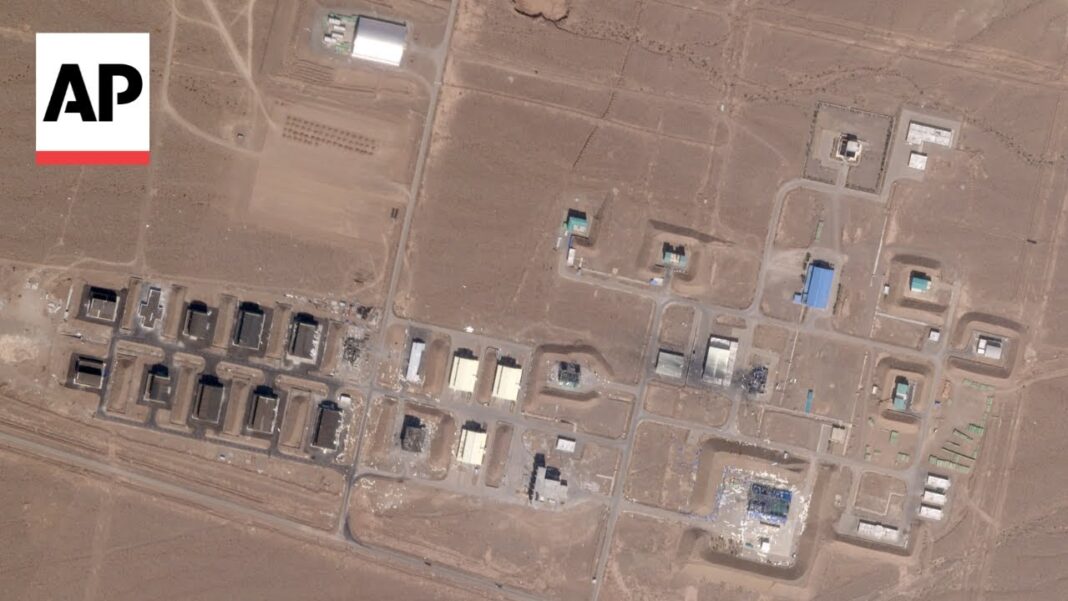
According to the information provided in the i24News report, Washington views these activities with growing alarm. U.S. officials believe Iran’s renewed missile development and arms transfers are proceeding in tandem, reinforcing one another as part of a broader effort to recover from setbacks suffered during the 12-day conflict with Israel in June. That confrontation, while brief, inflicted what Iran itself has described as “serious damage” on sensitive military and nuclear infrastructure, temporarily disrupting—but not dismantling—Tehran’s strategic capabilities.
In response, the United States has intensified coordination with regional partners to interdict Iranian shipments before they reach their destinations. This effort involves close collaboration with Lebanon, Syria, Jordan, and Iraq, each of which sits astride critical transit routes used by Iran to move weapons, ammunition, and advanced technology to groups such as Hezbollah and other aligned militias.
Yet the challenges confronting this containment strategy are formidable. Lebanon, in particular, has emerged as a weak link. According to the information contained in the i24News report, the Lebanese Armed Forces are currently heavily engaged in dismantling Hezbollah’s military infrastructure in the country’s south—a mission that consumes manpower and resources, leaving border oversight stretched thin. Iranian shipments, U.S. officials say, are increasingly exploiting these vulnerabilities, moving through porous crossings and, in some cases, relying on Lebanese ports that authorities struggle to monitor effectively.
The situation underscores a central paradox confronting regional security planners: the very effort to rein in Hezbollah domestically may be creating opportunities for Tehran to replenish and upgrade its arsenal. Hezbollah remains Iran’s most formidable proxy, and sustaining its military edge is widely regarded in Tehran as a strategic imperative, particularly in the aftermath of recent hostilities with Israel.
Beyond the immediate mechanics of arms transfers, Iran’s revival of its ballistic missile program has emerged as a focal point of concern. Ballistic missiles have long been a cornerstone of Iran’s deterrence strategy, offering a means to project power across the region without relying on conventional air superiority. According to intelligence assessments cited in the i24News report, Tehran is investing renewed energy into missile development, viewing it as essential to restoring credibility after the June strikes exposed vulnerabilities in its defensive posture.
These developments are unfolding alongside increasingly defiant rhetoric from Iran’s leadership. In a separate but closely watched interview with Russia Today, Iranian Foreign Minister Abbas Araghchi addressed the state of Iran’s nuclear facilities, confirming that they suffered significant physical damage during the conflict with Israel. However, Araghchi was adamant that the attacks failed to achieve their ultimate objective.
“Technology cannot be bombed,” Araghchi declared, encapsulating Tehran’s argument that while buildings and equipment can be destroyed, the scientific knowledge underpinning Iran’s nuclear and missile programs remains intact. He added that Iran has already rebuilt what was damaged and reaffirmed the country’s commitment to its nuclear program and its asserted right to uranium enrichment—a position that continues to place Tehran at odds with Western powers.
Araghchi’s remarks were as much a warning as they were a reassurance to domestic audiences. He cautioned that any attempt by Israel to repeat the strikes would meet with failure, suggesting that Iran has absorbed lessons from the June conflict and adapted accordingly. “If they want to repeat the same failed experiment, they will not achieve a better outcome,” he said, signaling a determination to press ahead despite international scrutiny and pressure.
For Israel and its allies, this posture raises profound strategic questions. As i24News analysts have observed, Iran’s insistence that it has already restored damaged facilities complicates efforts to assess the true impact of past military action. It also reinforces concerns that Tehran may be accelerating its programs precisely because it believes time and resilience are on its side.
The broader regional implications are equally unsettling. Iran’s network of allied militias—often referred to as the “axis of resistance”—has demonstrated an ability to threaten Israel, U.S. forces, and regional partners from multiple fronts. Renewed arms shipments, particularly of precision-guided munitions and advanced rockets, could significantly alter the balance of power along Israel’s northern border and beyond. U.S. officials fear that even partial success in interdicting these transfers may not be sufficient to prevent a qualitative upgrade in militia capabilities.
At the same time, Tehran’s maritime routes pose a distinct challenge. The unnamed U.S. official cited by i24News noted that Iran is exploiting both commercial shipping lanes and clandestine methods to move weapons by sea, complicating monitoring efforts. While naval patrols and intelligence-sharing have improved in recent years, the sheer volume of traffic and the ingenuity of Iranian logistics networks make complete interdiction elusive.
Within this tense environment, diplomatic efforts appear increasingly strained. Iran’s leaders continue to frame their actions as defensive and lawful, insisting on their right to self-determination and technological advancement. Western officials, by contrast, see a pattern of destabilization that undermines regional security and risks igniting wider conflict. This divergence in narratives leaves little room for compromise, particularly as memories of recent fighting remain fresh.
The role of external powers further complicates the picture. Russia’s engagement with Iranian officials, including Araghchi’s interview with Russian media, underscores Moscow’s interest in maintaining close ties with Tehran amid broader geopolitical rivalries. Meanwhile, Washington’s reliance on regional partners reflects both the strength and the fragility of existing security architectures in the Middle East.
For now, the trajectory appears unmistakable. Iran is rebuilding, rearming, and recalibrating—determined to demonstrate that military strikes and diplomatic pressure have not diminished its resolve. As the i24News report makes clear, the resumption of ballistic missile development and the persistence of weapons transfers to militias are not isolated phenomena but interlocking elements of a coherent strategy.
Whether that strategy ultimately succeeds—or provokes a new cycle of confrontation—remains an open question. What is clear, however, is that the region is entering another phase of strategic uncertainty, one in which old conflicts are resurfacing with renewed intensity. As the i24News report observed, the shadow arsenal Iran is reassembling has the potential to reshape the Middle East’s security landscape once again, with consequences that will reverberate far beyond its borders.