



|
Getting your Trinity Audio player ready...
|
By: Fern Sidman
The quiet dignity of a residential corridor in Toronto’s North York neighborhood was shattered this week by an act that reverberated far beyond the walls of a single building. Mezuzahs—small parchment scrolls inscribed with sacred Hebrew verses and traditionally affixed to Jewish doorways—were forcibly removed from several condominium units on Thursday, in what authorities and community leaders fear may be a hate-motivated incident. As VIN News reported on Thursday, this marks the second such episode in Toronto within the span of a single month, intensifying anxieties within the city’s Jewish community and prompting renewed calls for vigilance and accountability.\
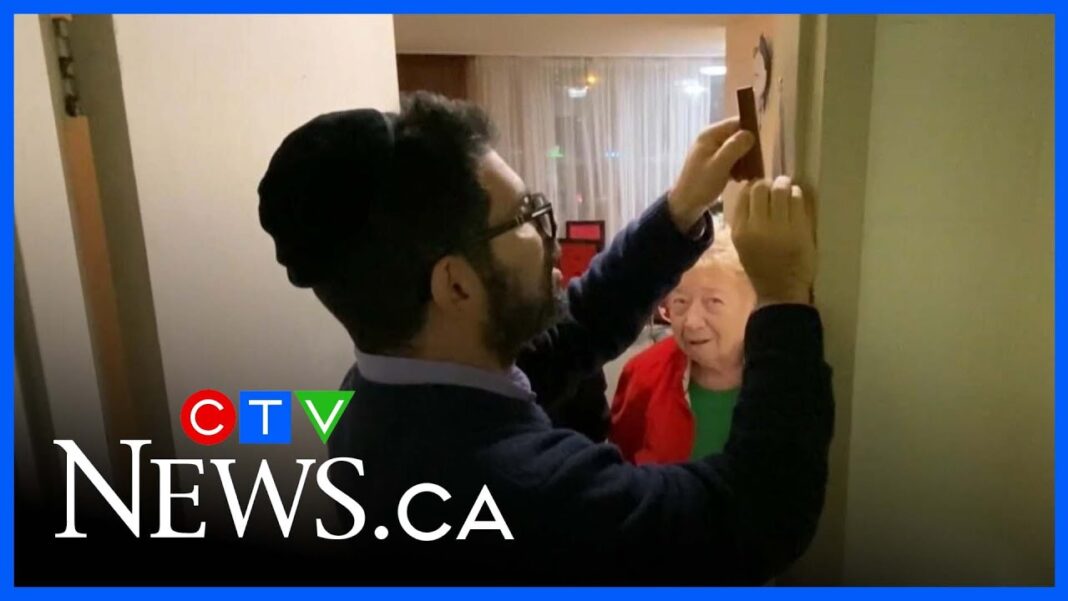
According to information confirmed by CTV Canadian News, Toronto police officers responded shortly before 12:30 p.m. to a report that three mezuzahs had been taken from the entrances of three separate condo units in the North York area. The Toronto Police Service said its specialized hate crime unit has been notified and is actively investigating the matter, underscoring the seriousness with which authorities are treating the incident.
While police declined to release the exact address of the building, they confirmed that it is located near the intersection of Finch Avenue East and Bayview Avenue—an area known for its established Jewish population. The VIN News report noted that the geographic context is significant, as the neighborhood has long been considered a place of relative security and communal cohesion for Jewish families, including many elderly residents.
Local city councillor James Pasternak, who represents the area, described the incident in stark terms. Speaking to local media, Pasternak said the building in question is a seniors’ residence that is home to a large number of Jewish residents, among them Holocaust survivors. The mezuzahs, he said, appeared to have been forcibly removed rather than simply taken or displaced, a detail that has deepened concern about the intent behind the act.
“To target mezuzahs is to target Jewish identity itself,” Pasternak said, characterizing the removals as deeply disturbing. VIN News reported that the councillor emphasized the emotional toll such incidents can have on elderly residents, many of whom carry the lived memory of persecution and displacement. For Holocaust survivors in particular, the violation of a sacred symbol affixed to one’s home can trigger profound fear and retraumatization.
The symbolism of the mezuzah cannot be overstated. More than a ritual object, it represents protection, faith and continuity, marking the threshold between the public world and the sanctity of the Jewish home. As VIN News has frequently explained in its coverage of antisemitic incidents, attacks on Jewish symbols often resonate more deeply than property crimes alone, striking at the core of religious and cultural identity.
Pasternak noted that this was not an isolated occurrence. Earlier this month, a similar incident involving the removal of mezuzahs was reported in the same general area. Police are now examining whether the two cases may be connected, and VIN News reported that investigators are treating the latest episode as a potential hate-motivated offense pending further evidence.
Community reaction has been swift and emotional. Residents of the building, many of whom are elderly, have expressed fear and unease in the wake of the incident. Some residents questioned whether they should replace the mezuzahs immediately or wait until the investigation progresses, torn between asserting their identity and concerns for personal safety.
Jewish community advocates have echoed these concerns, warning that even seemingly small acts can have an outsized psychological impact. VIN News has documented a broader pattern in which antisemitic acts—ranging from vandalism to harassment—have contributed to a climate of anxiety among Jewish communities across North America. While Canada has long prided itself on multicultural tolerance, recent months have seen a troubling rise in reported hate incidents, particularly those targeting Jewish institutions and symbols.
Toronto police have urged anyone with information about the mezuzah removals to come forward. Investigators are reviewing security footage from the building and surrounding area, and VIN News reports that officers are canvassing residents for eyewitness accounts. The involvement of the hate crime unit signals that authorities are not dismissing the possibility of ideological motivation, even as they caution that investigations must be guided by evidence.
The city’s response, however, extends beyond law enforcement. Pasternak and other civic leaders have called for unequivocal condemnation of the act from across the political spectrum. “Silence is not neutral,” Pasternak said. “When sacred symbols are targeted, it is incumbent upon all of us to speak out clearly and forcefully.”
For many observers, the incident raises broader questions about the safety of religious expression in public and semi-public spaces. Mezuzahs, by their nature, are outward-facing declarations of faith. Their removal is not only a violation of personal property but also an attempt—whether conscious or not—to erase visible Jewish presence. Such acts can function as a form of intimidation, particularly when directed at vulnerable populations such as seniors.
Jewish organizations in Toronto have responded by offering support services to affected residents, including counseling and assistance with replacing damaged or stolen mezuzahs. VIN News reports that some groups are also coordinating with building management to review security measures and ensure residents feel protected.
As the investigation continues, the incident has become a focal point for wider discussions about antisemitism, public safety and communal responsibility. While police work methodically to establish facts, community leaders stress that the moral clarity of the situation should not be delayed. An act that targets the religious markers of a minority community, particularly one with a history of persecution, demands an unambiguous response.
In the corridors of the North York seniors’ residence, the doorways now bear the absence of what once marked them as Jewish homes. That absence speaks volumes. As the VIN News report emphasized, the true measure of a society’s resilience lies not only in how it responds to violence, but in how it confronts acts of intimidation before they escalate.
Whether the mezuzah removals are ultimately prosecuted as hate crimes or another form of offense, their impact is already being felt. They have unsettled a community, stirred painful memories and underscored the fragility of the sense of security many take for granted. For Toronto’s Jewish residents—and for the city as a whole—the hope is that swift justice, public solidarity and sustained vigilance will ensure that such violations of sacred space are neither normalized nor repeated.