



|
Getting your Trinity Audio player ready...
|
By: Russ Spencer
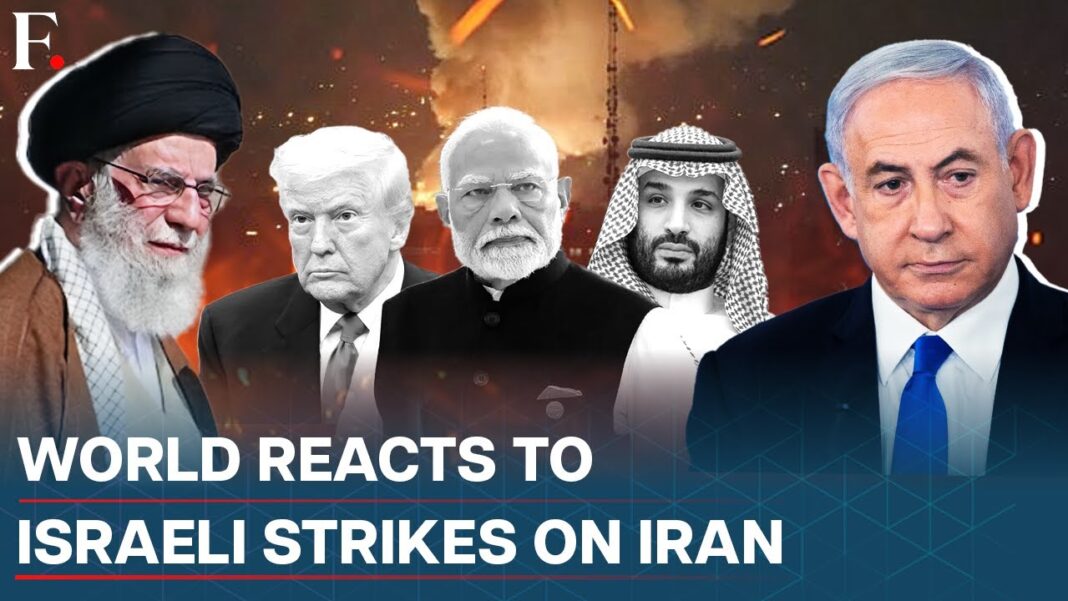
As the world wakes to the aftermath of Israel’s sweeping air campaign against Iranian nuclear and military infrastructure, a wave of condemnation has surged from Arab capitals across the Middle East. In statements issued Friday, several regional powers—including Saudi Arabia, Oman, the United Arab Emirates, and Qatar—denounced the Israeli military operation as a dangerous provocation and a clear violation of international law, raising fears of a broader regional conflagration.
According to a report on Friday at VIN News, the Israeli strikes—codenamed Operation Rising Lion—involved over 200 aircraft targeting critical Iranian assets, including the Natanz uranium enrichment complex and key military facilities in Esfahan. The Israeli Defense Forces (IDF) characterized the assault as a “preemptive, precise” measure aimed at crippling Iran’s ability to develop nuclear weapons and to retaliate via its long-range missile arsenal. Prime Minister Benjamin Netanyahu has declared that the mission will continue “as many days as it takes” to neutralize the existential threat posed by Tehran’s nuclear ambitions.
But across the Gulf and Levant, reactions have been swift and severe. VIN News reported that the Kingdom of Saudi Arabia led the regional denunciation, issuing a formal statement through its Foreign Ministry calling the operation a “blatant Israeli aggression” and a “clear violation” of Iran’s sovereignty and established international norms.
“The Kingdom of Saudi Arabia expresses its strong condemnation and denunciation of the blatant Israeli aggressions against the brotherly Islamic Republic of Iran,” the statement read, warning that such actions “undermine regional stability and threaten global security.”
Oman, long regarded as a neutral facilitator in diplomatic negotiations between Tehran and the West, also expressed alarm. As the VIN News report noted, the Omani Foreign Ministry condemned the attack as a “dangerous, reckless escalation” that undermines decades of delicate diplomacy.
“Oman considers this act a dangerous, reckless escalation, representing a flagrant violation of the United Nations Charter and principles of international law,” the ministry stated. It went further in assigning blame, holding Israel “responsible for this escalation and its consequences,” while urging the international community to “adopt a firm and unequivocal stance to halt this dangerous course of action.”
The United Arab Emirates, whose 2020 Abraham Accords with Israel had opened a new chapter in Gulf-Israel relations, offered an unusually pointed rebuke. The UAE Foreign Ministry’s statement, cited by VIN News, condemned the Israeli strikes and emphasized the need for “maximum restraint” from all parties involved.
“This escalation poses a serious threat to regional stability,” the statement read, adding that the UAE “reiterates the importance of respecting the sovereignty of states and resolving disputes through peaceful means.”
Qatar, another key Gulf player, likewise criticized the operation as a “blatant violation of Iranian sovereignty” and called on the international community to intervene diplomatically to prevent further deterioration.
Jordan and Iraq, though not issuing official condemnations, responded by closing their airspace. Iraq’s Civil Aviation Authority suspended overflights in multiple provinces, and Jordan’s aviation regulators cited “developments in the security situation” as justification. Regional analysts cited by VIN News interpreted these measures as implicit warnings against Israeli overreach and indications of widespread unease regarding Iran’s likely response.
Iranian state media confirmed the deaths of key military and scientific personnel, and vowed retaliatory action. The country’s Supreme Leader, Ayatollah Ali Khamenei, called the strikes “criminal” and warned Israel that it had “set itself on a bitter and painful path.”
As the VIN News report indicated, defense officials in Tel Aviv have declared a national emergency, and sirens have sounded in numerous cities amid fears of Iranian drone and missile counterstrikes. The Israeli government has instructed citizens to remain in fortified spaces and to follow Home Front Command advisories closely.
The geopolitical implications of the strikes are profound. For many Arab states, particularly those that had sought to balance warmer relations with Israel alongside economic or strategic partnerships with Iran, the Israeli action complicates an already fragile regional landscape.
Despite differing views on Iran’s ambitions, Arab capitals appear united—at least for now—in their rejection of what they perceive as unilateral Israeli aggression. Yet as the VIN News report emphasized, the deeper currents of regional politics remain nuanced. While Gulf states such as Saudi Arabia and the UAE have condemned the attack, none have signaled any substantive shift in their broader posture toward Israel or hinted at severing ties.
Nonetheless, the reverberations from this moment will be felt in diplomatic chambers from Brussels to Baghdad. With Iran promising retribution and Arab powers demanding restraint, the path ahead is clouded by uncertainty.
