



|
Getting your Trinity Audio player ready...
|
Russian Oligarchs have Donated Millions to American Philanthropies, Museums & Universities
By: Serach Nissim
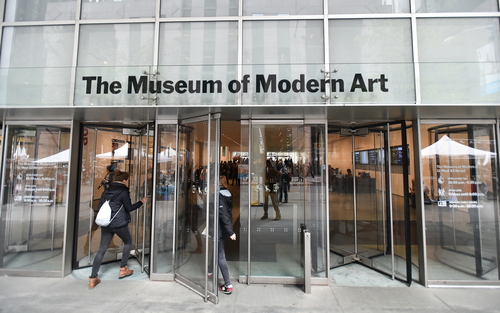
Russian tycoons, with links to President Vladimir Putin, have donated millions of dollars to American institutions over the years. As previously reported by the Washington Post, some of the named oligarchs, targeted by Western sanctions after the start of the war, have donated to U.S. cultural organizations, as per an analysis by anti-corruption researchers. This has raised the question of whether the institutions have an ethical responsibility to disavow contributions attained by connections with the Putin regime. The analysis, which was produced by the Anti-Corruption Data Collective, a group of academics and advocates working to expose transnational corruption, found that illustrious institutions including New York’s Museum of Modern Art, the Massachusetts Institute of Technology, the Mayo Clinic and the Guggenheim Museum, have benefited from such contributions.
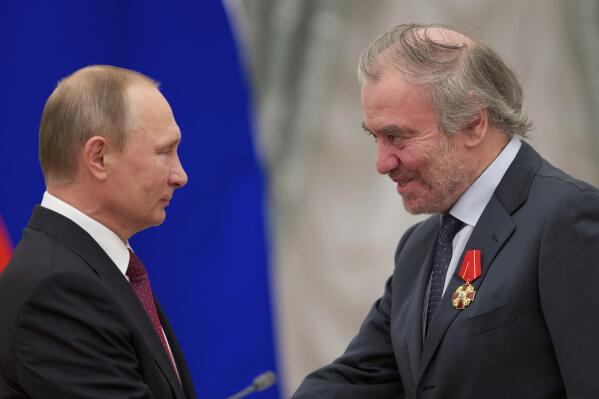
After Russia had invaded the Ukraine, in Feb. 2022, civic groups around the world put pressure on Western institutions to sever ties with Russians aligned with Putin. In New York, Carnegie Hall barred concerts by conductor Valery Gergiev and pianist Denis Matsuev, while the Metropolitan Opera announced it will similarly not book pro-Putin artists. Early on in the war, Ukrainian groups, anti-corruption organizations and activists penned petitions urging “all Western institutions to halt all forms of cooperation with Kremlin-connected entities and sponsors.”
“The West is finally waking up to the fascistic and inhumane nature of Vladimir Putin’s regime,” the petition said. “The time has come for academic and cultural institutions to do the same.” The United States and the European Union have led economic sanctions against those with ties to Putin, including restrictions on Russian billionaires believed to have profited from the corrupt regime. The Biden administration has repeatedly threatened to more aggressively limit access to the US economy to figures named in the treasury’s list of Oligarchs.

Despite this, some oligarchs have used their extensive philanthropic contributions to “help launder their reputations and integrate themselves socially and financially in the West,” said David Szakonyi, a political science professor at George Washington University and co-founder of the data collective. These “contributions to charity and cultural institutions are done in hopes that Western society will look past questions about where their money comes from,” said Szakonyi, adding that their data suggests the need for stricter requirements on charities to disclose details regarding major donors.
Still, today, the large cultural institutions are not required to reveal their funding sources, and the figures available are low estimates at best. Per the Washington Post, some of the oligarchs named in the previous analysis of U.S. donors include: Viktor Vekselberg, Vladimir Potanin, Leonid Mikhelson, and Dmitry Rybolovlev.

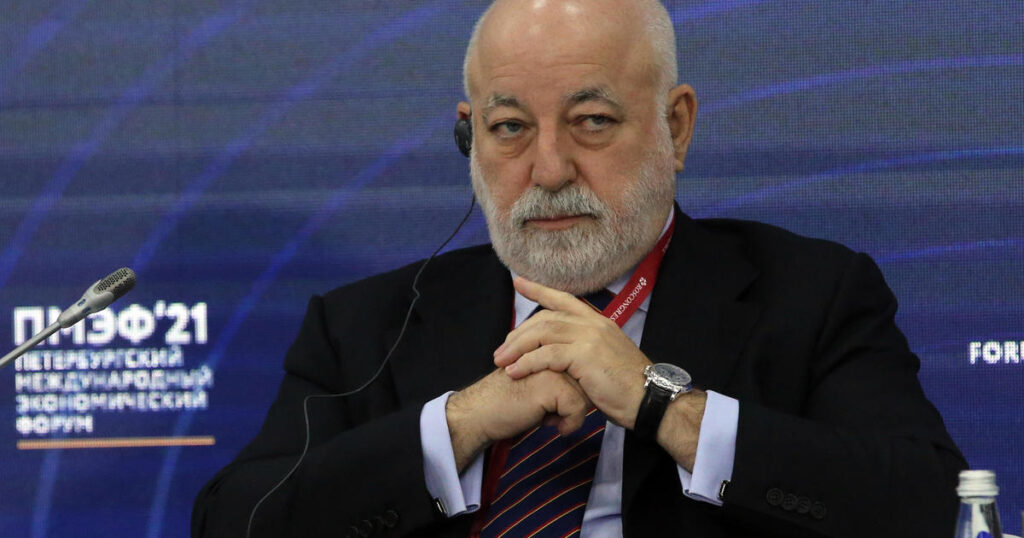
Viktor Vekselberg, 66, boasts an estimated net worth of $9.3 billion as of November 2021. The energy tycoon was designated for sanctions by the Treasury department back in 2018 “for operating in the energy sector of the Russian Federation economy.” He has donated over $100,000 to institutions, including the Clinton Foundation, the Museum of Modern Art and MIT, where there is a scholarship in his name.
Vladimir Potanin, one of Russia’s richest men, who reportedly plays hockey with Putin and met with the Putin with others at the Kremlin shortly after the invasion of Ukraine. He has donated millions to the Kennedy Center, and has been a major benefactor of the Guggenheim Museum. Potanin has not been sanctioned but was among the Kremlin insiders who made a fortune in the 1990s when the Russian government basically sold off state-owned companies to politically connected businessmen.
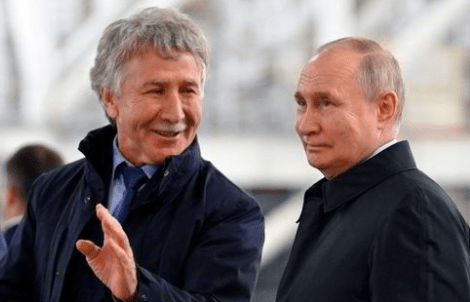
Leonid Mikhelson, whose gas company was sanctioned by U.S. officials in 2014, was also one of the insiders who attended the meeting with Putin after the invasion, as reported by Tass news agency. Mikhelson’s namesake foundation has donated at least $100,000 to the Art Institute of Chicago, the analysis says. Also, the New Museum in New York accepted a “small donation” from Mikhelson as recently as 2017.
Dmitry Rybolovlev, 57, reportedly has a net worth of $6.4 billion, as of 2024. The Washington Post reported, he was named by the Treasury Department in 2017 in the list of oligarchs and political figures with ties to the Russian government. Rybolovlev has donated over $1 million to the Mayo Clinic, mostly prior to 2011, and to Amfar, the Foundation for AIDS Research, per the data.
