



|
Getting your Trinity Audio player ready...
|
Report Claims Iranian Forces Opened Fire on Civilians — Not Only Protesters — During Nationwide Unrest
By: Fern Sidman
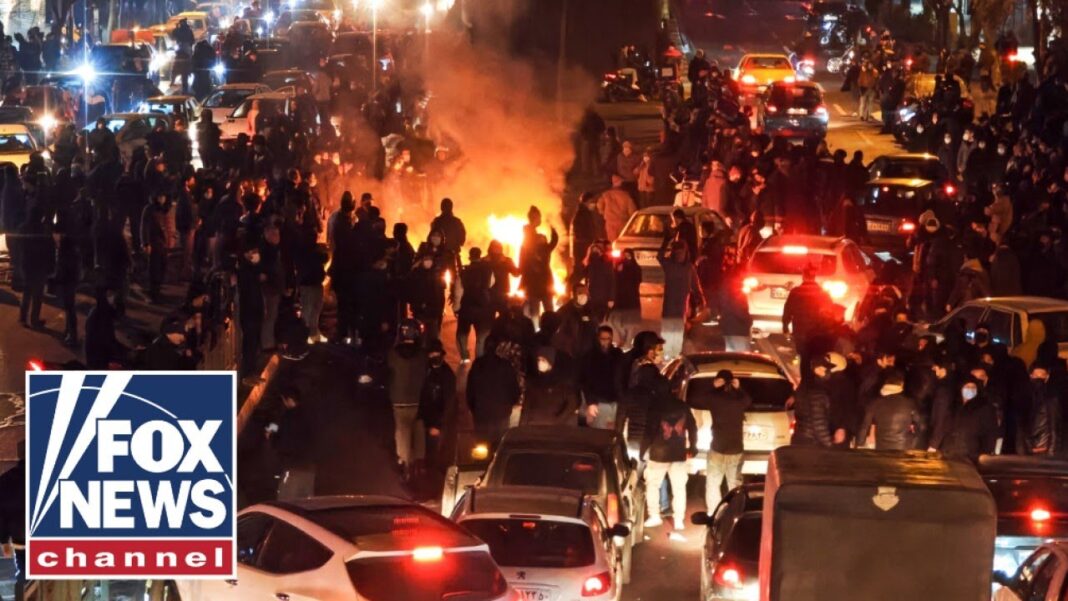
As Iran’s nationwide uprising enters one of its darkest chapters, a grim portrait of state violence, civilian suffering, and systemic repression is emerging—one that is increasingly impossible for the world to ignore. According to a report on Wednesday at World Israel News, witnesses across multiple Iranian cities have accused security forces of deliberately firing not only on protesters, but on ordinary bystanders, transforming public streets into killing zones and turning neighborhoods into landscapes of fear.
Drawing on accounts first reported by Reuters, World Israel News has documented how Iran’s security apparatus allegedly unleashed lethal force in a manner that made little distinction between demonstrators and civilians uninvolved in protests. Families across the country are now engaged in desperate searches—moving from hospitals to morgues, detention centers to police stations—seeking missing relatives who vanished amid the chaos.
Reuters noted that it could not independently verify all witness testimony, but the consistency of the accounts, the scale of casualties, and corroboration from human rights organizations have lent the reports chilling credibility. As the World Israel News report emphasized, the pattern that emerges is not one of isolated incidents, but of a coordinated, nationwide suppression campaign.
Witnesses describe a landscape more akin to an active war zone than a civilian protest movement. Security forces reportedly fired live ammunition and metal pellets not only from ground level, but from rooftops and elevated positions, targeting crowds in public squares, residential streets, and commercial districts. According to Amnesty International, these tactics were used against unarmed individuals, many of whom posed no threat to state forces.
January 8 and 9 have been singled out as particularly catastrophic days, when entire districts in multiple cities reportedly descended into violence. Residents described hearing sustained gunfire, seeing bodies left in the streets, and watching ambulances blocked or delayed as chaos spread.
The protests, which began on December 28 as localized demonstrations over economic hardship in Tehran’s Grand Bazaar, rapidly metastasized into a nationwide movement. Within days, chants against clerical rule echoed from major cities to small towns, and slogans demanding the end of the Islamic Republic’s system of governance became common. World Israel News reported that the demonstrations quickly transcended economic grievances, evolving into an existential challenge to Iran’s ruling structure.
Among the most haunting stories reported by World Israel News is that of Fariba, a 16-year-old girl who went with her mother merely to observe the protests. According to her mother’s testimony, security forces opened fire on the crowd. Fariba was later found with a bullet wound to the heart.
Officials reportedly told the family she had been killed by “terrorists,” a claim her mother categorically rejected, stating that she personally witnessed security forces firing into the crowd. Fariba’s death has become emblematic of a broader tragedy: civilians caught in the crosshairs of a state determined to crush dissent at any cost.
Her story is not isolated. The World Israel News report noted that dozens of similar accounts have surfaced—children, elderly individuals, and passersby killed or injured while not participating in protests, their lives erased by indiscriminate violence.
The true scale of the bloodshed remains contested, reflecting the regime’s information blackout and the difficulty of independent verification. Telephone lines and internet access have been systematically restricted since January 8, according to World Israel News, making communication and documentation increasingly dangerous and unreliable.
The U.S.-based Human Rights Activists News Agency (HRANA) reports that it has verified 4,519 deaths linked to the unrest so far. These include 4,251 protesters, 197 security personnel, 35 individuals under the age of 18 and 38 bystanders.
In addition, HRANA states that it has 9,049 deaths under review, suggesting the final toll could be far higher.
By contrast, a high-level security body linked to Iran’s interior ministry has reported 3,117 deaths, according to state media. An Iranian official told Reuters that confirmed deaths exceed 5,000, including approximately 500 members of the security forces.
As the World Israel News report observed, the discrepancies between these figures reflect not only data uncertainty, but a deeper struggle over narrative control. The regime seeks to frame the unrest as foreign-instigated chaos, while independent organizations depict it as a popular uprising met with state terror.
Iranian authorities have consistently blamed the violence on what they describe as “terrorists and rioters” backed by exiled opposition groups and foreign adversaries, including the United States and Israel. State television has aired footage of burned police stations, government buildings, mosques, and damaged banks, attributing the destruction to hostile forces seeking to destabilize the country.
Images broadcast by state media show protesters allegedly burning pictures of Supreme Leader Ayatollah Ali Khamenei, reinforcing the regime’s portrayal of the demonstrations as an existential threat orchestrated by enemies of the state.
World Israel News reported that this narrative is being used to justify extreme repression, framing mass violence as a necessary act of national defense rather than an assault on civilians.
Beyond the statistics lies a deeper psychological catastrophe. Families are now living in a state of suspended terror—afraid to search for loved ones, afraid to ask questions, afraid even to speak aloud. Hospitals and morgues have become places of dread rather than refuge.
Witnesses told Reuters that families often receive no official confirmation of death or detention, leaving them in agonizing uncertainty. The World Israel News report described this as a form of psychological warfare: uncertainty as a weapon, silence as a method of control.
Entire communities have been traumatized. Parents keep children indoors. Businesses shutter early. Streets empty at dusk. The social fabric itself is unraveling under the weight of fear.
The protests represent more than civil unrest—they reflect a profound crisis of legitimacy for Iran’s ruling system. What began as economic demonstrations has evolved into a direct challenge to clerical authority.
As the World Israel News report noted, chants demanding the end of clerical rule mark a historic shift in public discourse. This is not merely protest against policy, but rejection of the ideological foundation of the Islamic Republic itself.
The regime’s response—mass violence, information blackouts, and indiscriminate force—suggests a leadership that views compromise as weakness and reform as existential threat.
While human rights organizations have issued statements and reports, global response has been muted compared to the scale of the crisis. Diplomatic language, calls for restraint, and expressions of concern have done little to alter realities on the ground.
World Israel News has highlighted the growing frustration among activists and Iranian diaspora communities, who argue that silence enables atrocity. For them, the issue is not geopolitics but morality: the right of civilians to live without fear of execution for dissent.
The accusation that security forces deliberately fired on bystanders represents a threshold moment. If substantiated, it reframes the crisis not merely as protest suppression, but as systematic state violence against the civilian population.
Iran now stands at a historical inflection point. The regime’s reliance on brute force may suppress demonstrations in the short term, but it deepens alienation and delegitimization in the long term. Every death becomes a symbol. Every victim becomes a narrative of resistance.
As World Israel News reported, the streets of Iran are no longer simply sites of protest—they are sites of memory, trauma, and unresolved grief.
The unfolding tragedy in Iran is not merely a regional crisis; it is a human catastrophe with global moral implications. Civilians, children, and bystanders have been drawn into a vortex of violence that defies any claim of legitimacy or necessity.
The World Israel News report chronicled not just the facts, but the human suffering behind them—the mothers searching morgues, the families waiting for names on lists, the communities living under constant fear.
History will not judge this moment by official statements or televised narratives, but by the lives lost, the voices silenced, and the courage of those who stood against brutality.
In the streets of Iran, blood has become a language of power. Whether the world chooses to listen—or remain silent—will define not only the future of Iran, but the moral credibility of the international community itself.
