



|
Getting your Trinity Audio player ready...
|
By: Ariella Haviv
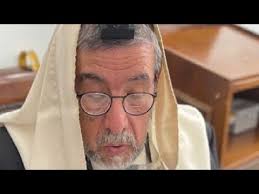
Rabbi Yosef Hamra, a prominent Syrian-American religious leader and chief rabbi of the Syrian Jewish community in New York, is scheduled to testify before a congressional hearing next week in support of lifting U.S. sanctions on Syria, according to a report on Friday at The Jewish News Syndicate (JNS),
The appearance marks what observers are calling a significant and unprecedented development in the dialogue between Washington policymakers and advocates for Syria’s post-war reconstruction.
Rabbi Hamra, the brother of the late Rabbi Avraham Hamra, who served as Syria’s last official chief rabbi before the country’s remaining Jews were allowed to emigrate, is expected to make his case before lawmakers at a hearing convened by the U.S. Helsinki Commission. The session, slated for next Thursday morning, will examine whether to revoke the Caesar Syria Civilian Protection Act of 2019, more commonly known as the Caesar sanctions.
As reported by JNS, the hearing represents a critical juncture in U.S. policy toward the Middle East nation, where advocates for Syria’s new leadership under President Ahmed al-Sharaa have argued that the sanctions, originally imposed against the regime of Bashar al-Assad, now undermine the country’s recovery efforts and broader attempts at national reconciliation.
According to the information provided in the JNS report, Rabbi Hamra’s forthcoming testimony is being viewed as both symbolic and substantive. It calls attention to the role of Syria’s small but historically significant Jewish community in the country’s ongoing effort to rebuild bridges among its diverse religious and ethnic populations.
The Jewish Heritage of Syria Foundation, which has been working to document and preserve Jewish life and heritage in Syria, stated that Hamra’s testimony would represent a “milestone not only for Syria’s Jewish community but for all Syrians who believe in a future built on reconciliation, coexistence, and respect for every faith.”
As JNS reported, the foundation emphasized that Rabbi Hamra’s appearance before Congress is not merely a political act but a humanitarian appeal aimed at enabling the restoration of Syria’s religious and cultural fabric — including the remnants of Jewish life that once flourished in cities such as Damascus, Aleppo, and Qamishli.
“The sanctions have obstructed the restoration of religious and cultural sites and have impeded efforts to preserve what remains of Syria’s Jewish heritage,” the foundation said.
The Caesar Syria Civilian Protection Act, enacted in 2019, was designed to punish the Assad regime and its allies for systemic human rights violations, including torture, mass displacement, and chemical weapons attacks. The legislation authorized wide-ranging financial penalties against Syrian government entities, officials, and those doing business with them, effectively isolating the country’s economy from most international financial systems.
However, according to the report at JNS, critics of the sanctions — including regional analysts and religious leaders such as Rabbi Hamra — argue that the measures have had unintended humanitarian consequences, worsening economic hardship for ordinary Syrians and delaying much-needed reconstruction following more than a decade of war.
Supporters of President Ahmed al-Sharaa, who assumed power following Assad’s removal, contend that the sanctions no longer serve their original purpose. Instead, they say, the restrictions prevent the new administration from rebuilding infrastructure, reviving the economy, and restoring essential services.
President Trump recently issued an executive waiver suspending enforcement of the Caesar Act for six months, signaling a willingness to allow limited humanitarian and reconstruction activity. Yet, under U.S. law, only Congress holds the authority to permanently annul or amend the sanctions.
In statements cited in the JNS report, the Jewish Heritage of Syria Foundation explained that Rabbi Hamra has been engaged in efforts to revitalize Jewish heritage sites within Syria under the oversight of the al-Sharaa government. His testimony, the group said, will highlight how the continuation of U.S. sanctions hampers these preservation efforts, making it difficult to secure materials, funding, and logistical support for projects such as synagogue restorations, archival recovery, and cemetery maintenance.
“The severe consequences that the Caesar sanctions continue to have on this mission are profound,” the foundation told JNS, noting that religious and cultural sites of historical significance have been left to deteriorate due to financial restrictions and the inability to import necessary restoration equipment.
Rabbi Hamra, who leads the Syrian Jewish community centered in Brooklyn and Deal, New Jersey, has long been viewed as a bridge between the Syrian diaspora and the homeland community. His late brother, Rabbi Avraham Hamra, played a crucial role in facilitating the emigration of Syria’s last Jews during the 1990s and early 2000s, ensuring the preservation of their religious traditions and historical records.
JNS reported that Rabbi Hamra sees his upcoming congressional testimony as an opportunity to advocate not only for Jewish heritage preservation but also for broader humanitarian relief that would benefit all Syrians — regardless of faith or ethnicity.
Rabbi Hamra’s recent interactions with Syrian officials signal a potential thaw in relations between the state and members of its long-dispersed Jewish community. During President al-Sharaa’s visit to New York for the United Nations General Assembly in September, the Syrian leader met privately with members of the Syrian Jewish diaspora.
Photographs and video footage cited by JNS show Rabbi Hamra meeting and offering a blessing to President al-Sharaa during a subsequent event in Washington earlier this week. Observers described the exchange as a symbolic gesture of mutual respect and reconciliation, an image unthinkable during the decades of repression under Bashar al-Assad’s rule.
The meeting marked one of the first public interactions between Syria’s head of state and a Jewish religious figure in more than half a century. JNS noted that it follows a broader pattern of regional normalization efforts, echoing gestures seen in neighboring countries that are seeking to mend ties with Jewish communities and Israel.
The U.S. Helsinki Commission, which oversees the upcoming hearing, is an independent, bipartisan body that monitors compliance with international human rights and security commitments under the Organization for Security and Cooperation in Europe (OSCE). The commission’s hearings often inform congressional deliberations on foreign policy and human rights legislation.
As the JNS report observed, the appearance of a Syrian-American rabbi before such a forum underscores the complex moral and political dimensions of U.S. sanctions policy. Lawmakers are expected to weigh testimony from multiple witnesses — including humanitarian experts, policy analysts, and community leaders — on whether the Caesar sanctions continue to serve American interests or impede Syria’s transition toward reconstruction and stability.
Analysts told JNS that Rabbi Hamra’s participation could influence congressional sentiment by introducing a religious and cultural preservation dimension to the debate, broadening the lens through which the sanctions’ impact is assessed. His testimony will likely focus on the cultural costs of isolation, framing heritage preservation as a moral imperative within the context of national healing.
The hearing is expected to draw significant attention from both Middle Eastern and U.S. observers, given the symbolic weight of a Jewish religious leader advocating for Syria’s rehabilitation.
For Rabbi Yosef Hamra, the moment encapsulates a historic convergence of faith, diplomacy, and cultural restoration — an attempt to reconcile the painful past of Syria’s Jewish community with a potential vision for the country’s future under new leadership.
Whatever the outcome of next week’s proceedings, Rabbi Hamra’s testimony will represent a defining moment in the ongoing narrative of Syria’s post-war reconstruction — a call for relief, reconciliation, and the preservation of a shared heritage long obscured by conflict and political division.