



|
Getting your Trinity Audio player ready...
|
By: Arthur Popowitz
Qatar’s government, long accused of bankrolling Hamas and providing safe haven to its senior leadership, is simultaneously spending tens of thousands of dollars every month to cultivate influence in the United States Congress. Newly disclosed records reviewed alongside congressional contact logs reveal a meticulously coordinated campaign in which Qatar not only shelters terror masterminds in Doha but also saturates Capitol Hill with lobbying meetings, emails, and phone calls—all designed to polish its image and secure political cover.
According to disclosures, Qatar pays former congressmen Jim Moran, Tom McMillen, Tom Davis, and Tom Reynolds a combined $80,000 per month to lobby on its behalf. These well-connected ex-lawmakers act as emissaries for a regime that hosts Hamas’s political bureau in Doha, where top leaders live in villas and luxury apartments while directing terror operations in Israel. As critics have pointed out, every ounce of “solidarity with Qatar” expressed in Washington is not organic. It is bought and paid for.
A recently released congressional contact chart details dozens of interactions between Qatari representatives and members of Congress or their senior staff between January and March 2025. The pattern is unmistakable: Qatar’s envoys methodically engaged aides and legislators across both parties, with the Gaza ceasefire and hostage negotiations serving as their entry point for dialogue.
On January 23, Qatari officials reached out to staffers for six House members, including Don Bacon, Eric Swalwell, Ryan Zinke, Lois Frankel, Dan Kildee, and Peter Welch. Each conversation, according to the log, revolved around “Qatar’s role in the Gaza ceasefire and hostage release.” That very phrase appears repeatedly across the record, signaling a pre-packaged talking point aimed at portraying Doha as indispensable to negotiations.
The following weeks brought a remarkable concentration of contact with Senator Chris Van Hollen, a Democrat from Maryland. Between February 3 and February 13, Van Hollen held no fewer than five conversations or meetings with Qatari representatives—via telephone, text, or in person—covering everything from hostage issues to “implications of Arabian countries’ normalization with Israel and potential security guarantees.” This frequency of contact underscores Qatar’s tactical investment in lawmakers who often position themselves as foreign policy voices on Middle East affairs.
Representative Bill Keating of Massachusetts also emerges as a frequent recipient of Qatar’s lobbying overtures. In late February, Keating was the subject of three separate phone calls or texts from Qatari representatives, each linked to upcoming House Foreign Affairs Committee hearings. Speaker Emerita Nancy Pelosi held a telephone conversation with Qatari officials on March 3, focused explicitly on “Qatar’s relationship with the Congress.” The following day, Representative Ted Lieu of California met in person with Qatar’s emissaries for similar discussions.
The pattern is not subtle. Qatar is saturating key lawmakers with direct communication precisely as international scrutiny grows over its role as Hamas’s protector.
The timing of these lobbying efforts is particularly damning. In the weeks prior, Israel had intensified its campaign against Hamas following devastating terror attacks. While the Israel Defense Forces targeted terrorists in Gaza, Hamas’s senior leadership continued to orchestrate operations from Doha. Reports from media outlets such as the BBC confirmed that more than a thousand Hamas operatives and their families relocated from Tehran to Doha after the killing of Hamas figurehead Ismail Haniyeh, with the Qatari government providing housing—including villas for top officials.
Thus, while Qatar’s envoys flooded congressional offices with messages of mediation and “constructive engagement,” the regime itself was cementing its role as host to terrorists directly responsible for the October 7 massacre and subsequent atrocities. In effect, Doha is attempting to purchase a shield in Washington to deflect scrutiny of its double game: presenting itself as a partner in diplomacy while acting as landlord to Hamas.
The hiring of Moran, McMillen, Davis, and Reynolds is emblematic of Qatar’s strategy. Each of these former lawmakers possesses deep relationships on Capitol Hill and across party lines. By paying them $80,000 per month, Doha ensures that its narrative is carried not by obscure foreign agents but by familiar American voices who can casually call or email sitting members and their chiefs of staff.
The effect is insidious. When Qatari representatives frame their role in the Gaza ceasefire as humanitarian, they obscure the reality that Hamas leaders live comfortably under their protection. When they position themselves as indispensable mediators, they erase their role as financiers of extremist groups. And when congressional staffers take those meetings, they risk becoming conduits for a foreign influence operation that sanitizes terror sponsorship.
The contact log demonstrates that Qatar does not limit itself to Democrats or Republicans; it casts a wide net. From conservative figures like Rep. Don Bacon to liberal stalwarts like Sen. Dick Durbin’s foreign policy adviser, Qatar is careful to ensure that its message resonates across the ideological spectrum. This bipartisan cultivation is critical for Doha, which seeks to avoid becoming a partisan wedge issue in Washington. By sprinkling access across both parties, it inoculates itself against unified opposition.
Yet, as critics have pointed out, this bipartisan strategy merely amplifies the danger. It allows Qatar to embed itself within America’s political bloodstream, portraying itself as an ally to all while actively undermining U.S. and Israeli security interests.
The New York Post has repeatedly documented the dangers of foreign money flowing into American institutions, from universities to think tanks. Qatar’s congressional lobbying is the next frontier of this influence campaign. Just as billions in Qatari funding have reshaped the landscape of higher education—fueling antisemitism and delegitimizing Israel on campuses—tens of thousands of dollars each month are now being deployed to sway legislators at the very heart of American democracy.
The silence that follows is deafening. Few lawmakers publicly call out Qatar’s duplicity, in part because many have grown accustomed to seeing Doha as a player in negotiations. But as the Post and other watchdogs emphasize, negotiation should not blind policymakers to complicity in terror.
One of the most revealing aspects of the congressional contact log is its obsession with portraying Qatar as a mediator in hostage and ceasefire talks. This is the regime’s most potent talking point, and it has been repeated ad nauseam to congressional staffers and members. But this narrative is deeply misleading. Qatar’s mediation role exists precisely because it provides sanctuary to Hamas. Without Doha’s protective umbrella, Hamas leaders would have no secure base from which to negotiate. In other words, Qatar creates the problem and then demands credit for helping manage it.
This circular dynamic is the essence of image laundering: manufacture leverage through complicity, then spend money in Washington to rebrand that leverage as benevolence.
The revelations contained in these logs and lobbying disclosures paint a troubling portrait of Qatar’s ongoing campaign to whitewash its image in Washington. At the very moment that Hamas leaders relax in Qatari villas and issue orders for terror attacks, the same regime is paying American ex-lawmakers $80,000 a month to lobby Congress. And judging from the frequency and breadth of contacts detailed in the chart, those payments are buying access in spades.
The pattern is unmistakable. Qatar has perfected a dual strategy: harbor terrorists abroad, buy influence in America. The cost is measured not only in dollars but in the erosion of moral clarity on Capitol Hill. If members of Congress allow themselves to become conduits for Qatari propaganda, then the voices of terror’s victims—Israeli and American alike—will be drowned out by the clinking of lobbyist glasses in Washington’s back rooms.
The question, as critics and watchdogs continually stress, is whether lawmakers will finally confront this corrosive influence—or continue to let Doha’s money speak louder than the truth.
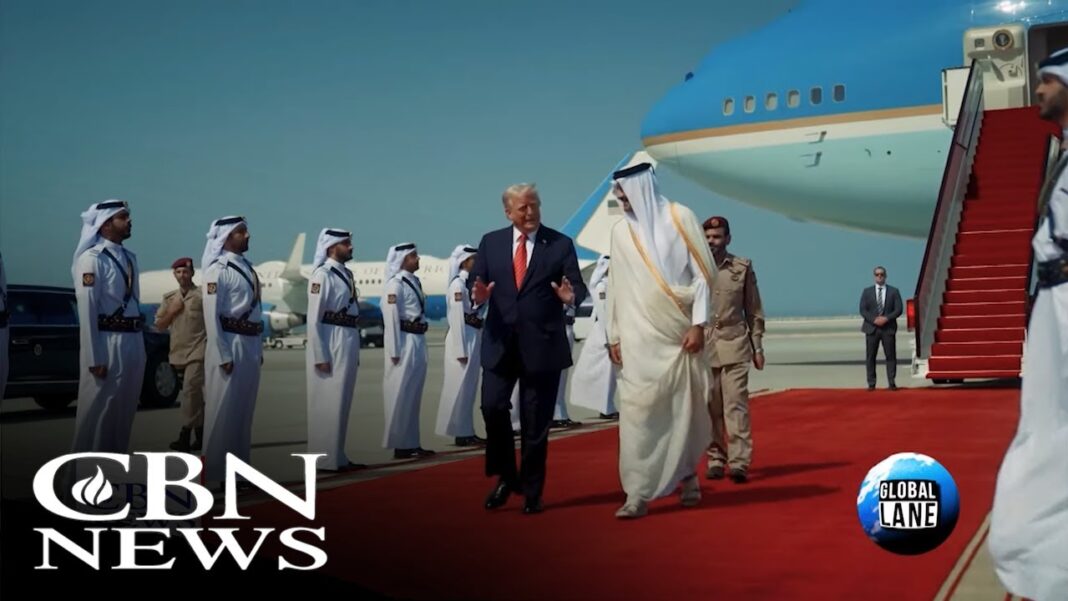
This is an exceptional report! Also the included news videos, beginning with the CBN News video, are EXCELLENT exposés of the malignant evil corrupt Islamists’ purchase of America, including of our own government by Qatar, the leading Sunni Muslim terrorist sponsor in the world.
It exposes how with Hundreds of Billions of dollars Qatar has bribed and corrupted the most powerful American politicians, schools and private and public universities, news organizations, and has literally “bought America”.
It names names, exposing America’s most powerful prestigious leaders, top Democrats and members of the Trump administration, and otherwise highly respected leading citizens, as corrupted frauds. It has purchased their “complicity in terror”.
While actively sponsoring, supporting, funding and partnering with HAMAS, it outrageously claims to be a neutral “mediator”. “In other words, Qatar creates the problem and then demands credit for helping manage it.” It is our enemy, and should be treated as such.