



|
Getting your Trinity Audio player ready...
|
On the Brink: As Washington Draws Down Forces, the Middle East Holds Its Breath for a Possible U.S.–Iran Showdown
By: Fern Sidman
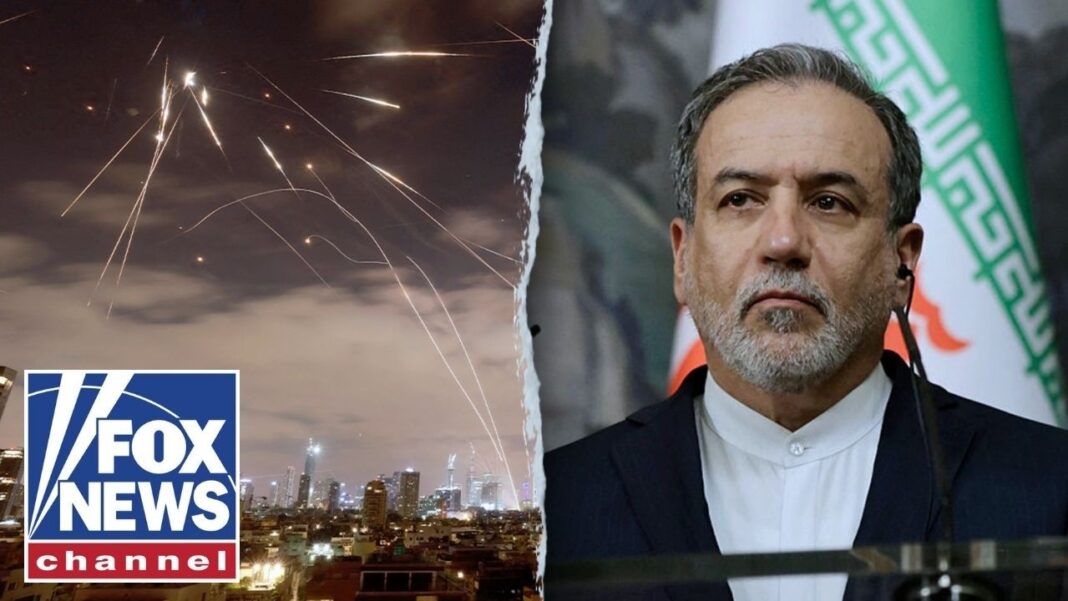
By any historical measure, the choreography now unfolding across the Middle East is laden with portent. The United States has begun quietly withdrawing personnel from key military installations in the region, while Iran, convulsed by the most ferocious internal unrest since the 1979 Islamic Revolution, has warned neighboring states that American bases on their soil will become targets should Washington intervene. According to a report that appeared on Wednesday at Reuters, the convergence of these signals — troop movements, diplomatic ultimatums, and increasingly bellicose rhetoric — has pushed the region into one of its most perilous moments in years.
A U.S. official confirmed on Wednesday, speaking on condition of anonymity, that some American personnel were being pulled from bases in the Middle East as a precautionary measure. Reuters reported that the drawdown reflects mounting concern inside the Pentagon that Tehran could attempt retaliatory strikes if President Donald Trump follows through on repeated threats to intervene in Iran’s internal crisis.
The moves come as Iran’s leadership struggles to suppress a nationwide uprising that has already claimed thousands of lives and laid bare the vulnerabilities of the clerical regime. According to both Iranian officials and independent rights organizations cited by Reuters, the death toll from the crackdown has climbed well past levels seen in earlier protest waves in 2009 and 2022.
Among the most sensitive locations now being thinned of personnel is Al Udeid Air Base in Qatar, the forward headquarters of U.S. Central Command and the largest American military installation in the Middle East. Qatari officials acknowledged that some personnel were being withdrawn in response to what they termed “current regional tensions.” Three diplomats told Reuters that staff had been instructed to leave the base, though there were no signs — yet — of the mass evacuations that preceded last year’s Iranian missile strike.
Britain, too, has begun reducing its footprint. According to a report referenced by Reuters, the United Kingdom is withdrawing personnel from a major air base in Qatar ahead of the possibility of U.S. action, though London has declined to issue formal comment.
“All the signals are that a U.S. attack is imminent,” a Western military official told Reuters. “But that is also how this administration behaves to keep everyone on their toes. Unpredictability is part of the strategy.”
Two European officials told Reuters they believed American military intervention could occur within 24 hours. An Israeli official separately suggested that Trump appeared to have made the decision to intervene, though the scope and timing remained opaque.
If Washington is moving pieces quietly, Tehran is doing so loudly. A senior Iranian official told Reuters that Iran has warned a swath of regional governments — from Saudi Arabia and the United Arab Emirates to Turkey — that any American strike on Iranian soil would prompt attacks on U.S. bases hosted by those states.
“Tehran has told regional countries that U.S. bases in those countries will be attacked,” the official said.
The Iranian warning is not mere bluster. The United States maintains a sprawling military architecture across the region, including the headquarters of the U.S. Navy’s Fifth Fleet in Bahrain and logistical hubs throughout the Gulf. Any attempt by Iran to strike these installations would risk igniting a multi-front confrontation stretching from the Persian Gulf to the Levant.
Adding to the gravity of the moment, the same Iranian official told Reuters that direct communications between Iranian Foreign Minister Abbas Araqchi and U.S. Special Envoy Steve Witkoff had been suspended — an alarming development that leaves both sides without a formal diplomatic backchannel at precisely the moment when miscalculation would be most catastrophic.
The internal crisis gripping Iran is, by the regime’s own admission, unprecedented. Demonstrations that began two weeks ago as protests against soaring prices and economic collapse have metastasized into nationwide unrest. According to the information provided by the Reuters report, an Iranian official has acknowledged that more than 2,000 people have been killed. The U.S.-based HRANA rights group places the number higher, reporting at least 2,403 protesters and 147 government-affiliated individuals dead, with total fatalities surpassing 2,600.
Armed Forces Chief of Staff Abdolrahim Mousavi described the upheaval in stark terms. “Iran has never faced this volume of destruction,” he said, blaming foreign enemies — a refrain echoed across state media.
French Foreign Minister Jean-Noël Barrot, quoted by Reuters, called it “the most violent repression in Iran’s contemporary history.”
The government has responded with force: mass arrests, internet blackouts, and the deployment of security units across major cities. HRANA told Reuters it has verified more than 18,000 arrests since the unrest began — a figure that dwarfs prior crackdowns.
Yet despite the bloodshed, one Western official told Reuters that the government does not appear to be on the brink of collapse. Iran’s formidable security apparatus remains intact, and state media have broadcast carefully curated images of funeral processions in Tehran, Isfahan, Bushehr and beyond, with mourners waving Iranian flags and portraits of Supreme Leader Ayatollah Ali Khamenei.
President Masoud Pezeshkian, whose authority remains subordinate to that of Khamenei, told a cabinet meeting that as long as the government retained popular support, “all the enemies’ efforts against the country will come to nothing.”
For days, President Trump has publicly flirted with the prospect of intervention, urging Iranians to continue protesting and vowing “very strong action” if executions of demonstrators proceed. In an interview with CBS News cited by Reuters, Trump warned of severe consequences and encouraged protesters to “take over institutions,” adding cryptically that “help is on the way.”
The effect of such statements is twofold. Domestically in Iran, they are seized upon by hardliners as proof that the unrest is foreign-orchestrated. Regionally, they have forced U.S. allies into an uncomfortable posture — supportive of Washington but acutely aware that they would be on the front lines of any Iranian retaliation.
Iranian officials, meanwhile, have embarked on a frantic diplomatic blitz. According to Iranian state media reports cited in the Reuters report, Ali Larijani, head of Iran’s top security body, spoke with Qatar’s foreign minister, while Araqchi held conversations with his Emirati and Turkish counterparts.
Araqchi told UAE Foreign Minister Sheikh Abdullah bin Zayed that “calm has prevailed” — a characterization starkly at odds with the figures compiled by HRANA and the grim assessments offered by Western governments.
Iran’s predicament is compounded by strategic setbacks. Last June, Israel — joined by the United States — conducted a 12-day bombing campaign that inflicted serious damage on Iranian infrastructure. The campaign followed losses for Tehran’s allies in Lebanon and Syria, and was soon followed by the reimposition of U.N. sanctions by European powers over Iran’s nuclear program, further strangling an already crippled economy.
As the Reuters report noted, the current unrest has erupted at a moment when Iran’s prestige, both domestically and regionally, is deeply eroded.
The implications of a U.S. strike — or even a near-miss — are staggering. Iran’s warnings to Gulf states, its suspension of talks with Washington, and the withdrawal of Western personnel from strategic bases together create a volatile tableau in which any spark could ignite a chain reaction.
For now, according to Reuters, the American drawdown remains limited — a precaution rather than a prelude to evacuation. But the symbolism is unmistakable. In a region where perception often carries the weight of reality, the sight of Western forces quietly thinning their ranks has set off alarm bells from Doha to Dubai.
Whether Trump ultimately chooses to act or continues to wield ambiguity as a deterrent, the Middle East is once again suspended in a tense interregnum — caught between a regime fighting for its survival at home and a superpower weighing the costs of intervention abroad.
As one diplomat told Reuters, “This is what the brink looks like. Everyone is moving their pieces, and nobody is certain who will blink first.”
